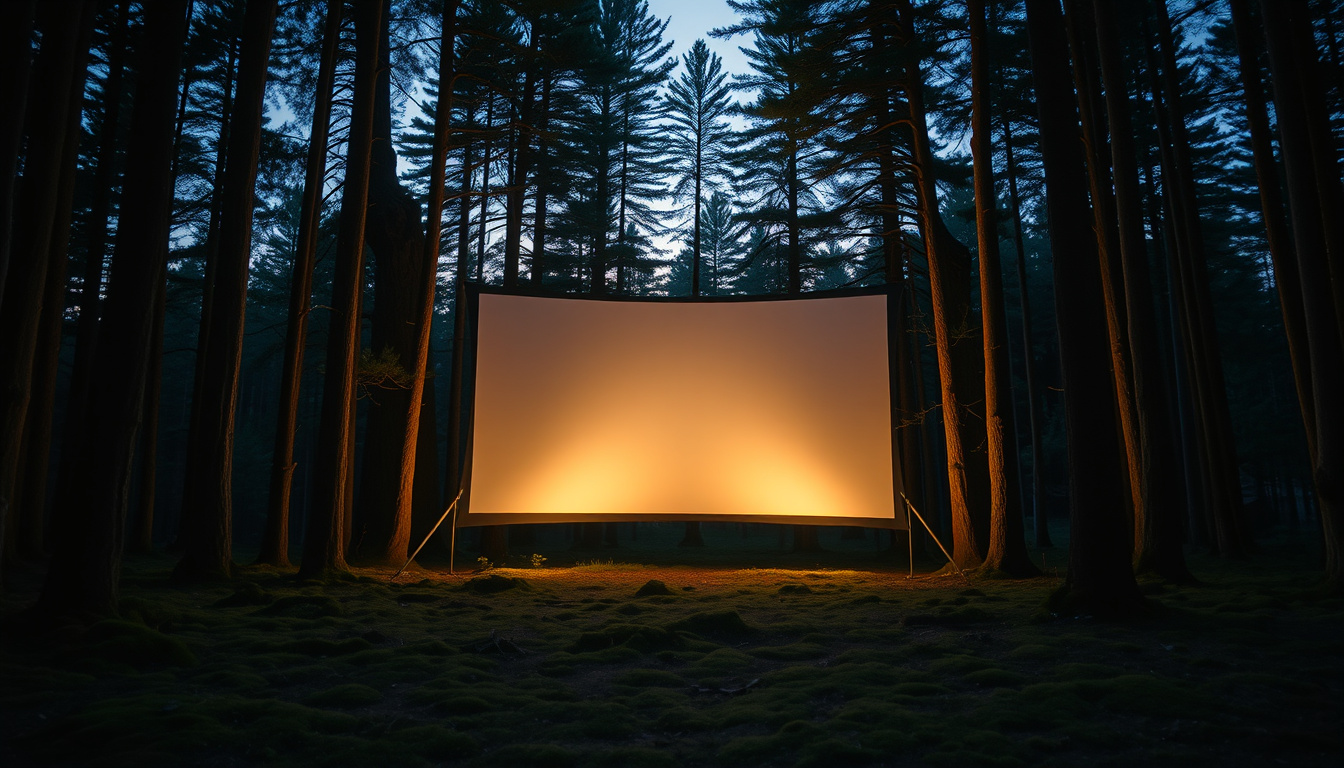

The Kinema in the Woods stands as one of Britain’s most remarkable surviving cinemas, tracing its heritage back to 1922 when it opened as the 68th cinema in the country. Located in Woodhall Spa, Lincolnshire, this venue occupies a converted late 19th-century sports pavilion that received new life following the destruction of the Victoria Hotel in 1920. What distinguishes this establishment from countless others across the nation is its unwavering commitment to preservation, maintaining original features while continuing to serve its community for over a century.
Unlike common misconceptions linking it to Yorkshire Dales or Grassington, The Kinema in the Woods has no connection to those locations. The confusion likely arises from its somewhat misleading name and the presence of unrelated venues in other regions. The cinema remains a Lincolnshire landmark, celebrated for its unique operational methods and rich historical tapestry woven through decades of dedicated stewardship.
What Makes The Kinema in the Woods Unique
The cinema holds a singular position in British exhibition history. Its main auditorium, Screen 1, remains the only fully functioning cinema in the United Kingdom still employing back projection, a technique necessitated by the building’s distinctive architecture with low roof trusses. This technical characteristic transforms every screening into a living demonstration of cinema’s evolutionary journey, offering audiences an experience impossible to replicate elsewhere.
- Original building served as a sports pavilion for the Victoria Hotel before a fire destroyed the hotel on Easter Sunday 1920
- Opened as the Pavilion Cinema in 1922 before receiving its current name in 1930
- First intended film “The Lion Eaters” never arrived; a Charlie Chaplin film screened instead due to delivery failure
- Only three families have owned and operated the cinema throughout its entire history
- Popular with airmen stationed nearby during the Second World War from 1938 to 1944
- Features a Compton Kinestra organ installed in 1987, still played during weekend screenings
- Expanded to include outdoor screenings through the Woodland Courtyard, opened in 2022
| Fact | Details |
|---|---|
| Original Name | Pavilion Cinema (1922–1930) |
| Founders | Sir Archibald and Lady Weigall, with Major C.C. Allport |
| Building Type | Converted sports pavilion (late 19th century) |
| Sound Arrival | 1928 (first sound projector installed) |
| Current Operator | Philip Jones (since 2013) |
| Unique Feature | UK’s only operating back-projection cinema |
How The Kinema in the Woods Came to Exist
The story of The Kinema in the Woods begins not with film but with sporting recreation. The original structure served the Victoria Hotel as an entertainment pavilion, overlooking tennis courts and manicured gardens. This Victorian-era venue hosted various leisure activities until catastrophe struck on Easter Sunday 1920, when the hotel burned to the ground, leaving the pavilion standing amid the ruins.
In 1922, Sir Archibald and Lady Weigall acquired the abandoned pavilion and partnered with Captain Carleton Cole Allport to transform it into a cinema. Major Allport, as he later became known, would guide the venue through its most formative decades. The inaugural screening took place on September 11, 1922, at 7pm, though the evening did not unfold as planned.
The First Screening and Early Challenges
The debut program was intended to feature “The Lion Eaters,” but circumstances beyond anyone’s control intervened. The film print failed to arrive in time, forcing the projection team to scramble for alternative content. A Charlie Chaplin film filled the void, providing an unexpected but fitting beginning to what would become a century-long legacy. The cinema operated under the Pavilion Cinema name until 1930, when it received the designation that visitors recognize today.
The venue’s original 1922 projector remains on display, offering visitors a tangible connection to the cinema’s earliest days. This preservation commitment extends throughout the building, where classic film posters and period equipment create an atmosphere unmatched by modern multiplexes.
The Three Families Who Shaped Its History
Few British cinemas can claim such continuity of ownership as The Kinema in the Woods. Exactly three families have stewarded this venue through its entire existence, each leaving indelible marks on its character and facilities.
Major C.C. Allport: The Founding Era (1922–1973)
Major Carleton Cole Allport served as the cinema’s founding manager and primary visionary. His tenure spanned more than five decades, during which he introduced the first sound projector in 1928, fundamentally transforming the silent film experience for local audiences. Allport also pioneered the back projection system that continues operating today, adapting the technique to overcome the building’s structural limitations imposed by low roof trusses.
James Green: Modernization and Expansion (1973–2013)
James Green purchased the cinema from the Allport family in 1973, initiating a new chapter characterized by thoughtful modernization. In 1987, he installed the Compton Kinestra organ that remains a defining feature of weekend screenings. Alan Underwood serves as the resident organist, performing during intermissions and creating an authentically nostalgic atmosphere. Green also oversaw the transition to digital projection in 2010, ensuring the venue could continue operating as exhibition technology evolved.
Philip Jones: Contemporary Operations (2013–present)
Philip Jones acquired the cinema following Green’s retirement in 2013, becoming its third and current operator. Under his stewardship, The Kinema in the Woods has continued expanding its offerings while maintaining the heritage characteristics that distinguish it from any other venue in Britain.
The venue’s remarkably stable ownership history means that only three operators have managed The Kinema in the Woods across its entire 100-year existence. This continuity has preserved architectural integrity and operational philosophy in ways that frequently changing ownership could never achieve.
Growth and Modern Developments
While Screen 1 preserves the original auditorium with its heritage features, the cinema has expanded considerably over recent decades. These additions have transformed a single-screen operation into a multi-auditorium complex while maintaining the intimate character that defines the venue.
- Kinema Too (Screen 2): Opened July 8, 1994, with “Four Weddings and a Funeral,” featuring 92 seats and distinctive trompe l’œil artwork by Murray Hubick
- Screen 3: Introduced in June 2019 with “Yesterday,” offering 74 seats
- Kinema 4 (Screen 4): A 21-seat intimate auditorium launched in October 2021
- Woodland Courtyard: Outdoor screening space debuted in summer 2022 for weekend presentations
The combined indoor capacity now exceeds 187 seats across four screens. The newer auditoriums utilize laser projection and Dolby 7.1 sound systems, providing contemporary viewing experiences that complement rather than replace the heritage characteristics of the original space. The car park has expanded alongside these developments to accommodate increased visitor numbers.
No specific 2026 schedule details appear in available records. Current film listings, ticket availability, and seasonal outdoor screening schedules are maintained on the venue’s official website. Visitors planning trips should consult the site directly for up-to-date information regarding performances and special events.
Cultural Significance and Visitor Experience
The Kinema in the Woods occupies a unique position within British cinema culture. Its continued use of back projection in Screen 1 represents living exhibition history, allowing audiences to experience viewing conditions that have virtually vanished elsewhere. The low roof trusses that necessitated this approach have become defining architectural features rather than limitations.
The venue attracted particular attention during the Second World War, when airmen from nearby stations formed a significant portion of the audience between 1938 and 1944. This wartime popularity cemented the cinema’s role as a community institution beyond mere entertainment provision. By 1953, the venue had replaced its original deckchairs with tip-up seats, reflecting evolving audience expectations while maintaining the building’s essential character.
Modern visitors encounter an unusual blend of historical preservation and contemporary amenity. Classic film posters line the walls alongside equipment spanning different technological eras. Weekend screenings typically include organ interludes performed by resident musicians, creating experiences distinct from conventional cinema visits. The 2022 addition of outdoor screenings through the Woodland Courtyard has further diversified the programming, though the venue’s primary identity remains rooted in its indoor heritage auditoriums.
Timeline of Key Milestones
The following chronological highlights trace the evolution of The Kinema in the Woods from its origins as a hotel pavilion through its transformation into a historic cinema complex:
- Late 19th Century: Sports and entertainment pavilion constructed for the Victoria Hotel
- Easter Sunday 1920: Victoria Hotel destroyed by fire; pavilion survives
- September 11, 1922: Pavilion Cinema opens with first screening
- 1928: First sound projector installed by Major C.C. Allport
- 1930: Renamed The Kinema in the Woods
- 1938–1944: Popular with wartime airmen during Second World War
- 1953: Deckchairs replaced with tip-up seating
- 1973: James Green purchases the cinema from Allport family
- 1987: Compton Kinestra organ installed; Alan Underwood begins residency
- 1994: Kinema Too (Screen 2) opens with “Four Weddings and a Funeral”
- 2010: Transition to digital projection
- 2013: Philip Jones becomes current operator
- 2019: Screen 3 opens with “Yesterday”
- 2021: Kinema 4 (Screen 4) launches as intimate 21-seat auditorium
- 2022: Woodland Courtyard outdoor screenings debut; cinema celebrates 100 years
Clarifying Common Confusions
Misconceptions about The Kinema in the Woods appear frequently, particularly regarding its location and format. Addressing these misunderstandings helps ensure visitors find the correct venue and appreciate what actually distinguishes this cinema.
| Common Assumption | Verified Reality |
|---|---|
| Located in Grassington, Yorkshire Dales | Actually located in Woodhall Spa, Lincolnshire |
| An open-air or outdoor cinema | Primarily indoor venue; outdoor Woodland Courtyard added 2022 as secondary space |
| UK’s oldest cinema | One of Britain’s earliest (68th when opened in 1922); precise ranking among surviving venues varies |
| Connected to Grassington Players | No association; Grassington Players are an unrelated local theatre group in Yorkshire |
| Standard front-projection setup | Screen 1 uses back projection due to building’s low roof trusses; unique in UK |
| Single-screen operation | Four indoor screens plus seasonal outdoor screening space as of 2022 |
Why This Venue Matters
The Kinema in the Woods represents something increasingly rare in an era of standardized multiplex experiences. Its multi-generational family stewardship has preserved institutional memory and operational philosophies that prioritize character over cost-cutting. The back projection system, far from being a limitation, has become a defining characteristic that draws visitors seeking cinema experiences unavailable anywhere else in Britain.
The venue also demonstrates how heritage buildings can adapt to changing technological demands without sacrificing their essential identities. The Compton organ, the preserved projector, the classic posters—these elements create an atmosphere that transcends mere film exhibition. Visitors attend not simply to watch movies but to participate in a living museum of cinema history.
The Kinema in the Woods remains the UK’s only fully functioning cinema using back projection in its main Screen 1, a testament to both its architectural constraints and its remarkable preservation of early exhibition techniques.
Planning a Visit
Those interested in experiencing this unique venue should consult the official website for current scheduling information, ticket availability, and any seasonal variations in operating hours. The cinema typically programs a mix of current releases and classic films, with organ performances accompanying weekend screenings.
The addition of the Woodland Courtyard in 2022 expanded summer offerings, though indoor screenings in Screen 1 remain the primary attraction for those seeking the authentic heritage experience. Whether attending for historical interest, architectural appreciation, or simply to watch a film in conditions impossible to replicate elsewhere, The Kinema in the Woods offers an experience rooted in over a century of continuous operation.
For those exploring related cinema history topics, the Indiana Jones and the Temple of Doom – Plot, Cast, Timeline Guide offers additional context on film history developments during the 1980s, when home video and cable television began transforming movie exhibition.
Frequently Asked Questions
Where exactly is The Kinema in the Woods located?
The venue is located in Woodhall Spa, Lincolnshire, England. It is not in Grassington or the Yorkshire Dales, despite occasional confusion arising from its name and similar venues elsewhere.
Is The Kinema in the Woods an outdoor cinema?
Primarily an indoor cinema, it added a seasonal outdoor space called the Woodland Courtyard in 2022 for summer weekend screenings. The main attraction remains Screen 1, which uses back projection.
What makes this cinema unique compared to other UK venues?
Screen 1 is the only fully functioning cinema in the United Kingdom still using back projection. This technical characteristic, necessitated by the building’s low roof trusses, creates a viewing experience unavailable anywhere else.
How many screens does the venue have?
As of 2022, The Kinema in the Woods operates four indoor screens plus a seasonal outdoor screening area. Combined indoor capacity exceeds 187 seats.
Can visitors see the original 1922 projector?
Yes, the original 1922 projector remains on display within the venue. Classic film posters and period equipment throughout the building further enhance the historical atmosphere.
Are there organ performances at screenings?
The Compton Kinestra organ, installed in 1987, is played during weekend screenings by resident organist Alan Underwood. These performances create a distinctive atmosphere not found at conventional cinemas.
Who operates The Kinema in the Woods currently?
Philip Jones has operated the cinema since 2013, representing the third family to steward the venue since its 1922 opening. Only three families have owned the cinema in its entire history.
How can I find current film schedules and tickets?
The venue’s official website provides current listings, ticket availability, and schedule information. Outdoor screening availability varies by season, so checking ahead is recommended.

Madeleine Shaw is Politics & Public Affairs Editor at NewsPrism.co.uk, covering Parliament, government policy, elections and public spending.