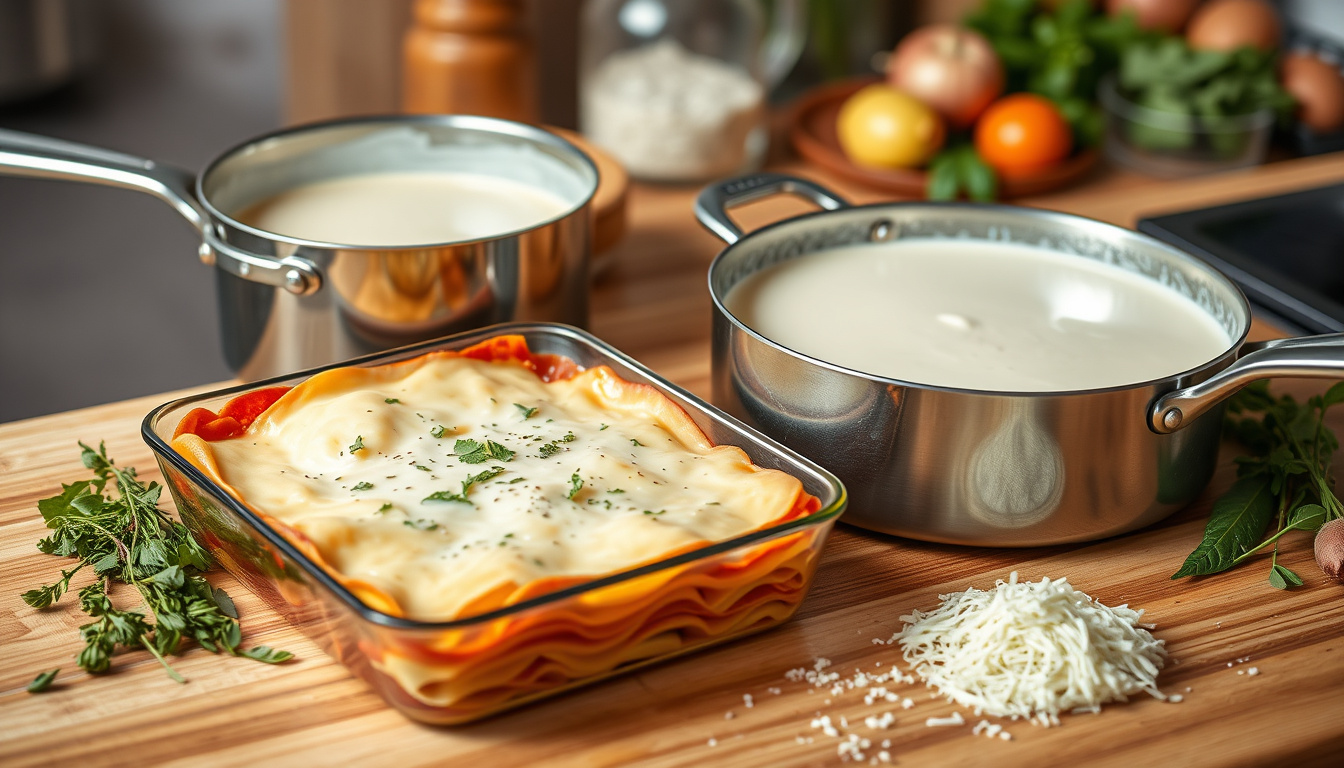
White sauce, known as béchamel, forms the creamy backbone of classic lasagne recipes. This versatile French mother sauce transforms a simple pasta dish into something rich and comforting. Whether you’re following a traditional Italian approach or looking for quick weeknight shortcuts, understanding how to make a proper white sauce opens up endless possibilities for layered pasta bakes.
The beauty of béchamel lies in its simplicity. With just three core ingredients—butter, flour, and milk—you can create a sauce that rivals any restaurant version. Home cooks across the UK have adopted this technique, adapting it with local ingredients and modern time-saving tricks while maintaining the essence of the classic method.
This guide covers everything from the traditional roux-based approach to cheat versions using supermarket ingredients, including specific tips tailored for UK kitchens and the approaches favoured by popular British chefs.
Easy White Sauce for Lasagne
Getting started with white sauce doesn’t require culinary training. The classic method uses equal parts butter and flour to create a roux, which is then gradually thinned with milk. This technique dates back centuries in French cooking and remains the gold standard for lasagne makers worldwide.
Butter, flour, and milk combined using the traditional roux method for authentic results
Single pan method where all ingredients are combined together for minimal washing up
Using ready-made jar sauces or packet mixes as a base for quick assembly
Creamy variation with cheese additions like Cathedral City cheddar
Key Insights for Perfect Results
- The secret to a lump-free sauce lies in adding milk gradually while whisking constantly over medium-low heat
- Never rush the roux stage—cooking the flour in butter for 2 minutes removes the raw taste
- Cold whole milk poured off-heat initially prevents curdling and ensures a smooth texture
- Freshly grated nutmeg adds authentic Italian flavour that pre-ground alternatives cannot match
- Allow the sauce to cool slightly before layering to prevent soggy pasta sheets
- The finished sauce should coat the back of a spoon like runny sour cream
- Storage in the fridge extends usability to 2-3 days, making it ideal for meal prep
| Ingredient | Amount (500ml) | Purpose |
|---|---|---|
| Butter | 50g | Base fat for roux |
| Plain Flour | 50g | Thickening agent |
| Whole Milk | 500ml | Liquid foundation |
| Salt | Pinch | Seasoning |
| White Pepper | Pinch | Subtle heat |
| Fresh Nutmeg | Grated, small amount | Authentic flavour |
Best White Sauce for Lasagne Recipe
The béchamel sauce serves as the backbone of any classic lasagne, providing moisture and richness that balances bold tomato and meat sauces. According to The Clever Carrot, this white sauce creates “the backbone of classic lasagna” with its mild, slightly sweet character that complements rather than overwhelms other flavours.
The Traditional Roux Method
Begin by melting butter in a heavy-bottomed saucepan over medium heat. Once foaming, add the flour and stir continuously for about 2 minutes. This cooking period is essential—it eliminates the raw flour taste and ensures the sauce will have a silky texture rather than a pasty one.
Remove the pan from direct heat and add the cold milk gradually, whisking vigorously to prevent lumps from forming. Return to medium-low heat and continue whisking as the sauce slowly thickens. This gradual approach, recommended by sources including Pasta Evangelists, typically takes 10-20 minutes depending on the quantity being prepared.
Testing for Doneness
The sauce is ready when it coats a wooden spoon thickly enough that you can draw a line through it with your finger. BBC Good Food recommends bringing milk to a boil with aromatics like onion, bay leaves, and cloves for added depth, though this step is optional for a simpler version.
Add cheese such as parmesan or cheddar off the heat, stirring until melted. This creates a rich sauce variant particularly popular in UK-style lasagnes.
White Sauce for Lasagne UK Variations
British home cooks have embraced béchamel while adding their own regional twists. Supermarket staples from chains like Lidl provide affordable options for creating quality white sauces without breaking the household budget.
Budget-Friendly Options at Lidl
Lidl’s own-brand butter costs approximately £1.50 for 250g, plain flour around 50p for a 1.5kg bag, and milk approximately 80p for 2 litres. These pantry basics enable multiple batches of sauce for well under £10 total, according to analysis of current UK supermarket pricing. Their Deluxe range also offers jarred béchamel alternatives that work as a time-saving base when enhanced with fresh roux additions.
Pre-grated cheese varieties, including mozzarella and parmesan-style options, eliminate the need for chopping and melting steps. No-boil lasagne sheets, commonly stocked at Lidl and other UK supermarkets, further streamline the assembly process for busy weeknight dinners.
Quick Assembly Cheats
For a complete lasagne in 30-45 minutes, combine no-boil pasta sheets with pre-made ragu, frozen vegetables, and pre-grated cheese. The layering sequence involves spreading a thin layer of béchamel on the base, followed by pasta sheets, filling, and cheese, repeating this pattern 3-5 times. Baking at 180-200°C until bubbly and golden takes approximately 30 minutes.
Homemade béchamel keeps in the refrigerator for 2-3 days and freezes well for up to three months. Prepare ahead and simply thaw and reheat when needed for stress-free meal planning.
Jamie Oliver and Delia Smith White Sauce for Lasagne
Two of Britain’s most recognisable chefs have shaped how UK home cooks approach white sauce for lasagne. While neither has published an exact “all-in-one” recipe specifically for this purpose, their broader culinary philosophies offer clear guidance.
Jamie Oliver’s Approach
Oliver favours quick preparations using quality ingredients. His 5-ingredient series aligns with the philosophy that simple, full-fat milk and fresh nutmeg can produce restaurant-quality results at home. The emphasis remains on using proper cooking technique rather than relying on processed shortcuts.
Delia Smith’s Technique
Delia Smith stresses the importance of lump-free whisking technique and advocates for UK staples in cheese layers, particularly Cathedral City cheddar alongside mozzarella. Her approach ensures reliability and consistent results even for inexperienced cooks.
Both chefs emphasize using full-fat milk rather than skimmed alternatives. The fat content in whole milk creates the creamy mouthfeel essential to authentic béchamel and prevents the sauce from becoming thin or watery during cooking.
Step-by-Step White Sauce Timeline
Understanding the timing for each stage helps plan lasagne preparation efficiently. The following sequence applies to a standard 500ml batch of béchamel.
- Preparation: Measure all ingredients and ensure milk is cold. Gather whisk and heavy-bottomed pan. (5 minutes)
- Roux base: Melt butter over medium heat, add flour, stir continuously for 2 minutes until golden and cooked through.
- Milk addition: Remove pan from heat, add cold milk gradually while whisking constantly to prevent lumps.
- Thickening: Return to medium-low heat, continue whisking until sauce reaches proper consistency. (10-20 minutes)
- Seasoning: Add salt, pepper, and freshly grated nutmeg to taste. Include cheese if desired.
- Cooling: Allow sauce to cool slightly before using in lasagne layers to prevent pasta becoming soggy.
Total active cooking time typically ranges from 20-30 minutes depending on quantity and pan size. The sauce can be made up to three days ahead and stored refrigerated until needed.
What We Know and What Remains Unclear
Transparency about the limits of available information helps readers understand the reliability of guidance they find online.
| Established Information | Information That Remains Unclear |
|---|---|
| Core ingredients: butter, flour, milk (universally agreed across all sources) | Exact measurements for cheese additions vary significantly between UK and Italian traditions |
| Roux method: cook flour in butter for 1-2 minutes before adding milk | Precise specifications for Jamie Oliver or Delia Smith lasagne recipes have not been published |
| Sauce should coat a spoon thickly when ready | Specific Lidl all-in-one products have not been identified in available sources |
| Fresh nutmeg improves authentic flavour | Regional variations between Northern and Southern UK cooking styles lack documentation |
Understanding Béchamel in Italian Cooking
Béchamel originated in French cuisine as one of the five mother sauces, but Italian cooks adopted and adapted it for their own purposes. In lasagne preparation, the white sauce serves a practical function beyond mere flavour—it creates a protective layer between acidic tomato sauces and the pasta sheets, preventing them from becoming waterlogged during extended baking.
Traditional Italian lasagne alla Bolognese relies on béchamel alongside meat ragù, creating the characteristic rich and layered profile celebrated throughout the Emilia-Romagna region. Northern Italian recipes tend toward creamier sauces, while southern variations sometimes omit dairy entirely in favour of ricotta or mozzarella alone.
The sauce also acts as a flavour carrier, allowing cheese and nutmeg notes to permeate throughout the entire dish rather than remaining concentrated in specific layers. This distribution contributes to the balanced taste that distinguishes properly made lasagne from rushed imitations.
What Cooks Are Saying
“Bring milk to the boil with onion, bay, cloves for depth, then strain before using in the roux.”
— BBC Good Food
“Béchamel is truly the backbone of classic lasagna, providing a mild, sweet base that balances rich meat sauces perfectly.”
— The Clever Carrot
These authoritative voices emphasise that technique matters more than elaborate ingredients. The simplicity of béchamel invites experimentation while rewarding careful attention to fundamentals.
Bringing It All Together
White sauce for lasagne represents one of the most valuable techniques a home cook can master. The classic béchamel requires just three ingredients and basic whisking to produce restaurant-quality results. UK adaptations using affordable supermarket staples make this achievable for any budget, while the approaches championed by familiar chefs like Jamie Oliver and Delia Smith provide reliable frameworks for success.
Whether you follow the traditional roux method exactly or opt for time-saving cheats, understanding the underlying principles helps troubleshoot problems and adapt recipes confidently. The sauce freezes well and can be prepared ahead, making it a practical choice for busy households seeking homemade comfort food without the weekday stress.
Once the technique becomes familiar, exploring variations like spinach and ricotta fillings or white lasagne with different cheese combinations opens up entirely new dimensions of this beloved dish. For more pasta sauce inspiration, discover our guide to Cacio e Pepe Recipe – Authentic Roman Technique or learn about How Long to Boil Chicken Breast – Exact Times and Safety Guide for additional weeknight meal ideas.
Frequently Asked Questions
Can I use béchamel from a jar for lasagne?
Yes, jarred béchamel or creamy pasta sauces from Lidl’s Deluxe range or similar supermarkets work as a shortcut. Enhance the flavour by stirring in fresh butter roux or grated cheese before layering.
What can I substitute for milk in white sauce?
While whole milk produces the creamiest results, plant-based alternatives like oat or almond milk can work. The texture may differ slightly, and using full-fat versions yields the most consistent outcome.
How do I fix lumpy white sauce?
Strain the sauce through a fine mesh sieve, then whisk vigorously over gentle heat. Alternatively, blend with an immersion blender until smooth. Adding milk gradually while whisking prevents lumps from forming in the first place.
Is béchamel necessary for lasagne?
While traditional lasagne benefits from béchamel’s creamy texture and flavour distribution, some recipes substitute ricotta, cream cheese, or additional mozzarella layers instead. The result differs but can still be delicious.
Can I make white sauce without flour?
Gluten-free alternatives like cornstarch or rice flour work as thickeners. Use approximately half the amount of flour specified in recipes, and mix with cold liquid before adding to the butter base to avoid clumping.
Why did my béchamel turn out too thick?
The sauce continues thickening as it cools. If it becomes too firm, whisk in small amounts of warm milk until reaching the desired consistency. Refrigeration accelerates this thickening effect.
How many layers does white sauce go on in lasagne?
Most recipes recommend approximately half a cup of béchamel per layer when building 5 or more layers. Spread thinly on the base to prevent sticking, and more generously between middle and top layers for maximum creaminess.

Madeleine Shaw is Politics & Public Affairs Editor at NewsPrism.co.uk, covering Parliament, government policy, elections and public spending.