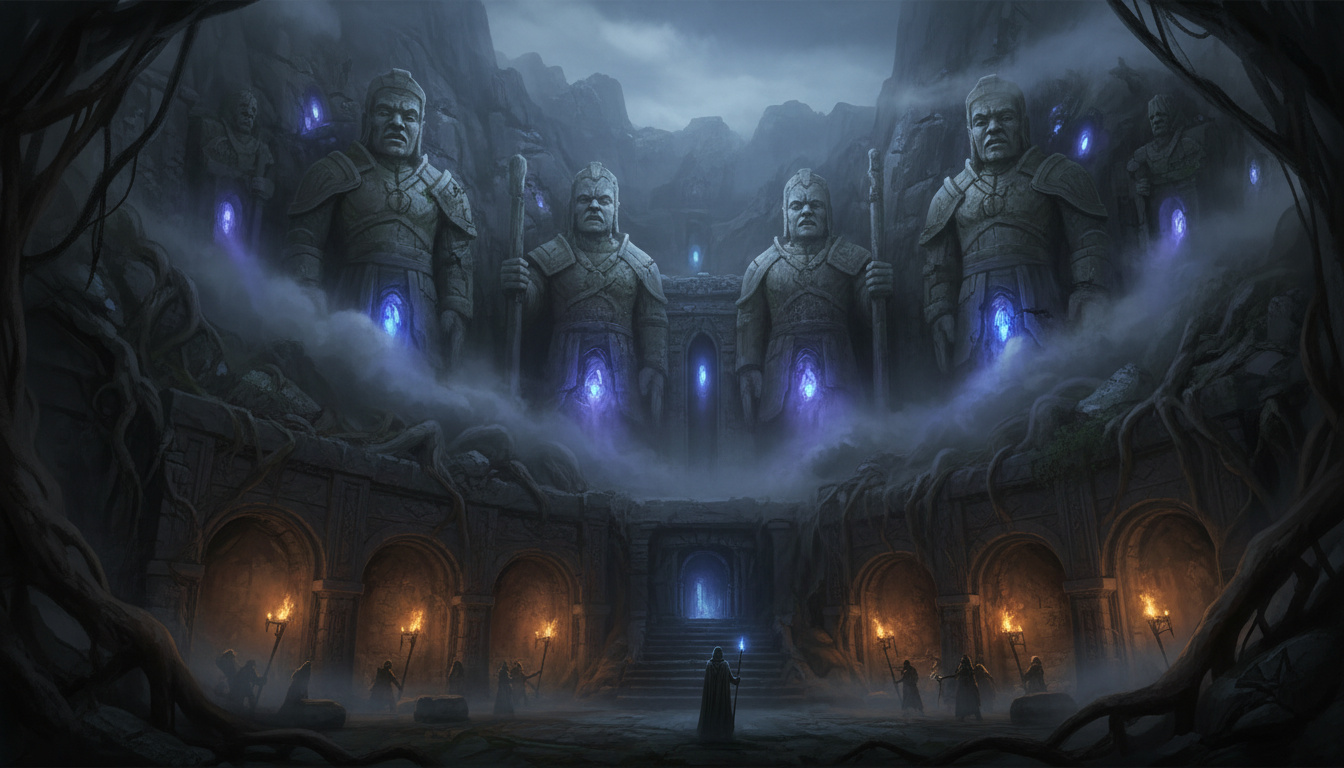

In 1984, Steven Spielberg and George Lucas released a cinematic prequel that would become one of the most divisive entries in the adventure franchise. Indiana Jones and the Temple of Doom plunges audiences into a darker chapter of the archaeologist’s career, set explicitly in 1935, one year before the events of Raiders of the Lost Ark.
The film establishes its tone immediately in Shanghai, where Indiana Jones attempts to exchange the remains of Emperor Nurhaci for a diamond, only to be betrayed by gangster Lao Che. What follows is a relentless descent from a crashed plane in the Himalayas to the depths of an underground temple in India, where a revived Thuggee cult practices human sacrifice and enslaves children to mine for sacred stones.
Despite grossing over $333 million worldwide against a modest $28 million budget, the production sparked significant controversy regarding its graphic violence and cultural portrayals, ultimately prompting the Motion Picture Association to reconsider its rating standards.
What Is the Plot of Indiana Jones and the Temple of Doom?
The narrative opens at the Club Obi Wan nightclub in Shanghai, where archaeologist Indiana Jones meets with crime boss Lao Che to trade the ashes of Emperor Nurhaci for a valuable diamond. When the deal turns deadly, Jones flees with nightclub singer Willie Scott and his young companion Short Round aboard a plane owned by Che. The pilots bail out mid-flight, leaving the trio to escape via an inflatable raft, careening down the snowy slopes of the Himalayas and drifting into a river that carries them to the distressed village of Mayapore in India.
Villagers reveal that the Thuggee cult from nearby Pankot Palace has stolen their sacred Sankara stone—one of five relics given by Hindu gods to combat evil—and has kidnapped their children to work as slaves in subterranean mines. Jones, Willie, and Short Round travel by elephant to the palace, where they are welcomed by the youthful Maharaja Zalim Singh and his prime minister, Chattar Lal. During a banquet featuring questionable cuisine, Jones is attacked by an assassin, leading him to discover secret tunnels beneath the palace where high priest Mola Ram conducts human sacrifices to the goddess Kali.
Captured after attempting to retrieve the stones, Jones is forced to drink the “black blood of Kali Ma,” a potion that brainwashes him into preparing Willie for sacrifice. Short Round escapes the mines, revives Jones through the application of pain using a torch, and the pair rescue Willie, liberate the enslaved children, and flee with the three stolen Sankara stones. The climax unfolds on a rope bridge above a crocodile-infested river, where Jones severs the support ropes, sending most of the cultists plummeting to their deaths. As Mola Ram attempts to retrieve the last stone, Jones invokes Shiva, causing the artifact to glow red-hot, burning the high priest’s hand and sending him falling into the gorge. British Indian Army soldiers arrive shortly after, and the heroes return the recovered stone to Mayapore amid celebration.
| Release Year 1984 |
Director Steven Spielberg |
Runtime 118 minutes |
MPAA Rating PG (precursor to PG-13) |
Key Insights
- Chronologically set in 1935, functioning as a prequel to Raiders of the Lost Ark (1936)
- Distinguished as the darkest and most violent installment of the original trilogy
- Global box office exceeded $333 million, making it the highest-grossing film of 1984
- Earned one Academy Award nomination for Original Score
- Features the franchise’s only inflatable raft escape sequence
- Introduces the recurring characters Willie Scott and Short Round
Production Facts
| Fact | Details |
|---|---|
| Stars | Harrison Ford, Kate Capshaw, Ke Huy Quan |
| Budget | $28 million |
| Setting | 1935 Shanghai and rural India |
| Primary Villain | Mola Ram (portrayed by Amrish Puri) |
| Release Date | May 23, 1984 (United States) |
| Worldwide Gross | $333+ million |
| Original Rating | PG (contributed to creation of PG-13) |
| Music | John Williams |
Where Does Temple of Doom Fit in the Indiana Jones Timeline?
The film occupies a specific chronological position that often confuses viewers familiar with the release order. While it arrived in theaters three years after Raiders of the Lost Ark, its narrative deliberately predates that film’s 1936 setting by one year.
Is Temple of Doom a Prequel to Raiders?
Yes. Wikipedia’s documentation confirms the 1935 setting, establishing this adventure as the earliest chronological entry in the original trilogy. Executive Producer George Lucas intended this placement to explore a younger, more ruthless Indiana Jones, explaining the character’s moral complexity before his redemption arc in Raiders.
The film’s events occur one year before Raiders of the Lost Ark (1936) and two years before The Last Crusade (1938), making it the first adventure in the character’s internal chronology.
Geographic Progression
The narrative moves through distinct environments: the urban corruption of Shanghai, the snow-capped Himalayas, the rural desperation of Mayapore, and finally the subterranean horrors of Pankot Palace. This descent from civilization into primal darkness mirrors the film’s thematic trajectory.
Who Stars in Indiana Jones and the Temple of Doom?
The ensemble combines established Hollywood stars with breakthrough international talent, creating a dynamic that differs significantly from the more solitary heroics of the previous installment.
The Core Trio
Harrison Ford returns as Dr. Henry “Indiana” Jones Jr., portraying the character with notably harder edges than in Raiders. Kate Capshaw appears as Willie Scott, a nightclub singer whose aversion to adventure and insects provides comic relief. Ke Huy Quan (credited as Jonathan Ke Quan) makes his film debut as Short Round, a resourceful 12-year-old sidekick who serves as Jones’s moral compass throughout the narrative.
The Antagonists and Officials
Amrish Puri portrays Mola Ram, the high priest of the Thuggee cult, delivering one of cinema’s most memorable villainous performances. Fandom archives detail the supporting cast: Roshan Seth as the duplicitous Chattar Lal, young Raj Singh as the enthralled Maharaja Zalim Singh, and Philip Stone as the British Captain Blumburtt who arrives with relief forces at the film’s conclusion.
Behind the camera, Steven Spielberg directed, with George Lucas serving as executive producer and story creator. The screenplay was written by Willard Huyck and Gloria Katz, with John Williams composing the Oscar-nominated score.
Why Was Indiana Jones and the Temple of Doom Controversial?
Upon release, the film generated significant outcry from parents and cultural critics, marking a turning point in how the industry classified adventure content. Contemporary Rotten Tomatoes aggregation reflects this polarization—audiences praised the action while critics questioned the tonal appropriateness.
Graphic Violence and Rating Reform
The film’s original PG rating shocked viewers accustomed to the relatively bloodless adventure of Raiders. Scenes depicting Mola Ram manually extracting a victim’s heart during sacrifice, the “black blood of Kali Ma” brainwashing sequence, and the enslavement of children in dangerous mines prompted widespread complaints to the Motion Picture Association of America.
The intensity of the human sacrifice scenes and child peril contributed directly to the MPAA creating the PG-13 rating in July 1984, establishing a new classification for films falling between parental guidance and restricted admission.
Cultural Representation Concerns
Critics, including family advocacy organizations, raised objections regarding the depiction of Indian cuisine (including monkey brains and snakes) and the portrayal of Hindu religious practices through the lens of the villainous Thuggee cult. The presentation of the Maharaja as a helpless puppet to foreign evil and the characterization of village Indians as helpless without Western intervention sparked academic debate regarding Orientalism in 1980s cinema.
The Thuggee cult depicted was a real, historically suppressed criminal organization in colonial India, though the film’s supernatural elements and Kali worship represent fictional embellishments rather than documentary accuracy.
When Was Indiana Jones and the Temple of Doom Released?
The production and release timeline spans several years, marked by significant industry events and technical challenges.
- 1983: Principal photography begins across Sri Lanka, Macau, and Elstree Studios in the UK. Harrison Ford sustains a serious back injury during a fight sequence, requiring him to fly to Los Angeles for surgery and limiting his physical participation in later scenes.
- May 23, 1984: The film premieres in the United States, immediately becoming the highest-grossing release of the year despite mixed critical reception.
- July 1984: Following sustained outcry regarding the film’s intensity, the MPAA officially institutes the PG-13 rating, with Temple of Doom and Gremlins cited as primary catalysts.
- 2008: A comprehensive DVD release includes behind-the-scenes documentation of the raft escape sequence, which utilized a real plane dropping the inflatable device over Arizona.
- 2021: Lucasfilm releases a 4K Ultra HD restoration, scanning the original negative at 4K resolution with HDR color grading for modern displays.
What Facts Are Established Versus What Remains Uncertain?
| Established Information | Unconfirmed or Disputed |
|---|---|
| Directed by Steven Spielberg; produced by George Lucas and Robert Watts | Extent of original screenplay’s darkness before revisions |
| Plot involves Pankot Palace, Thuggee cult, and Sankara stones | Rumors of direct narrative sequels to this specific timeline entry |
| Budget was $28 million; final gross exceeded $333 million | Specific details of alternative endings considered during editing |
| Ford’s back injury required script adjustments during filming | Precise extent of improvised dialogue in Shanghai sequences |
What Is the Cultural Legacy of Temple of Doom?
The film occupies a complicated position within the franchise canon. While its bridge sequence remains an iconic set piece in action cinema history, its cultural depictions have aged poorly by contemporary standards. The movie serves as a bridge between the pulpy optimism of Raiders and the paternal reconciliation themes of The Last Crusade, testing the boundaries of how dark a mass-market adventure could become.
Today, the film is available for streaming on Disney+, positioned as an essential but cautionary viewing experience for modern audiences. In the broader landscape of 1984 cinema, it stands alongside upcoming contemporary releases like Pokemon Legends Za Release Date – Confirmed October 16 on Switch, illustrating the evolution of blockbuster entertainment from practical stunt work to digital animation.
What Have the Filmmakers Said About the Production?
“We went too dark. It was a learning experience about where the line is between excitement and trauma.”
— Steven Spielberg, retrospective interview
“We wanted to make a prequel to explain Indy’s ruthlessness, why he was the way he was in 1936.”
— George Lucas, Lucasfilm archives
These statements, archived in official Lucasfilm production notes, confirm the intentional departure from the first film’s tone, a decision that ultimately expanded the character’s psychological complexity while generating significant audience friction.
Summary and Current Availability
Indiana Jones and the Temple of Doom remains a financially triumphant but culturally complicated entry in the adventure genre, notable for its practical effects innovation, its role in film rating history, and its unflinching descent into supernatural horror. The film is currently available on Disney+ and through various 4K UHD physical media formats. For viewers seeking a comprehensive understanding of the franchise’s evolution, consult the Indiana Jones and the Temple of Doom – Plot, Cast, Controversy Guide.
Frequently Asked Questions
What are the main locations in Temple of Doom?
The narrative spans Shanghai, China; the Himalayan mountains; the village of Mayapore in India; and Pankot Palace with its subterranean temple complex. Detailed location analysis is available through study guides.
Who portrayed the villain Mola Ram?
Amrish Puri played the Thuggee high priest Mola Ram, creating one of cinema’s most recognizable antagonists through his performance of ritualistic menace.
Where was Indiana Jones and the Temple of Doom filmed?
Principal photography occurred in Macau (Shanghai exteriors), Sri Lanka (Mayapore village and river sequences), Kalsangi Fort in India (Pankot Palace), and Elstree Studios in the United Kingdom for interior sets.
How much did the film gross at the box office?
The production grossed over $333 million worldwide against a $28 million budget, making it the highest-grossing film of 1984.
Is the Thuggee cult historically accurate?
The Thuggee were a real criminal group suppressed by British colonial authorities in 19th-century India, though the film’s depiction of Kali worship, human sacrifice, and supernatural powers represents fictional exaggeration.
Who composed the musical score?
John Williams composed the score, earning an Academy Award nomination for his work, which includes the “Slave Children’s Crusade” and ritualistic chant sequences. Official trailers feature excerpts of this composition.

Madeleine Shaw is Politics & Public Affairs Editor at NewsPrism.co.uk, covering Parliament, government policy, elections and public spending.