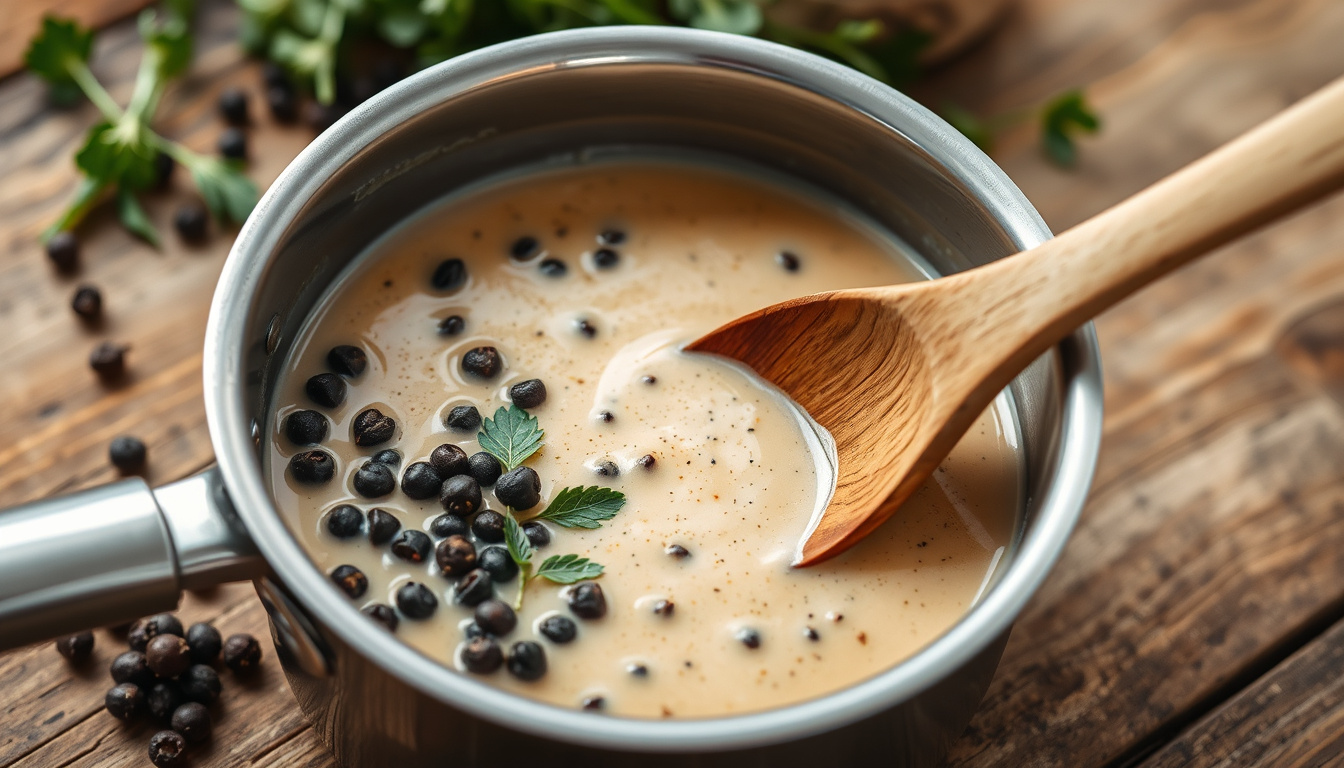
Peppercorn sauce brings a rich, slightly spicy finish to steak dinners without demanding restaurant-level skill. This guide walks through several approaches to making the sauce at home, including versions that skip alcohol and cream entirely. Whether serving a weeknight meal or preparing something special, the technique stays within reach for most home cooks.
At its core, the sauce relies on black peppercorns for flavor, a fat element for richness, and a liquid base to bring everything together. The earliest restaurant versions often called for brandy or wine, with heavy cream providing body. However, everyday kitchens can achieve satisfying results using pantry staples like milk, stock, and a few common seasonings. The approach works equally well over chicken when beef is not on the menu.
How to Make Peppercorn Sauce for Steak
Making peppercorn sauce for steak begins with understanding a few foundational choices. The sauce can be built directly in the pan where the steak rested, capturing rendered fats and savory drippings that would otherwise go to waste. This single step adds considerable depth to the finished sauce.
Key insights for a successful result include crushing peppercorns rather than grinding them finely, which preserves texture and releases aromatic oils. Using the deglazed pan from cooking the meat means the sauce carries a natural meatiness without additional effort. Brandy remains optional in most modern versions, and omitting it still produces a flavorful sauce. Thickening happens through gentle reduction or a light roux, never through excessive flour or cornstarch. Finally, seasoning with salt should happen near the end, after the sauce has reduced enough to evaluate its flavor.
| Ingredient | Quantity | Notes |
|---|---|---|
| Black peppercorns | 1 tbsp (15g) | Crushed, not finely ground |
| Butter | 2–35g | Unsalted preferred |
| Milk | 200ml–1.5 cups | Any variety works |
| Plain flour | 35g | For roux-based versions |
| Chicken stock | 100ml | Or half a stock cube + water |
| Onion or shallot | 1 medium | Finely chopped |
| Worcestershire sauce | 1 tsp | Adds depth, mimics brandy |
| Maggi cube or bouillon | 1 | Optional umami boost |
Easy Peppercorn Sauce Recipe
The simplest approach uses milk as the liquid base, with butter providing richness and a Maggi cube standing in for more complex stocks. This method requires no roux and comes together in roughly ten minutes. It suits beginners and works well when time is limited before dinner is served.
Quick Milk-Based Method
Melt two teaspoons of butter in a medium pan over medium heat. Add one finely chopped onion and cook until softened, about three minutes. Stir in one tablespoon of crushed black peppercorns and cook for one additional minute to bloom the pepper’s flavor. Crumble in one Maggi cube or equivalent bouillon, then pour in one and a half cups of milk. Season with salt to taste. Simmer gently, stirring occasionally, until the sauce reaches a pourable consistency that coats the back of a spoon, roughly five to seven minutes. For the most authentic steakhouse experience, deglaze the steak pan with a splash of water or stock first, then use those drippings as the base for this sauce.
Roux-Based Method for Extra Body
Those preferring a thicker, more restaurant-style result can build the sauce with a quick roux. Melt thirty-five grams of butter in a saucepan, then whisk in thirty-five grams of plain flour. Cook the mixture for about one minute to eliminate the raw flour taste. Gradually add two hundred milliliters of milk while whisking constantly to prevent lumps. Pour in one hundred milliliters of chicken stock, add fifteen grams of crushed peppercorns and a quarter teaspoon of salt, and continue whisking. Let the sauce simmer for five to ten minutes until it reaches the desired thickness. This version holds well on the plate and pairs nicely with gammon as an alternative to beef.
Adding a teaspoon of Worcestershire sauce mimics the depth that brandy or wine provides in traditional recipes, without introducing any alcohol into the dish.
How to Make Peppercorn Sauce Without Alcohol
Traditional peppercorn sauce recipes often call for brandy, wine, or other alcoholic ingredients that are flamed or reduced into the pan. Home cooks who prefer to avoid alcohol can skip this step entirely without compromising the final result. The key lies in finding substitutes that deliver similar flavor complexity.
Worcestershire sauce serves as the most reliable alcohol-free alternative because it contains anchovy-derived glutamates that provide a savory, fermented depth. A single teaspoon stirred into the sauce late in cooking can replicate much of what brandy contributes. Beef or chicken stock concentrated slightly with a stock cube also adds body and savoriness. Some cooks add a small amount of lemon juice to brighten the flavor profile, compensating for the acidity that wine would normally provide.
For those working from classic recipes that call for brandy as an optional addition, omitting it presents no technical challenge. The sauce will still thicken, season, and pour correctly. The trade-off involves slight differences in complexity rather than any absence of core flavor. Recipes explicitly designed without alcohol, such as the Quick Peppercorn Sauce demonstrated in this video tutorial, build their flavor profile entirely from pantry staples.
BBC Good Food’s peppercorn sauce recipe uses brandy, wine, and cream as standard ingredients. For alcohol-free versions, alternative sources offer tested recipes that skip these components entirely while maintaining the signature peppery flavor.
Peppercorn Sauce Variations Without Cream or With Milk
Heavy cream delivers richness but adds significant fat content and can overwhelm more delicate palates. Swapping cream for milk requires minor adjustments to technique, primarily around thickening. Milk-based sauces tend to be thinner initially and may need additional reduction time or a small amount of cornstarch mixed with water to reach the right consistency.
Substituting Milk for Cream
The most straightforward substitution replaces the same volume of cream with milk. Expect a lighter texture and slightly paler color. The sauce will take longer to reduce to serving consistency, sometimes an extra five to ten minutes of gentle simmering. Adding a teaspoon of cornstarch dissolved in a tablespoon of cold water helps the sauce thicken without the silkiness that cream provides.
Adapting Existing Recipes
Many online recipes specify cream but respond well to milk swaps. The Dont Go Bacon My Heart recipe demonstrates how to replace two hundred milliliters of cream with milk plus a cornstarch slurry, keeping the cooking time to around twenty-five minutes. Similarly, the Hint of Helen approach uses two hundred fifty milliliters of milk instead of cream, with a longer simmer to achieve proper thickness. Those seeking dairy-free alternatives can follow the Every Last Bite template, which uses coconut cream as a base and can be adapted with regular milk and additional arrowroot for similar results.
Peppercorn Sauce for Chicken
The sauce adapts readily to chicken without requiring significant modifications. Chicken provides a milder backdrop than beef, meaning the peppercorn flavor becomes more pronounced on the palate. Using the pan juices from roasted or pan-seared chicken gives the sauce a natural affinity with the protein.
Adjusting for Poultry
When preparing peppercorn sauce for chicken, chicken stock works better than beef stock as the liquid base. The flavor profile remains consistent, but the sauce complements rather than competes with the lighter meat. Maggi cubes or chicken-specific stock powder dissolve easily and contribute the same umami boost that beef-based stocks provide in steak versions. The roux method performs particularly well here, as the extra body helps the sauce cling to poultry rather than pooling on the plate.
Resting the cooked chicken and stirring the collected juices into the finished sauce creates continuity between the main course and its accompaniment. This step, standard for steak preparation, proves equally valuable when chicken takes center stage. The result bridges gap between the two proteins, demonstrating the sauce’s flexibility beyond red meat.
How to Make Peppercorn Sauce: Step by Step
Building the sauce in a logical sequence prevents last-minute scrambling and ensures each component develops properly. The following timeline covers the essential stages from prep work through final plating.
- Crush peppercorns using a mortar and pestle or the bottom of a heavy pan. Coarse pieces release flavor better than fine dust.
- Prepare aromatics by finely chopping onion or shallot. Mince garlic if desired for additional depth.
- Melt butter in the pan over medium heat. If cooking meat first, reserve the drippings and use those instead.
- Sauté the onion until translucent, approximately three minutes. Avoid browning, which adds sweetness unintended in this recipe.
- Add crushed peppercorns and stir for one minute to toast them lightly and release their oils.
- For roux-based sauces, whisk in flour and cook for one minute before adding liquid. For direct sauces, proceed to liquid addition.
- Pour in milk, stock, or a combination. Season with salt and optional Worcestershire sauce.
- Simmer gently, stirring frequently, until the sauce reaches coating consistency. This step typically takes five to ten minutes.
- Rest the cooked meat briefly, then stir any resting juices into the sauce before serving.
- Pour the sauce over sliced meat and serve immediately while hot.
What Works and What Remains Unclear
Several elements of peppercorn sauce preparation have solid, tested support across multiple sources. These established techniques provide reliable guidance for most home cooks.
- Crushing peppercorns rather than using pre-ground pepper preserves flavor and texture.
- Worcestershire sauce effectively substitutes for brandy in alcohol-free versions.
- Milk can replace cream with minimal adjustment to cooking time.
- Deglazing the meat pan and incorporating drippings enhances the finished sauce considerably.
Other aspects show more variation depending on the source. Exact pepper quantities remain subjective, with some cooks preferring fifteen grams and others using considerably more for a spicier result. The ideal aging of peppercorns before use is not addressed in most accessible recipes, leaving freshness a matter of trial and error. Specific recommendations for milk fat content also vary, with recipes equally successful using skim, whole, or full-fat milk.
The Role of Peppercorn Sauce in Cooking
Peppercorn sauce traces its lineage to steak au poivre, the French classic that pairs pepper-crusted beef with a pan sauce. Over time, the sauce evolved from a simple reduction into a more elaborate preparation, gaining cream, brandy, and additional seasonings along the way. Modern interpretations often simplify these additions while retaining the essential character of pepper and richness.
The sauce serves multiple functions beyond flavor enhancement. It adds moisture to lean cuts of beef or chicken that might otherwise taste dry. The slightly spicy quality cuts through the fattiness of richer proteins, providing palate cleansing between bites. For home entertainers, having a warm sauce ready transforms a plain grilled steak into something that feels occasion-worthy without requiring advanced technique.
Finding Reliable Peppercorn Sauce Recipes
Professional cooking publications and established food blogs tend to provide the most dependable peppercorn sauce recipes. BBC Good Food offers a traditional version with brandy, wine, and cream as core ingredients. Those resources also maintain a collection of steak sauce recipes for broader inspiration.
Home cooks benefit most from sources that explain technique rather than simply listing ingredients and steps.
— Kitchen Sanctuary recipe structure, 2021
Store-cupboard recipes that rely on pantry staples eliminate shopping barriers and make sauce preparation more spontaneous.
— Charlotte’s Lively Kitchen approach
Key Points to Remember
Peppercorn sauce proves accessible for cooks at any experience level, requiring only basic equipment and common ingredients. Alcohol-free and cream-free versions deliver satisfying results without compromise, using milk and pantry seasonings as substitutes. The technique works equally well over steak, chicken, or gammon, making it a versatile addition to any weekly rotation.
Building flavor through deglazing the meat pan and using Worcestershire sauce compensates for omitted alcohol. Reducing the sauce slowly ensures proper thickness, while resting the meat before slicing allows juices to collect for stirring into the finished sauce. For further exploration of complementary sauces, the Creamy Peppercorn Sauce recipe demonstrates a roux-based approach that produces particularly silky results.
Frequently Asked Questions
How long does peppercorn sauce keep in the refrigerator?
The sauce stores for two to three days in an airtight container. Reheat gently over low heat, adding a splash of milk if it has thickened too much.
Can I make peppercorn sauce ahead of time?
Yes, preparing the sauce up to two days before serving works well. Reheat just before plating and stir in any fresh resting juices from the meat.
What can I use instead of Worcestershire sauce?
Fish sauce provides similar umami depth. Soy sauce or a small amount of anchovy paste also substitute effectively in alcohol-free versions.
Is peppercorn sauce gluten-free?
The basic milk-based version without roux is naturally gluten-free. Roux-based versions contain flour and are not suitable for those avoiding gluten.
How do I make the sauce spicier?
Increase the amount of crushed peppercorns by half or more. Toasting them briefly in the pan before adding liquid intensifies their heat.
Can I use pre-ground black pepper instead of whole peppercorns?
Whole peppercorns crush better and retain flavor longer. Pre-ground pepper lacks the aromatic oils released during crushing and produces a muted result.
What should I serve with peppercorn sauce besides steak?
Mashed potatoes, roasted vegetables, and crusty bread all pair well with the sauce. It also works over scrambled eggs for a breakfast variation.

Madeleine Shaw is Politics & Public Affairs Editor at NewsPrism.co.uk, covering Parliament, government policy, elections and public spending.