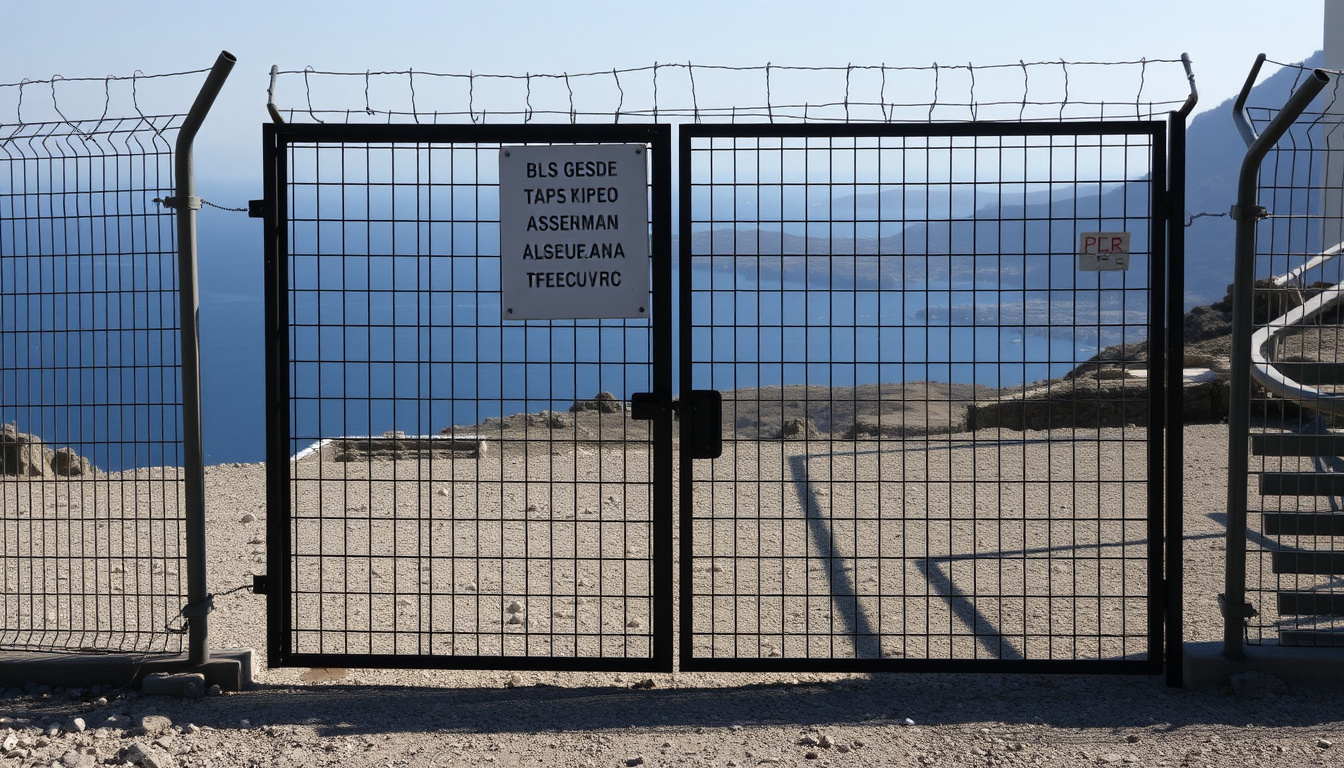
In July 2025, Greece took the unusual step of suspending the right to seek asylum for anyone arriving by boat from North Africa. The measure, focused on the islands of Crete and Gavdos, was a direct response to a surge in migrant crossings from Libya. Over the following weeks, the government approved new detention infrastructure on Crete, while human rights organisations warned that the policy violated international law and put thousands of people at risk of arbitrary detention and forced return.
The three-month suspension, which ran from 14 July to 14 October 2025, effectively closed the asylum route for people reaching Greek shores via the eastern Mediterranean. Migrants were detained automatically and denied the chance to register a protection claim. According to Refugee Support Aegean, around 2,000 people were held in detention during that period, many without access to legal information or basic rights.
The decision drew sharp criticism from the United Nations, the Council of Europe, and a coalition of non-governmental organisations. At the same time, the Greek parliament moved forward with a broader migration bill that included the creation of new reception facilities on Crete and expanded powers to detain and deport.
Why Did Greece Suspend Asylum for Migrants Arriving via Crete?
| What Greece suspended asylum for 3 months for arrivals from North Africa via Crete. |
Why Rising migrant arrivals from Libya; government cited an “invasion” narrative. |
| Where Three new detention centres planned in Crete (one permanent, two temporary). |
When Asylum suspension started July 2025; centres to be built by early 2026. |
- Greece’s asylum suspension marks a significant shift in EU migration policy, reverting to stricter deterrence.
- Crete has become a new hotspot for migrant arrivals from Libya, replacing earlier routes like the Aegean islands.
- The three-month suspension created legal limbo for hundreds of migrants in detention.
- Human rights organisations warned of increased risk of racist violence and inadequate conditions.
- The migration bill of 2025 includes both detention centre construction and expedited deportation procedures.
- Legal aid groups reported that detained individuals were not informed of their rights and could not access the asylum process.
| Fact | Detail |
|---|---|
| Asylum suspension duration | 3 months (July – October 2025) |
| Number of new detention centres in Crete | 3 (1 permanent, 2 temporary) |
| Estimated migrant arrivals to Crete in 2025 | Around 9,000 (as of mid-July 2025, per ECRE) |
| Primary origin of migrants | North Africa (Libya) |
| Official justification | National security and migration management |
| Human rights concerns | Risk of refoulement, arbitrary detention, and lack of individual assessment |
The Greek government’s stated reason for the suspension was operational capacity. Prime Minister Kyriakos Mitsotakis said Greece was “not an open transit route” and argued that the measure would send a strong deterrent signal to smugglers. The law, identified as Article 79 of Law 5218/2025, was passed by parliament on 11 July 2025 and applied specifically to people arriving irregularly by sea from North Africa.
Human rights groups rejected that explanation. Amnesty International called the proposals “shameful” and said they “flagrantly violate international law.” The Council of Europe Commissioner for Human Rights, Michael O’Flaherty, warned that suspending asylum and enabling forced returns would effectively legalise returns to face torture. UNHCR expressed “deep concern” and reiterated that border management must comply with international and European law, as documented in their public statements on the situation.
Where Are the New Migrant Detention Centres in Crete?
Plans evolved from a single facility to multiple sites
Early reports suggested the Greek government planned a single detention facility on Crete. Later reporting, including analysis from the Global Detention Project, indicated those plans had shifted. Instead of one large centre, the government proposed three new temporary registration centres. According to InfoMigrants, the three centres were approved as part of the broader migration bill, with one designated as permanent and two as temporary facilities.
At the time of reporting, the precise locations of the three centres had not been formally confirmed. Local media suggested a former military training site near Heraklion as one possible location, but this remained unverified. The Global Detention Project noted that the format and exact siting of the centres were still under discussion.
What happens inside the centres
According to Refugee Support Aegean, people detained under the suspension were held at existing facilities such as the Amygdaleza Pre-Removal Detention Centre and the Sintiki Special Detention Facility. RSA reported that detainees were not informed of their rights, were not allowed to apply for asylum, and that conditions violated human dignity. The new centres on Crete are expected to operate under a similar framework, though full details of their operational protocols have not been published.
How Many Migrants Are Arriving in Crete and Why Is It Increasing?
Arrival numbers surged in 2025
Crete and the nearby island of Gavdos saw a steep increase in migrant arrivals from Libya starting in early 2025. The European Council on Refugees and Exiles (ECRE) reported that almost 2,000 people arrived on Crete on 6–7 July alone. That brought the total for the year to around 9,000, a figure more than 350% higher than the same period in 2024.
Why Crete became a new frontline
The shift is partly explained by interdiction efforts elsewhere. As patrols intensified in the Aegean Sea, smuggling routes adjusted southward. Libya became a primary departure point, with Crete and Gavdos the nearest Greek landfalls. The Global Detention Project described the two islands as the newest frontline of Greece’s increasingly hardline migration policy.
What Is the Greece Migration Bill 2025 and How Does It Affect Migrants?
A broader legislative package
The asylum suspension was not an isolated measure. On 17 July 2025, the government submitted a legislative proposal on returns that included stricter rules aligned with the EU Return Regulation, criminalisation of irregular entry and stay, and broader detention and deportation powers. The Global Detention Project noted that this package suggested a wider hardline shift in Greek migration policy beyond the three-month suspension.
Amnesty International warned that automatic detention without individual assessment amounts to arbitrary detention and violates EU and international law. HIAS Greece stated that the legislation orders immediate deportation without registration, effectively denying the right to seek asylum. Legal challenges from civil society groups were expected.
Will migrants be deported from Crete?
Under the suspension, yes. The law mandated immediate return for those arriving irregularly from North Africa, without their asylum claims being registered. Refugee Support Aegean reported that 33 individuals from Sudan, South Sudan, Eritrea, Yemen, and Egypt were directly represented by their lawyers during the suspension period, all facing deportation without a protection assessment.
The three-month suspension expired on 14 October 2025. As of the latest reporting, no official decision had been announced regarding an extension. The Global Detention Project noted the possibility that the suspension could be extended. Migrants still in detention at the end of the period would likely have their cases processed, but no formal plan had been published.
Timeline: Key Events Leading to the Asylum Suspension
- Early 2025 – Sharp increase in migrant arrivals to Crete and Gavdos from Libya. (Source: ECRE, Global Detention Project)
- 6–7 July 2025 – Nearly 2,000 people arrive on Crete over two days, bringing the yearly total to around 9,000. (Source: ECRE)
- 11 July 2025 – Greek Parliament votes to suspend asylum for 3 months for arrivals via the eastern Mediterranean. (Source: Article 79 of Law 5218/2025)
- 14 July 2025 – Suspension comes into effect, covering arrivals from North Africa. (Source: Refugee Support Aegean)
- 17 July 2025 – Government submits a legislative proposal on returns with stricter detention and deportation powers. (Source: Global Detention Project)
- 30 July 2025 – BBC reports that the Greek government warned of an “invasion” as the asylum halt took effect. Full report available here.
- Late 2025 – Public consultation and approval of the migration bill including new detention centres on Crete. (Source: InfoMigrants)
- February 2026 – InfoMigrants reports that three new migrant centres are to be built in Crete as part of the migration bill.
What Is Known and What Remains Unclear?
| Established information | Information that remains unclear |
|---|---|
| Greece suspended asylum applications from North African arrivals for 3 months starting July 2025. | Whether the suspension will be extended beyond October 2025. |
| Three new detention centres are planned in Crete. | Exact number of migrants currently detained in Crete is not publicly confirmed. |
| Migrant arrivals from Libya increased sharply in 2025. | Conditions inside the new centres are not yet documented. |
| Around 2,000 people were held in detention during the suspension, per Refugee Support Aegean. | The timeline for construction of the temporary centres is unclear. |
What Broader Context Explains the 2025 Policy Shift?
The 2025 asylum suspension in Greece reflects a broader European trend toward externalising migration control. Crete’s emergence as a new arrival point is partly due to successful interdiction efforts in the Aegean, which pushed smuggling routes further south. The bill’s passage signals a political shift to the right, with a focus on deterrence rather than integration.
Human rights groups argue the policy violates international refugee law, but the Greek government maintains it is a temporary measure to manage capacity. The move also aligns with a wider legislative agenda that includes stricter penalties for irregular entry and expanded return powers. For readers unfamiliar with Crete as a location, the TUI Blue Sensatori Atlantica Caldera Palace – Crete Resort Review offers background on the island’s geography and infrastructure, though it does not cover migration policy.
The Australia Social Media Ban – Rules Timeline Enforcement article provides a thematic parallel as another example of a government implementing a restrictive policy with a defined timeline and enforcement mechanism, though in a completely different context.
What Do Official Sources and Rights Groups Say?
“Greece warns of ‘invasion’ as it halts asylum on Med route.”
— BBC News, July 2025
“Three new migrant centers to be built in Crete as part of migration bill.”
— InfoMigrants, February 2026
“Rise in arrivals on Crete ― Greek Parliament votes to suspend asylum ― increasingly hostile discourse about people on the move in Greece ― more deportations from.”
— ECRE, July 2025
The Amnesty International report on Greece for 2025 provides further details on the organisation’s legal concerns, while the Greek Ministry of Migration & Asylum publishes official policy documents on its website.
Summary: What Does the 2025 Asylum Suspension Mean for Greece and Migrants?
The 2025 Greek response to the Libya-Crete migration route centred on a temporary but sweeping asylum suspension, immediate detention, and planned new reception infrastructure on Crete. Human rights organisations broadly argued that the policy violated international and EU law, placing thousands at risk of refoulement and arbitrary detention. The coming months will show whether the suspension is extended, how the new centres operate, and whether legal challenges reshape the policy. For a broader look at how governments implement restrictive measures with defined timelines, the Australia Social Media Ban – Rules Timeline Enforcement article offers a useful comparison.
Frequently Asked Questions
Can migrants still apply for asylum in other parts of Greece?
The suspension applies specifically to arrivals via the eastern Mediterranean route, primarily from North Africa. Other routes may still be processed, but the overall policy is restrictive.
What happens to migrants who are already in detention when the suspension ends?
Their cases will likely be processed after the three-month period, but no official plan has been announced.
Are children and families affected?
The suspension does not exempt vulnerable groups; however, Greece is obligated under EU law to consider the best interests of the child.
How does this compare to Turkey’s 2020 asylum policy?
Turkey similarly suspended asylum for certain arrivals; Greece’s move is seen as a hardening of its stance.
What is the role of Frontex?
Frontex is involved in patrolling the Mediterranean and may support returns, but its exact role in Crete is not specified.
How long did the asylum suspension last?
The suspension ran for three months, from 14 July to 14 October 2025, as confirmed by Refugee Support Aegean.
Where were detained migrants held?
Detainees were held at the Amygdaleza Pre-Removal Detention Centre and the Sintiki Special Detention Facility, according to Refugee Support Aegean.
How many migrants arrived in Crete in 2025?
ECRE reported around 9,000 arrivals by mid-July 2025, more than 350% higher than the same period in 2024.

Amelia Grant is Technology & Media Editor at NewsPrism.co.uk, covering AI, platforms, cybersecurity, consumer tech and the media landscape.