Mount Olympus: The Legendary Peak of Greece
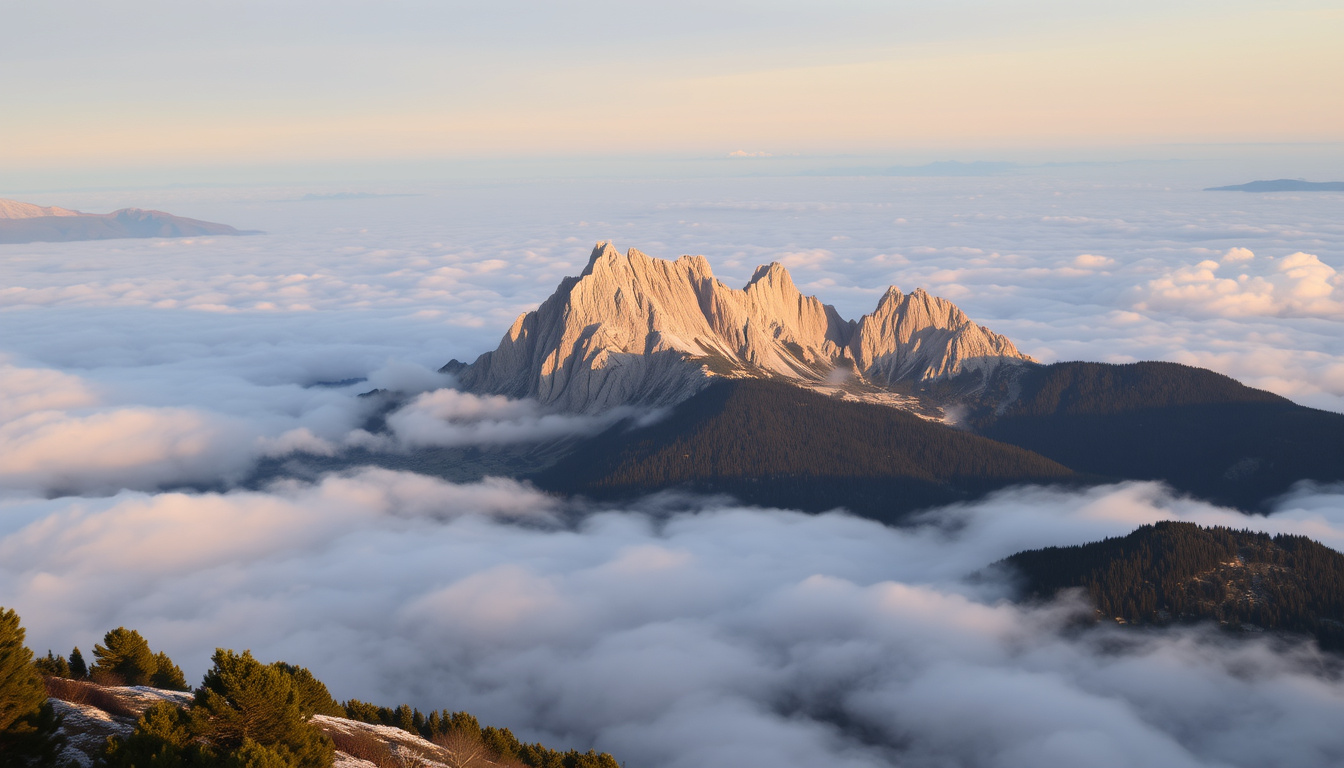
Mount Olympus stands as both a physical mountain and a symbol that has shaped Western culture for millennia. As Greece’s highest peak, it rises dramatically between Thessaly and Macedonia, its summit often wrapped in clouds that once fueled the belief that gods dwelled there. Today, the mountain draws hikers, history enthusiasts, and travelers curious about the place where mythology and geography intersect.
The mountain is not merely a relic of ancient stories. It is a living landscape with 52 distinct peaks, deep gorges, and a rich ecosystem protected as a UNESCO Biosphere Reserve. Its highest summit, Mytikas, reaches 2,917.7 meters (9,570 feet), a height that makes it a serious but achievable objective for experienced trekkers.
What makes Mount Olympus unusual is its dual identity. It is a real place you can visit, climb, and explore. At the same time, it remains the mythical home of the Twelve Olympians, the gods who ruled from Zeus’s throne at the top of the world. This blend of fact and legend gives the mountain a resonance that few other peaks can match.
What is the height and location of Mount Olympus?
2,917.7 m (9,570 ft)
Thessaly, Greece
Home of the 12 Olympian gods
Trek available (moderate to hard)
Mount Olympus lies on the border between Thessaly and Macedonia in northern Greece, according to Greek mythology sources and geographical records. The mountain massif covers roughly 500 square kilometers and is accessible from the town of Litochoro, which serves as the main gateway for climbers.
The height of Mount Olympus has been measured more precisely in recent years. A 2023 GPS survey refined the elevation of Mytikas, the highest peak, to 2,917.727 meters. Earlier measurements placed it at 2,917 meters, and some older sources cite 2,918 meters. The variation is small, but the official figure now stands at 2,917.7 meters above sea level, as noted by Wikipedia.
The mountain has 52 distinct peaks in total. The three main summits are Mytikas (the highest), Stefani, and Skolio. Mytikas means “nose” in Greek, a name that reflects its sharp, prominent shape. Stefani, meaning “crown,” is the second-highest peak.
Key insights about Mount Olympus
- Mount Olympus is the highest point in Greece, but the tallest peak in the solar system (Olympus Mons) shares its name.
- Despite being a sacred site in antiquity, climbing the mountain was likely forbidden to ordinary mortals in ancient times.
- The mountain has 52 distinct peaks, with Mytikas being the highest at 2,917.727 meters (exact elevation refined in 2023).
- Hiking season runs from June to September, but experienced climbers can attempt early autumn or late spring.
- The mountain is a UNESCO Biosphere Reserve, protecting its unique alpine ecosystem and biodiversity.
- First recorded ascent of Mytikas was in 1913 by Christos Kakkalos and Swiss guides.
- Ancient Greeks imagined Olympus as a divine, mist-shrouded realm beyond ordinary human access.
Fast facts about Mount Olympus
| Fact | Detail |
|---|---|
| Official Height | 2,917.727 m (9,570 ft) |
| First Recorded Ascent | 1913 (by Christos Kakkalos and Swiss guides) |
| Number of Peaks | 52 |
| Main Summits | Mytikas, Stefani, Skolio |
| Protected Status | UNESCO Biosphere Reserve (since 1981) |
| Mythological Significance | Home of Zeus, Hera, Athena, Apollo, etc. |
| Mars Counterpart | Olympus Mons – 21.9 km high |
What is Mount Olympus in Greek mythology?
In ancient Greek religion, Mount Olympus was the divine realm where the gods lived. It was not simply a mountain; it was a celestial palace above the clouds, inaccessible to mortals. The ancient Greeks believed that Zeus, the king of the gods, ruled from the highest peak, and the other major deities gathered there to observe and influence human affairs, as described in Britannica.
The role of Mount Olympus in ancient Greek religion
Olympus served as the meeting place of the gods after their victory over the Titans in the Titanomachy. It was imagined as a place of eternal spring, golden palaces, and divine feasts. The mountain was so sacred that ordinary people were not supposed to approach it. According to study.com, the ancient Greeks viewed Olympus as a separate, elevated realm beyond ordinary human reach.
Major gods associated with Olympus
The commonly listed Olympians include Zeus, Hera, Poseidon, Demeter, Hestia or Dionysus, Athena, Apollo, Artemis, Ares, Aphrodite, Hephaestus, and Hermes. These Twelve Olympians formed the core pantheon of Greek mythology, and their interactions and conflicts drove many of the most famous myths. Each god had a distinct domain, from the sea to wisdom to war.
Mythological vs. real mountain – clarifying the connection
Some sources note that the mythological Olympus was not always treated as strictly identical to the physical mountain. Over time, the concept of Olympus evolved into a more general heavenly realm beyond the actual peaks. Yet the physical mountain remains a major hiking destination, making Olympus a rare case where myth and geography overlap in a tangible way. Aegean Outdoors notes that the mountain’s dramatic, cloud-covered summit naturally inspired the idea of a divine dwelling.
Ancient Greeks imagined Olympus as a divine, mist-shrouded elevation beyond ordinary human access. Zeus was believed to rule from its highest peak, and the mountain served as the court of the gods where they observed mortal affairs. This belief persisted for centuries and shaped Greek religious practice.
Can you climb Mount Olympus? A complete hiking guide
Yes, Mount Olympus is open to hikers and is one of the most popular trekking destinations in Greece. The mountain offers several routes, with the most common starting from the town of Litochoro. The climb to Mytikas is demanding but achievable for fit hikers with some experience.
Climbing routes and trail options
The standard route begins at the Prionia trailhead, at about 1,100 meters elevation. From there, hikers ascend to the Refuge A (Spilios Agapitos) at 2,100 meters, where most spend the night. The summit push to Mytikas starts early the next morning and takes about three to four hours. The total climb from Prionia to Mytikas and back to the refuge typically takes 7 hours up and 4 hours down, according to hike reports.
Difficulty and fitness requirements
The trek is rated moderate to challenging. The terrain includes steep sections, rocky scrambles, and some exposed ridges near the summit. Hikers need good cardiovascular fitness, basic scrambling skills, and proper footwear. The final section to Mytikas involves a narrow ridge with some exposure, which can be intimidating for those afraid of heights.
Guided tours vs. independent climbing
Guides are not mandatory, but they are recommended for first-time climbers or those unfamiliar with mountain navigation. Several local companies offer guided tours that include transport, accommodation in refuges, and experienced leadership. Independent climbing is possible for those with route-finding experience and proper equipment.
Best season and weather considerations
The ideal climbing season runs from June to September, when weather is stable and refuges are open. Late spring (May) and early autumn (October) can be attempted by experienced climbers but carry higher risk of snow, ice, and sudden storms. Winter climbing requires technical mountaineering skills and equipment. For current conditions, check Mountain Forecast before your trip.
Refuges (huts) and camping
Two main refuges operate on the mountain: Refuge A (Spilios Agapitos) at 2,100 meters and Refuge B (Christos Kakkalos) at 2,700 meters. Both offer dormitory-style accommodation, meals, and water. Camping is allowed only in designated areas, and open fires are prohibited. Reservations are recommended during peak season.
What is Mount Olympus Mars and how does it compare?
The strongest connection between Mount Olympus and Mars is symbolic rather than geographical. Mount Olympus on Earth was described by ancient Greeks as a place so high, remote, and cloud-covered that it felt like a separate world. Mars, in modern astronomy, is the distant “other world” that scientists explore. The shared theme is one of unreachable height and distance.
Olympus Mons: the largest volcano in the solar system
Olympus Mons is a massive shield volcano on Mars, standing about 21.9 kilometers (13.6 miles) high. That makes it nearly three times the height of Everest and more than seven times the height of Earth’s Mount Olympus. It is the largest volcano in the solar system, with a base diameter of roughly 600 kilometers.
Naming history – connection to Greek mythology
The name Olympus Mons was chosen by astronomers in the 19th century, following the tradition of naming Martian features after classical mythology. The choice reflects the enduring influence of Greek mythology on astronomy. The mountain on Mars was named after the mythical dwelling of the gods, not directly after the Greek peak, though the two are now linked in popular imagination.
Comparison of heights (Earth vs. Mars)
Earth’s Mount Olympus rises 2.9 kilometers above sea level. Olympus Mons rises 21.9 kilometers above the Martian datum. The difference is enormous: Olympus Mons is roughly 7.5 times taller. However, Earth’s Olympus has the advantage of being accessible to hikers, while no human has ever set foot on the Martian volcano.
Olympus Mons on Mars was named after the mythical mountain of the Greek gods, not directly after the physical peak in Greece. The naming reflects the long tradition of using classical mythology for celestial features. Both mountains, in their own ways, represent extremes of height and remoteness.
Misconceptions about the name
A common misconception is that “Mount Olympus” on Mars is the same as the Greek mountain. In fact, the Martian feature is officially called Olympus Mons, and the two are entirely separate. The shared name is a tribute to Greek mythology, not a geographical link. The only real connection is the symbolic one: both represent a kind of unreachable height or distance.
What do I need to know before visiting Mount Olympus?
Getting to the mountain
The most common access point is the town of Litochoro, located about 90 minutes from Thessaloniki and 5 hours from Athens by car. Buses run from both cities to Litochoro. From the town, a paved road leads to the Prionia trailhead, where the main hiking route begins. Taxis and local shuttles are available.
Park permits and regulations
No permit is required for day hikes on Mount Olympus. Overnight stays in the refuges require a reservation, and camping is allowed only in designated zones. The area is a national park and UNESCO Biosphere Reserve, so visitors must follow Leave No Trace principles. Fires are strictly prohibited, and all rubbish must be carried out.
Packing essentials for a hike
Essential gear includes sturdy hiking boots, warm layers (even in summer), rain gear, a headlamp, plenty of water, snacks, and sun protection. The summit can be cold and windy year-round, so a windproof jacket is critical. Trekking poles are helpful for the steep descent.
Nearby accommodation and facilities
Litochoro offers a range of hotels, guesthouses, and restaurants. The mountain refuges provide basic dormitory accommodation and meals. For those who prefer more comfort, the nearby town of Dion has additional options and is also home to important archaeological sites related to the worship of Zeus.
How has Mount Olympus been explored and protected over time?
- c. 8th century BC — Homer writes about Mount Olympus in the Iliad and Odyssey, establishing it as the home of the gods in Greek literature.
- 1913 — First recorded ascent of Mytikas peak by Christos Kakkalos, a Greek mountain guide, along with Swiss climbers Frédéric Boissonnas and Daniel Baud-Bovy.
- 1938 — Mount Olympus is declared a National Park, one of the first in Greece, protecting its unique flora and fauna.
- 1981 — The mountain is designated a UNESCO Biosphere Reserve, recognizing its ecological and cultural significance.
- 2023 — Precise elevation of Mytikas is remeasured via GPS, yielding 2,917.727 meters.
- 2025 — The mountain continues to grow in popularity as a hiking destination, with increasing numbers of international visitors.
What is known and what remains uncertain about Mount Olympus?
| Established Information | Information That Remains Unclear |
|---|---|
| Mount Olympus is the highest mountain in Greece (2,917.7 m). | The exact spot of the mythological palace of the gods is unknown and likely metaphorical. |
| It is the legendary home of the Greek pantheon, especially the Twelve Olympians. | Ancient rituals performed on the mountain are not fully documented. |
| The mountain is accessible to hikers via multiple well-marked trails. | Some historical claims about early ascents (before 1913) are disputed. |
Why does Mount Olympus matter beyond its geography?
Mount Olympus serves as a bridge between mythology, history, and adventure tourism. It is one of the few places on Earth where a physical landscape still carries the weight of ancient belief. The naming of Olympus Mons on Mars shows the enduring influence of Greek mythology on astronomy and exploration. The mountain continues to inspire writers, artists, and travelers.
Climate change and increased tourism are impacting the ecosystem. Conservation efforts are ongoing, and the UNESCO Biosphere Reserve designation helps protect the area’s biodiversity. The mountain’s future as both a natural and cultural landmark depends on sustainable management and visitor responsibility.
What do authoritative sources say about Mount Olympus?
“Mount Olympus is the highest peak in Greece, and was considered the home of the gods in ancient Greek religion.”
— Britannica
“Olympus has 52 peaks and deep gorges. The highest peak, Mytikas, means ‘nose’ in Greek.”
— Wikipedia
“The climb takes roughly 7 hours up and 4 hours down, with stunning views of the Aegean Sea.”
— The Best Viewpoints
What should you remember about Mount Olympus?
Mount Olympus is a rare convergence of myth and reality. It is Greece’s highest peak, a UNESCO Biosphere Reserve, and the legendary home of the Twelve Olympians. Whether you are drawn by the challenge of hiking Mount Olympus or the pull of ancient stories, the mountain offers an experience that connects the physical world to the imagination. Plan your visit carefully, respect the environment, and take time to appreciate the landscape that inspired centuries of myth.
Frequently asked questions about Mount Olympus
What is the best time to climb Mount Olympus?
The ideal climbing season is June to September. Weather is stable, and refuges are open.
Do I need a guide to climb Mount Olympus?
It is not mandatory, but recommended for inexperienced hikers. Trails are well-marked but strenuous.
How difficult is the Mount Olympus hike?
Moderate to challenging. Requires good fitness and some scrambling near the summit.
Is Mount Olympus open all year?
Yes, but winter conditions (snow, ice) make it dangerous. Only experienced mountaineers should attempt in winter.
What is the difference between Mount Olympus and Olympus Mons?
Mount Olympus is on Earth (2.9 km high). Olympus Mons is on Mars (21.9 km high, largest volcano in solar system). Both named after the mythical mountain.
How many peaks does Mount Olympus have?
The mountain has 52 distinct peaks, with Mytikas being the highest at 2,917.7 meters.
Where is Mount Olympus located?
It lies on the border between Thessaly and Macedonia in northern Greece, near the town of Litochoro.
What is Mytikas?
Mytikas is the highest summit of Mount Olympus, reaching 2,917.7 meters. The name means “nose” in Greek.
Can beginners climb Mount Olympus?
Beginners with good fitness can attempt the climb, but a guide is strongly recommended. The final section involves scrambling.
What equipment do I need to climb Mount Olympus?
Sturdy hiking boots, warm layers, rain gear, headlamp, water, snacks, and sun protection. Trekking poles are helpful.

George Bennett is Senior Reporter at NewsPrism.co.uk, covering breaking news and general UK stories.