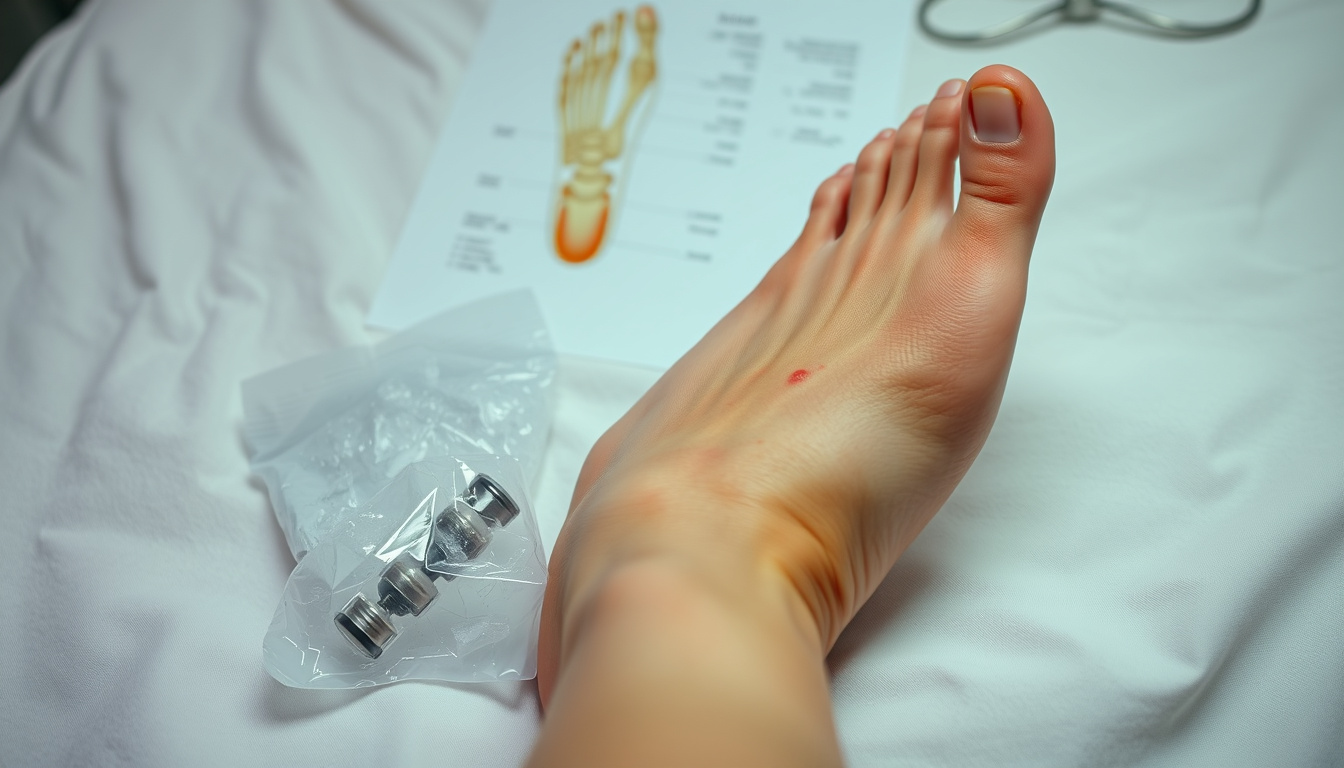
A sudden sharp pain on the top of the foot can stop anyone mid-step. Whether it appears during a morning run or while resting on the couch, the sensation is unsettling—especially when no obvious injury explains it. The top of the foot is a complex structure of tendons, bones, nerves, and joints, and pain in this area can stem from several distinct causes. Understanding what might be happening is the first step toward finding relief.
For many people, pain on the top of the foot resolves with simple home care. But persistent or worsening symptoms require medical attention. This article examines the most common causes—from extensor tendonitis to stress fractures, gout, and nerve entrapment—and explains how clinicians distinguish between them. The goal is to provide clear, actionable information grounded in medical sources.
Why does the top of my foot hurt all of a sudden?
Sudden pain without a clear injury often points to one of four underlying issues. The table below summarizes the main possibilities, their typical features, and what to do next.
Most common cause: extensor tendonitis from running, kicking, or tight shoes.
Repetitive force – especially in metatarsals or navicular bone. Pain worsens with activity.
Sudden, intense pain often at night; bump may appear red and hot.
Sharp, electric-like pain that comes and goes; may feel like a bruise.
Clinical experience and medical literature emphasize that top-of-foot pain is rarely due to a single cause. Accurate self-diagnosis is difficult without a physical exam. The following insights reflect current understanding from sources such as the NHS, Hospital for Special Surgery, and Healthline.
- Sudden pain without injury often points to gout or a stress fracture, not simple overuse.
- A visible bump on top of the foot may be a ganglion cyst or bone spur, but can also indicate tendonitis or a gout tophus.
- Rest and ice are first-line treatments, but persistent or worsening pain requires imaging such as X-ray or MRI.
- Extensor tendonitis typically responds well to footwear changes and activity modification.
- Nerve-related pain often presents with burning or tingling, which can help distinguish it from other causes.
- Gout flares can mimic infection — redness, warmth, and severe tenderness are hallmark signs.
| Attribute | Details |
|---|---|
| Common causes | Extensor tendonitis, stress fracture, gout, nerve entrapment, osteoarthritis |
| Typical onset | Gradual (overuse) or sudden (gout, fracture) |
| Pain quality | Sharp, aching, burning, or bruise-like |
| Aggravating factors | Walking, running, tight shoes, bending foot upward |
| Self-care duration | 3–7 days; seek care if no improvement |
Sudden foot pain without injury: what could it be?
When pain appears without a fall, twist, or impact, clinicians consider conditions that do not require trauma. Gout is a classic example: a crystal arthritis that can strike the foot with intense pain, often at night. Healthline notes that gout classically affects the big toe joint, but it can involve other parts of the foot, including the top. Rapid onset, redness, warmth, and previous gout history are important clues.
Another possibility is a stress fracture, which develops from repetitive loading rather than a single event. According to the Mayo Clinic, stress fractures are small cracks in bone that cause localized pain during weight-bearing activities. Runners, dancers, and military recruits face higher risk. For a deeper look at symptoms that appear without a clear trigger, see this guide on sudden sharp pain on top of foot without injury.
Nerve entrapment can also produce sudden symptoms, particularly when tight footwear compresses the superficial peroneal or sural nerves. The pain may feel sharp, electric, or burning and can radiate across the top of the foot.
Sharp pain on top of foot when resting: causes and implications
Pain that persists even when the foot is not bearing weight suggests an inflammatory or neurological process. Gout flares often hurt at rest, and the affected area may be exquisitely tender to the lightest touch. Tendonitis, while typically aggravated by movement, can also cause discomfort at rest if inflammation is significant.
Less commonly, pain at rest can indicate a more serious condition such as avascular necrosis or a bone infection. These are rare but underscore why persistent rest pain merits a medical evaluation.
Sharp pain on top of foot when walking: common causes
Walking places significant load on the bones, tendons, and nerves of the foot. When sharp pain occurs specifically during walking, the list of likely causes narrows. Extensor tendonitis, stress fractures, and certain nerve entrapments all tend to worsen with activity.
Sharp pain that comes and goes: intermittent conditions
Intermittent sharp pain often points to nerve entrapment or early tendonitis. The pain may appear during certain movements—such as pointing the toes upward—and disappear when the foot is relaxed. According to research from Precision Orthopaedic and Healthline, nerve irritation can produce symptoms that flare with shoe pressure or swelling and then subside.
Extensor tendonitis also tends to be intermittent initially. It often starts as a mild ache during running or walking and progresses to sharper pain if activity continues without adjustment. Tight shoelaces are a common aggravating factor.
Pain on top of foot that feels like a bruise without visible injury
A deep, bruise-like sensation without discoloration is a classic description of a stress fracture. The Hospital for Special Surgery notes that stress fractures of the metatarsal or navicular bone produce focal pain that intensifies with impact and improves with rest. Point tenderness over a specific bone is a key finding during a physical exam. The American Academy of Orthopaedic Surgeons also emphasizes that these injuries require prompt diagnosis to prevent progression.
Extensor tendonitis can sometimes feel like a bruise if the tendons are significantly irritated, but the pain is usually more diffuse and linked to movement rather than weight-bearing alone.
What does a bump on top of foot mean?
A visible or palpable bump on the top of the foot understandably raises concern. Research indicates that several conditions can produce a lump in this area, and the combination of pain and a bump requires careful evaluation.
Pain on top of foot bump: possible causes
Swelling from tendon irritation—especially extensor tendonitis—can create a visible fullness on the top of the foot. A ganglion cyst, which is a benign fluid-filled sac arising from a joint or tendon sheath, is another common cause. Bone spurs, or bony prominences related to osteoarthritis, can also be felt as a hard lump.
Gout tophi—deposits of urate crystals under the skin—are less common but possible in people with chronic gout. In rare instances, a bump may be related to fracture-related swelling or, more seriously, to infection. The rule among podiatrists is that a bump with sharp pain warrants imaging to rule out fracture or other structural issues.
Without imaging, it is not possible to rule out a stress fracture or avascular necrosis. A bump on top of the foot can be benign—such as a ganglion cyst—or indicate something more serious. Self-diagnosis is not reliable in this scenario.
How to get rid of pain on top of foot
Treatment depends on the underlying cause, but several self-care measures are common across most conditions. The goal is to reduce inflammation, relieve pressure, and allow tissues to heal. If symptoms do not improve within a week, medical evaluation becomes important.
Immediate self-care steps
The RICE protocol—rest, ice, compression, elevation—is a widely recommended starting point. Rest involves reducing or stopping the activity that causes pain. Ice applied for 15–20 minutes several times a day can help control inflammation. Elevation reduces swelling, and supportive shoes with looser laces can relieve direct pressure on the top of the foot.
Over-the-counter NSAIDs, such as ibuprofen, may help if safe for the individual. Stretching the calf muscles and foot muscles can also be beneficial, particularly for tendonitis. The NHS advises avoiding tight laces and choosing footwear with a wide toe box.
Pain worse with walking, better with rest, and very focal → more suspicious for stress fracture. Pain from shoe pressure or toe motion, with tenderness on top of foot → more likely extensor tendonitis. Sudden intense pain with redness, swelling, warmth → consider gout. Burning, tingling, or numbness, worse with tight shoes → suggests nerve entrapment.
When to see a doctor for top of foot pain
Medical attention is advisable if pain is severe or worsening, if there is visible swelling, redness, or warmth, or if bearing weight becomes impossible. Numbness, tingling, or symptoms that persist beyond a few days or keep recurring also warrant a professional visit. People with diabetes, poor circulation, or neuropathy should seek care earlier.
A clinician will typically perform a history and physical exam, including palpation for localized tenderness and range-of-motion testing. Imaging may include X-ray, which is often the first test, though stress fractures may not show early. MRI is useful for detecting stress fractures and soft tissue injuries, while ultrasound can help evaluate tendons. Blood tests and gout evaluation may be ordered if the clinical picture suggests crystal arthritis.
Get evaluated promptly if you cannot bear weight, if pain is very focal over a bone, if numbness or tingling is present, if symptoms persist more than a few days despite home care, or if you have diabetes, poor circulation, or neuropathy. Continuing impact activity with a possible stress fracture can worsen the injury.
How does top of foot pain progress over time?
The timeline from symptom onset to recovery varies by cause. The following phases represent a typical progression and serve as a general reference. Individual experiences may differ.
- Day 1–2: Sudden pain appears. Begin rest, ice, and elevation. Note any swelling or bruising. Avoid tight footwear and reduce activity.
- Day 3–7: Pain persists despite home care. Consider over-the-counter anti-inflammatories if safe for you. Monitor for redness, warmth, or worsening symptoms.
- Day 7+: No improvement. Schedule a visit with a podiatrist or orthopedist. Imaging such as X-ray or MRI may be needed to clarify the diagnosis.
- Recovery (4–12 weeks): Follow the prescribed treatment plan—this may include a walking boot, orthotics, physical therapy, or activity restriction depending on the cause.
Which symptoms are most reliable for diagnosis?
Certain symptom patterns are strong indicators of specific conditions, while others leave room for uncertainty. The table below clarifies what clinicians consider more and less certain when evaluating top-of-foot pain.
| Condition | Reliable indicators | Remaining uncertainty |
|---|---|---|
| Extensor tendonitis | Pain on top of foot, worsens with bending toes upward, no swelling | Can overlap with early stress fracture; imaging may be needed |
| Stress fracture | Focal pain at a specific bone point, worse with weight-bearing | X-ray may not show fracture early; MRI is more sensitive |
| Gout | Sudden onset, redness, heat, severe tenderness, prior gout history | Lab or joint evaluation needed if diagnosis is uncertain |
| Nerve entrapment | Burning, tingling, numbness, electric pain, worse with shoe pressure | May mimic other conditions; nerve testing can confirm |
Why does top of foot pain develop?
The extensor tendons run along the top of the foot and are susceptible to friction from tight shoelaces or repetitive dorsiflexion—the motion of bending the foot upward. This biomechanical vulnerability explains why extensor tendonitis is the most common cause of top-of-foot pain in active individuals.
Stress fractures occur when the metatarsal bones receive repetitive loading without adequate rest. The navicular bone, located near the ankle, is another common site. Demographic factors also play a role: runners, dancers, and military recruits are at higher risk for stress fractures, while people with diabetes or gout are prone to specific forms of foot pain that require targeted management.
What do medical authorities say about top of foot pain?
Several reputable health organizations provide guidance on this condition. Their insights help frame the clinical picture and reinforce the importance of accurate diagnosis.
“Pain in the top of your foot is often caused by exercising, especially if it involves running, kicking or jumping.”
— NHS
“Pain at the top of the foot near the ankle may be due to a stress fracture of the navicular bone.”
“Top-of-the-foot pain typically results from extensor tendonitis but can also occur due to nerve damage.”
The American Podiatric Medical Association also provides resources on foot health conditions, emphasizing the value of professional assessment for persistent or severe symptoms.
What should you take away from this guide?
Pain on the top of the foot can arise from several distinct causes, and the right treatment depends on identifying the underlying issue. If pain is mild and recent, the RICE protocol and footwear adjustments are reasonable first steps. Monitor for red flags such as severe swelling, inability to bear weight, or fever. If symptoms persist beyond one week, scheduling an appointment with a podiatrist and considering imaging can help rule out a stress fracture or other structural problem. For a deeper look at related symptoms, see this guide on sudden sharp pain on top of foot without injury.
Frequently asked questions about top of foot pain
Can tight shoes cause pain on top of foot?
Yes, tight shoelaces or poorly fitting shoes can compress the extensor tendons and lead to pain on top of the foot.
Is top of foot pain a sign of a fracture?
It can be, especially if the pain is pinpoint and worsens with weight-bearing. A stress fracture is a common cause in active individuals.
Does gout affect the top of the foot?
Gout often affects the big toe, but can also cause sudden, severe pain on top of the foot with swelling and redness.
What is extensor tendonitis?
Inflammation of the tendons that straighten the toes, usually due to overuse or friction from footwear.
When should I worry about top of foot pain?
Seek medical attention if pain persists after a week of rest, if you cannot walk, or if you have numbness, tingling, or open wounds.
Can a stress fracture heal on its own?
Some stress fractures heal with rest, but medical evaluation is important because continuing impact can worsen the injury and delay recovery.
What does a ganglion cyst on the foot feel like?
A ganglion cyst typically feels like a smooth, firm lump under the skin. It may or may not be painful and can change size over time.
Is it safe to walk with a stress fracture?
Walking with a stress fracture can worsen the injury. Rest and minimizing weight-bearing are usually recommended until the bone heals.
How long does gout on the top of the foot last?
An untreated gout flare can last 5–10 days. Anti-inflammatory treatment can shorten the episode significantly.
Can nerve pain in the foot go away on its own?
Mild nerve irritation from tight shoes may resolve once the pressure is removed. Persistent numbness or burning should be evaluated by a clinician.

Amelia Grant is Technology & Media Editor at NewsPrism.co.uk, covering AI, platforms, cybersecurity, consumer tech and the media landscape.