
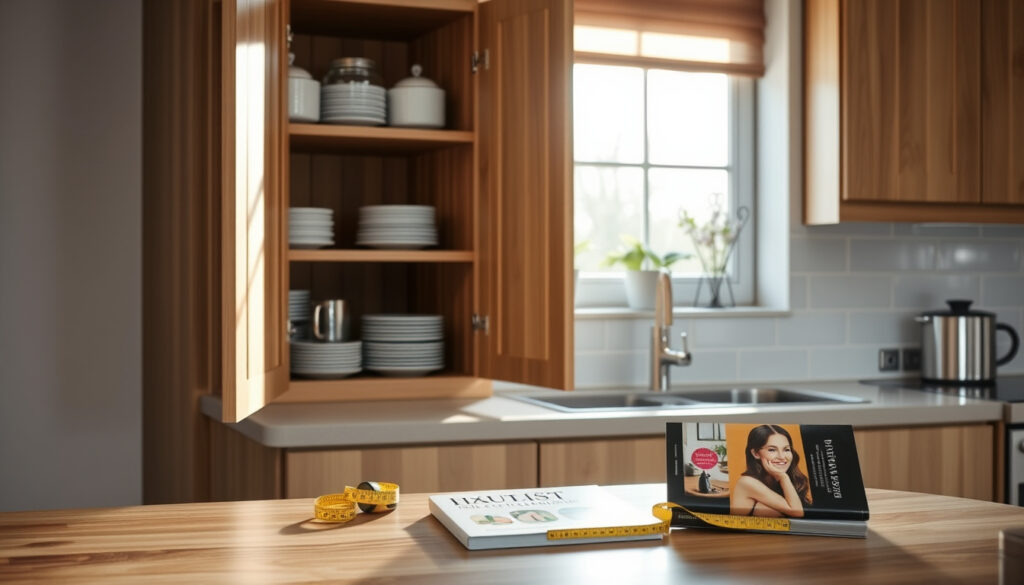
Choosing the right kitchen cupboards can feel like a maze of prices, materials, and retailer names. For UK buyers in 2025, the market breaks down into three main categories: flat-pack, ready-assembled, and fitted or bespoke units. The real decision, however, hinges on trade-offs between cost and convenience, storage efficiency and customisation, and durability versus style.
Whether you are planning a full renovation or simply replacing a few doors, understanding the types, materials, and where to buy is essential. This guide breaks down the options, compares the major UK retailers, and answers the most common questions about kitchen cupboards.
What Are the Different Types of Kitchen Cupboards?
Wall Cupboards
Mounted above countertops, ideal for light storage and dishes. Typical depth: 300–350mm.
Base Cupboards
Floor-standing units for heavy items, pans, and food storage. Typical depth: 550–600mm.
Freestanding Cupboards
Independent units, easy to move or mix and match. Typical height: 850–900mm.
Small Kitchen Cupboards
Compact units for galley kitchens, flats, or utility rooms. Typical width: 300–600mm.
- Type Dominance: Wall and base cupboards are the most searched subtypes, but freestanding units show high demand for flexibility.
- Retailer Preference: IKEA leads search volume for ‘kitchen cupboard’, but B&Q and Wickes compete on trade quality and UK-wide availability.
- DIY Trend: ‘Paint’ is the top secondary keyword, indicating many users want to refresh rather than replace.
- Sizing Confusion: There is a clear gap in guidance on measuring for small kitchen cupboards, especially for UK standard widths.
| Fact | Value |
|---|---|
| Standard UK base cupboard width | 300mm, 400mm, 500mm, 600mm |
| Standard wall cupboard depth | 300mm–350mm |
| Most popular finish | High-gloss white or matte grey |
| Average cost per door | £15 – £60 (laminate) | £40 – £120 (solid wood) |
| Top UK retailer (searches) | IKEA (dominant), B&Q 2nd |
Wall vs Base Cupboards: Key Differences
Wall cupboards are mounted above the worktop, typically 300–350mm deep, and are suited for plates, glasses, and lighter items. Base cupboards sit on the floor, are 550–600mm deep, and are designed for heavier cookware and pantry goods. The choice between them depends on the layout of the room and the user’s daily workflow. According to guidance from Which?, base units usually house the sink, oven, and large storage, while wall units provide additional space for everyday essentials.
Freestanding vs Fitted Kitchen Cupboards
Freestanding cupboards offer flexibility. They can be moved, replaced, or taken to a new home, making them popular with renters or those not ready for a permanent renovation. Fitted or bespoke cupboards, as noted by Kitchens4U and Good Housekeeping, are built around the exact dimensions of the room. They maximise every inch of space and create a seamless look, but they are generally more expensive and require professional installation.
Kitchen Units with Doors and Drawers
Most kitchen cupboards are sold as carcasses, with doors and drawers purchased separately. Retailers such as Wickes and B&Q offer complete units where doors are included, but it is vital to check the product description. Integrated storage solutions such as pull-out bins, corner units, and tiered drawers are increasingly common across modular ranges.
Where Can I Buy Kitchen Cupboards in the UK?
The UK market is largely divided between flat-pack specialists, DIY sheds, and trade-oriented suppliers. A range of options exist at different price points, with the main trade-offs being assembly time, material quality, and after-sales support.
IKEA Kitchen Cupboards: Range & Value
IKEA is a dominant force for modular, flat-pack kitchens. Their SEKTION system is widely available and known for a 5-year warranty. While the price is attractive for budget-to-midrange buyers, some expert assessments, including those from Good Housekeeping, note that certain low-end frameless lines may score poorly for durability compared to more solid wood alternatives.
B&Q Kitchen Cabinets vs Wickes Units
B&Q offers mass-market DIY kitchen cabinets with a broad range of door styles and finishes. Wickes, on the other hand, is more trade-focused, with a reputation for sturdy ready-assembled units. According to the research, a precise 2025 price comparison between IKEA, B&Q, and Wickes cannot be verified from the available sources, as live price sheets were not included in the search results. Buyers are encouraged to check current pricing directly on each retailer’s site.
Because the search results here do not include live retailer price sheets, a precise 2025 IKEA vs B&Q vs Wickes price ranking cannot be verified from these sources alone. Buyers should compare in-store or online for the most accurate figures.
Budget-Friendly Options at Amazon & Specialist Retailers
Amazon UK stocks a range of kitchen storage cabinets, particularly freestanding units and small cupboards. Specialist retailers such as Kitchen Warehouse offer complete kitchen units with a more curated approach. These are often priced between the flat-pack and bespoke categories.
Which Is Better: IKEA Kitchen Cupboards or B&Q?
This is one of the most common questions among UK shoppers. The answer depends on several factors, including budget, desired quality, and how much work the buyer is willing to do themselves.
IKEA vs B&Q: Price, Quality, and Customisation
IKEA is generally cheaper and more modular, with a clear system of interchangeable parts. B&Q offers a wider variety of styles and finishes but often at a slightly higher price point. Quality varies between specific product lines at both retailers. According to analysis from Which?, the best value for most UK homes often comes from mid-range options, such as B&Q’s own-brand or Wickes, which balance cost with reasonable durability.
Wickes or Kitchen Warehouse for Trade Quality
Wickes units are often favoured by tradespeople for their solid construction and availability in ready-assembled forms. Kitchen Warehouse, meanwhile, offers a specialist selection that includes pre-assembled options and design services. Both are considered reliable for those who want a kitchen that feels more substantial than standard flat-pack.
Which retailer offers the best warranty?
IKEA offers a 5-year warranty on its SEKTION kitchen units. B&Q and Wickes typically provide a 2-year guarantee on cabinets, though this can vary by product line. Buyers are advised to check the specific warranty terms at the point of purchase.
For value, the best starting point is usually a modular system with good storage and a durable finish rather than the cheapest cabinet box available, as recommended by Which? and Good Housekeeping.
What Is the Best Paint for Kitchen Cupboards?
Painting kitchen cupboards is a popular way to refresh a kitchen without the expense of new units. The 2025 colour trend guidance from Happy Doors points toward earthy neutrals such as soft taupe, warm grey, and beige. One trend source from Homes & Gardens notes that the all-white kitchen is considered outdated for 2025, reflecting a shift toward warmer, softer palettes.
Best Paint Types for Kitchen Cupboards
For durability, choose paints specifically formulated for kitchen cabinets. These are typically water-based acrylics that are easy to clean and moisture-resistant. Brands such as Tikkurila Helmi or Johnstone’s are commonly recommended for their hard-wearing finish and low-odour formulas.
Step-by-Step Guide to Painting Kitchen Cupboards
The process involves cleaning the surfaces, lightly sanding to create a key, applying a stain-blocking primer, and then painting with at least two coats of cabinet paint. Using a foam roller and a high-quality brush helps avoid brush marks. According to Which?, moisture-resistant construction and soft-closing hinges are also important factors when considering a full cupboard refresh.
Do I need to sand before painting?
Yes. Sanding is essential for paint adhesion, especially on glossy or laminate surfaces. A light sand with fine-grit sandpaper, followed by a tack cloth to remove dust, is recommended before applying primer.
How Do I Choose Wall vs Base Cupboards for a Small Kitchen?
In a small kitchen, every inch counts. The choice between wall and base cupboards should be driven by the available floor space and the user’s storage needs.
Measuring for Small Kitchen Cupboards
Measure the width, depth, and height of your space carefully. Base units are typically 600mm deep and 720–900mm tall. Wall units are 300–350mm deep. Standard UK widths for both types are 300mm, 400mm, 500mm, and 600mm. Always account for plumbing, sockets, and window positions before ordering any system.
Maximising Storage with Wall and Base Units
Smart storage solutions such as pull-out drawers, corner carousels, and integrated organisers can make a compact kitchen feel significantly larger. Lighter cupboard colours and handleless or slab-front doors help create a cleaner, less cluttered visual effect.
Freestanding Cupboards for Small Kitchens
For extremely small spaces or rented properties, freestanding cupboards can be a practical alternative. They require no installation and can be rearranged as needed. Compact units with a width of 300–600mm are widely available from high-street retailers and online.
Timeline: Planning Your Kitchen Cupboard Purchase or Refurbishment
- Research (1–2 weeks): Type identification, budget setting, retailer comparison.
- Measure & Plan (3–5 days): Measure your space, decide on wall/base mix.
- Purchase (1–2 days): Order from chosen retailer (online or in-store).
- Delivery (1–4 weeks): Depending on stock, assembly time.
- Installation / Painting (1–2 weeks): Install units, paint doors if DIY refurb.
Certainty vs Uncertainty in Choosing Kitchen Cupboards
| Established Information | Information That Remains Unclear |
|---|---|
| Standard UK base cupboards fit 600mm spaces. | Quality variation between budget vs premium brands. |
| IKEA SEKTION units have a 5-year warranty. | Freestanding vs fitted choice depends on long-term renovation plans. |
| Paint adhesion requires proper sanding and primer. | Wall cupboard load limits vary by product. |
Independent reviews and retailer specifications should always be consulted for exact dimensions and load limits.
Analysis & Context: What Really Matters When Buying Kitchen Cupboards
Price per unit can vary fourfold between budget and premium lines, but mid-range options from Wickes and B&Q’s own-brand often offer the best value for most UK homes. Laminate doors are easy to clean but can scratch more easily than vinyl or wood; solid wood lasts longer but costs more. Freestanding cupboards suit renters or those planning a move, while fitted units add to a property’s value but require a greater commitment.
Sources & Expert Insight
The information in this guide draws on several UK-based retailers and advice platforms. For in-depth specifications and current pricing, the following official sources are recommended:
IKEA SEKTION installation guides and specifications.
B&Q kitchen cabinet range and advice.
Wickes kitchen units product page.
What to Do Next
Start by accurately measuring your kitchen width and height. Decide whether freestanding or fitted units suit your living situation. Compare prices across IKEA, B&Q, Wickes, and Amazon. If you plan to paint, invest in a quality cabinet paint and primer. Always order sample doors before committing to a full set. For a deeper dive into one of the most popular buying routes, read The Ultimate Guide to Flat-Pack Kitchens in the UK.
Frequently Asked Questions
Can I paint over laminate kitchen cupboards?
Yes, but you must clean, lightly sand, and prime with a stain-blocking primer first. Use a cabinet-specific paint (e.g., Tikkurila Helmi or Johnstone’s).
How do I measure for kitchen cupboards?
Measure the width, depth, and height of your space. Base units are typically 600mm deep and 720–900mm tall; wall units are 300–350mm deep. Always allow for plumbing and socket positions.
What is the cheapest kitchen cupboard option?
Laminate-front cupboards from IKEA or B&Q are the most affordable, starting at around £15 per door. Flat-pack units are cheaper than pre-assembled ones.
Do kitchen cupboards come with doors?
Most retailers sell units and doors separately. Some ‘complete kitchen units’ (like Wickes’ ready-to-assemble) include doors. Always check the product description.
What are the standard UK kitchen cupboard widths?
Standard UK widths for base and wall cupboards are 300mm, 400mm, 500mm, and 600mm.
Is it cheaper to buy kitchen cupboards online or in-store?
Online retailers often have lower prices due to reduced overheads, but delivery costs may add up. In-store allows you to see the finish and quality in person.
Can I fit kitchen cupboards myself?
Flat-pack and ready-assembled units are designed for DIY installation, provided you have basic tools and follow the instructions. Bespoke kitchens usually require a professional fitter.
What is the difference between MDF and chipboard kitchen cupboards?
MDF is denser, stronger, and more moisture-resistant than chipboard, but it is also slightly heavier and more expensive. Chipboard is the cheapest option and is common in budget kitchens.

Madeleine Shaw is Politics & Public Affairs Editor at NewsPrism.co.uk, covering Parliament, government policy, elections and public spending.