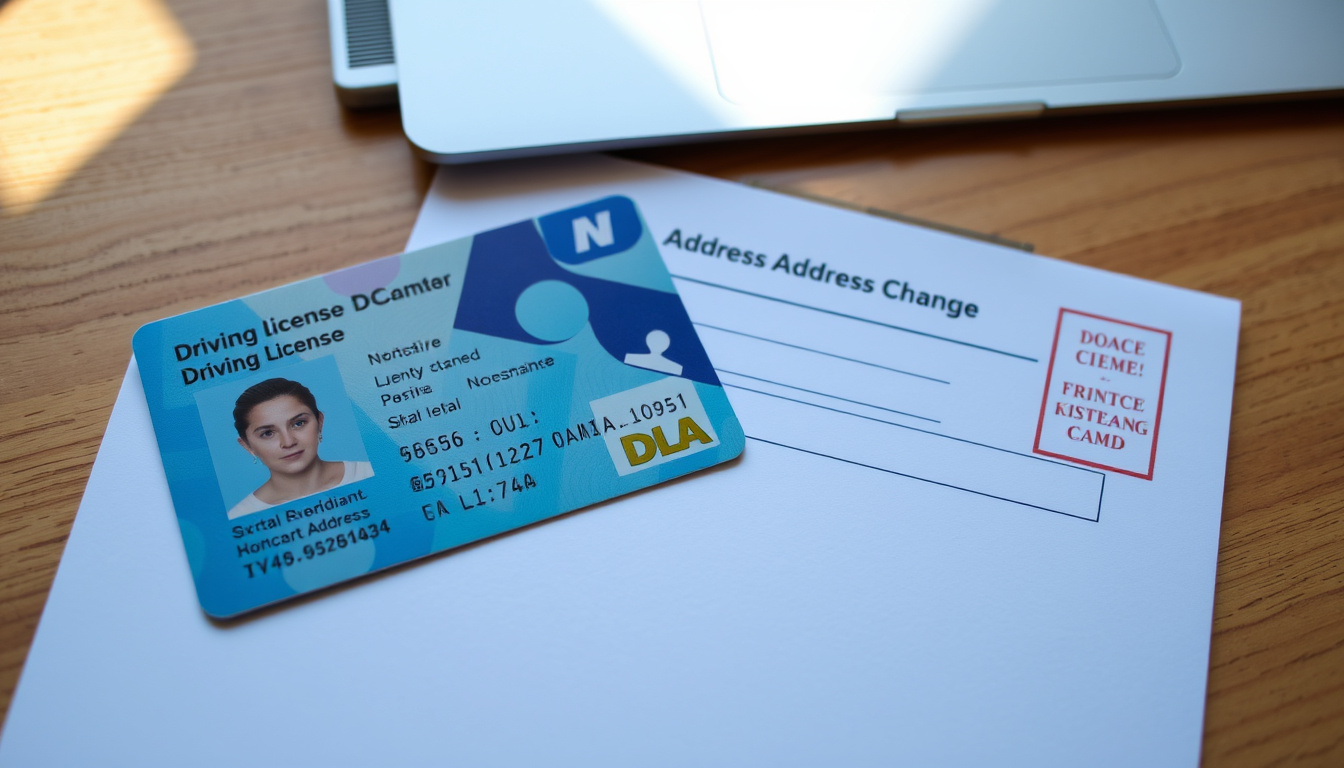
Keeping your driving licence address current is a legal requirement in the United Kingdom. Whenever you move house, you must notify the Driver and Vehicle Licensing Agency (DVLA) of your new address as soon as possible. This obligation applies to all types of driving licences, including full photocard licences and older paper counterparts. Failing to update your address can result in significant consequences, including fines of up to £1,000.
The process of updating your address with the DVLA is straightforward and, importantly, free of charge regardless of the method you choose. Whether you prefer the convenience of applying online, sending documents by post, or speaking with someone over the phone, the DVLA offers multiple channels to accommodate different preferences. Understanding these options helps ensure your licence details remain accurate and your legal obligations are met without unnecessary delays.
How Do I Change the Address on My Driving Licence?
The DVLA provides three primary methods for updating your driving licence address: online, by post, or via telephone. Each approach has distinct advantages depending on your circumstances and preferences. The online service stands out as the fastest and most convenient option for most drivers, offering round-the-clock accessibility without the need to visit a post office or wait on hold.
Applying Online Through GOV.UK
The online address change service on GOV.UK represents the quickest way to update your driving licence. This secure portal operates 24 hours a day, seven days a week, allowing you to complete the process at a time that suits you best. The service guides you through each step systematically, reducing the likelihood of errors that might cause delays.
To use the online service, you will need to provide several pieces of information. This includes your full name, gender, date of birth, and country of birth. You must also have your driving licence number readily available, as well as your National Insurance number. If you hold a valid passport, its number may also be required. Additionally, you will need to list all addresses where you have lived over the past three years, as the DVLA uses this information to maintain accurate records.
One significant advantage of the online process is that you can continue driving legally while waiting for your updated licence to arrive. The DVLA acknowledges that processing takes time and does not expect drivers to remain off the road during this period. Your new licence typically arrives within approximately seven working days of submitting your application.
Applying by Post
If you prefer traditional methods or do not have access to the internet, postal applications remain a viable option. For photocard licences, you will need to complete section 6 of your paper counterpart licence or obtain a D741 form, which is included with photocard renewal packages. These documents should then be sent to the DVLA’s designated processing centre in Swansea, with the address listed as SA99 1BN.
Drivers holding older-style paper driving licences for cars and motorbikes will need to use the D1 form instead. Along with this form, you must submit your current licence, relevant identity documents, and a recent passport-sized photograph. The postal route generally takes longer to process than the online equivalent, with applications typically requiring between two and four weeks to complete.
Before starting either application method, gather your driving licence, National Insurance number, and passport details. Having these ready speeds up the process considerably and helps avoid the frustration of incomplete applications.
Eligibility Requirements for Online Applications
Not everyone qualifies to use the DVLA’s online address change service. To be eligible, you must be a resident of Great Britain. Northern Ireland has a separate administrative process managed by its own driver licensing authority. Additionally, you must not currently be disqualified from driving, and your current driving licence must be readily accessible during the application process. If any of these conditions apply to your situation, the postal route would be more appropriate.
- UK residents of Great Britain only (separate process for Northern Ireland)
- Must not be currently banned or disqualified from driving
- Current driving licence must be available for reference
- Able to provide three years of address history
- National Insurance number required for verification
- Passport number may be needed if a valid passport exists
| Aspect | Requirement |
|---|---|
| Legal Requirement | Yes, must notify DVLA of address changes |
| Notification Deadline | As soon as possible after moving |
| Fee | Free (both online and postal methods) |
| New Licence Issued | Yes, updated licence posted to new address |
| Driving Allowed During Processing | Yes, you may continue driving |
| Temporary Moves | No notification needed if permanent address stays current |
Do I Need to Update DVLA When Changing Address?
Yes, updating your address with the DVLA is a legal requirement whenever you change your permanent residence. The law states that you must inform the agency of any address change as soon as possible after moving house. This obligation exists to ensure that the DVLA can maintain accurate records and contact you when necessary, whether for administrative purposes, legal notifications, or emergency situations.
The requirement applies specifically to permanent moves. If you are relocating temporarily, such as for university or an extended work assignment, you do not need to notify the DVLA provided they can still reach you at your registered permanent address. The key distinction is whether your move represents a genuine change of residence or merely a temporary absence from your usual home.
The DVLA makes clear on their official guidance that you must tell them when your address changes. This is not optional or merely advisable—it is a statutory requirement that carries potential penalties for non-compliance.
What Documents Do I Need to Change My Address?
When updating your address, you will need your current driving licence as the primary document. This allows the DVLA to identify your record and process the change correctly. Beyond this, the specific requirements vary slightly depending on the application method you choose.
For online applications, you will need to provide personal verification information including your National Insurance number and potentially your passport number. The system uses these details to confirm your identity before processing the change. You should also be prepared to recall all addresses where you have lived during the previous three years, as the DVLA requests this information as part of their record-keeping process.
Postal applications have slightly different documentation needs. In addition to your current licence, you must include identity documents that support your application. If you are using the D1 form for an older paper licence, a recent passport photograph is also required. The D741 form for photocard licences does not typically require a new photograph, as your existing licence already contains your image.
Do I Need My Old Licence to Update My Address?
Yes, your current driving licence is essential for the address change process. The DVLA uses the licence number to locate your record in their database, and the physical licence must be surrendered for updating. When you submit your application, whether online or by post, the agency will issue you a new licence card displaying your updated address.
If your licence has been lost, stolen, or damaged, you will need to apply for a replacement before or alongside your address change. The DVLA offers a separate replacement service for damaged or lost licences. Once you have a valid licence in your possession, the address update can proceed normally. It is worth noting that a replacement licence carries a fee of £20, whereas a straightforward address change remains free.
How Long Does It Take and What’s the Cost?
The cost of changing your driving licence address is straightforward: it is completely free of charge. This applies to both the online and postal application methods, with no hidden fees or administrative charges at any stage of the process. The DVLA absorbed these costs as part of their service to drivers, recognising that address updates are a routine administrative necessity rather than a revenue-generating activity.
Processing times vary depending on the application method you select. Online applications are processed relatively quickly, with most drivers receiving their updated licence within seven working days of submission. This timeframe represents one of the significant advantages of choosing the digital route, as it minimises the period during which you are waiting for your new documents to arrive.
Comparing Processing Times by Method
Postal applications take considerably longer than their online counterparts. The standard processing time for address changes submitted by post ranges from two to four weeks. This additional time accounts for the physical transit of documents to and from the DVLA’s processing centre in Swansea, as well as manual handling of each application. During peak periods or at certain times of year, these timeframes may extend further.
It is worth considering these differences when planning your move. If you have recently moved and need your updated licence for any reason, such as insurance matters or employer requirements, applying online provides the fastest resolution. However, the postal service remains a reliable alternative for those who prefer not to use digital services or lack the necessary technology to complete the online form.
While the DVLA provides standard processing timeframes, actual delivery times can vary based on factors such as postal service performance and processing volumes. If your updated licence has not arrived within the expected timeframe, you should allow a few extra days before contacting the DVLA to enquire about your application status.
Cost Comparison Between Methods
Both the online and postal methods are entirely free for address updates. This means your choice between methods should be based primarily on convenience and speed rather than cost considerations. There are no premium services or expedited options that carry additional charges for this particular transaction.
However, it is worth noting that while the address change itself is free, other related DVLA services may carry fees. For example, if you also need to replace a lost or damaged licence, that service costs £20. Similarly, if your licence is approaching expiry and needs renewal alongside the address change, standard renewal fees would apply. These are separate transactions from the address update and should be considered accordingly.
What Happens If I Don’t Update My Driving Licence Address?
Failing to update your driving licence address when you move house carries real legal and practical consequences. The DVLA is empowered to impose a fine of up to £1,000 for failing to notify them of an address change. This penalty reflects the seriousness with which the agency treats accurate driver records, as these databases serve important functions in road safety, law enforcement, and administrative governance.
Beyond the direct financial penalty, there are additional practical risks to leaving your address out of date. Your driving licence serves as a primary form of identification, and an incorrect address can cause problems in various situations. Insurance companies may question the validity of your policy if your registered address differs from your actual residence. Employers, particularly those requiring employees to drive company vehicles, may also need accurate licence records.
Related Updates Required After Moving
Updating your driving licence address is just one part of the administrative process following a house move. The DVLA advises that you should also update your vehicle’s logbook, known as the V5C document, to reflect your new address. This ensures that vehicle registration records remain current and that any correspondence from the DVLA reaches you at the correct location.
If you pay vehicle tax by Direct Debit, you should also update the payment address associated with this arrangement. Failure to do so could result in payment failures or correspondence being sent to your old address. Additionally, if you hold a personalised registration number with its own documentation (V750 or V778 forms), these documents should be updated to reflect your new address as well.
After moving house, remember to update: your driving licence address with DVLA, your vehicle logbook (V5C), vehicle tax Direct Debit details, any personalised registration documents, your car insurance provider, and the DVLA’s vehicle registration records.
Consequences for Insurance and Vehicle Records
Motor insurance policies depend on accurate address information to assess risk and calculate premiums correctly. If your insurer’s records show an incorrect address, this could affect the validity of your coverage. In the event of an accident, claims could be complicated if the insurer discovers a mismatch between your registered and actual addresses. Keeping your address current with all relevant parties, including your insurance provider, protects you from potential complications.
For those seeking the best deals on car-related expenses, ensuring all records are accurate can also help access available offers. Maintaining up-to-date information with the DVLA and other agencies is a fundamental step in managing your motoring administration effectively. Exploring options like 0% APR car deals becomes easier when your records are in order.
Timeline for Changing Your Address
Understanding the typical timeline for an address change helps you plan accordingly and manage expectations. While individual experiences may vary, the following sequence represents the standard progression from application to receiving your updated licence.
- Day 1: Gather required documents and information, then submit your application through your chosen method (online or post).
- Days 2-7: DVLA processes your application and produces your updated licence (for online submissions).
- Week 2: Updated licence delivered to your new address by first-class mail (online applications).
- Weeks 2-4: Processing time for postal applications, with delivery following shortly after.
For those applying online, the entire process from submission to receiving your new licence typically spans approximately one week. Postal applications extend this to between two and four weeks, accounting for transit times in both directions. If your circumstances require a quicker turnaround, the online method is clearly preferable.
What We Know and What Remains Unclear
The DVLA’s address change process has remained stable in recent years, with no major policy changes affecting the procedure through 2024 and into 2025. The core requirements—free service, multiple application methods, and similar processing times—have been consistent and are expected to remain so. This stability provides reassurance that the information in this guide accurately reflects current practice.
Some aspects of the process may vary in practice. Processing times, while generally predictable, can be affected by seasonal demand fluctuations and the overall volume of applications received by the DVLA. Additionally, individual circumstances such as incomplete applications or verification issues can extend the standard timeframes. Regional variations in postal service performance may also influence delivery times for those using the postal application method.
Why Address Accuracy Matters
Maintaining accurate address records with the DVLA serves several important purposes beyond simple administrative compliance. The DVLA’s driver records inform road safety initiatives, support law enforcement activities, and facilitate communication between the agency and licence holders. When addresses are current, these functions operate more effectively, benefiting both individual drivers and the broader motoring public.
For individual drivers, accurate records ensure they receive important correspondence, including renewal reminders and any notices requiring attention. This helps avoid inadvertently allowing a licence to expire or missing critical updates about medical requirements or other obligations. The practical inconvenience of incorrect address records can therefore extend well beyond simple administrative issues.
If you are planning travel involving airport transfers or long-term parking, keeping your driving licence address current is one of several administrative tasks worth completing. For instance, those using Heathrow airport parking services will find that their documentation, including driving licence details, should be accurate and up to date.
Official Guidance and Sources
The primary authoritative source for driving licence address changes is the DVLA itself, with official guidance available through GOV.UK. The agency states clearly: “You must tell DVLA when you change address.” This directive forms the foundation of the legal requirement and should be the starting point for any driver seeking to understand their obligations.
“You must tell DVLA when you change address.”
— DVLA, GOV.UK
Secondary sources including motoring organisations and insurance providers offer additional context and practical guidance. However, when discrepancies appear between different sources, the official DVLA guidance available through GOV.UK should be considered the authoritative reference. The agency can be contacted directly through their official channels if clarification is needed on specific circumstances.
Summary and Next Steps
Updating your driving licence address is a straightforward but important legal requirement for all UK drivers. The process is free, accessible through multiple channels, and can be completed relatively quickly, particularly when using the online service. Key steps include gathering your documents, choosing your preferred application method, and ensuring you receive your updated licence at your new address.
After completing your address update with the DVLA, remember to also update your vehicle logbook, notify your insurer, and check that all other motoring-related records reflect your new address. These complementary steps ensure your complete administrative profile remains current and accurate. By staying on top of these requirements, you avoid potential penalties and ensure your documentation serves you well whenever needed.
Frequently Asked Questions
How do I change the address on a provisional driving licence?
The process for updating a provisional licence address follows the same steps as a full licence. You can use the DVLA’s online service or apply by post using the appropriate form. Provisional licence holders should ensure their address remains current to avoid complications when upgrading to a full licence.
What if I have lost my driving licence?
If your licence is lost, you will need to apply for a replacement before or alongside your address change. The DVLA offers a replacement service with a £20 fee. Once you have your licence in hand, the address update can proceed through the standard channels.
Do I need to notify DVLA for a temporary move to university?
No, temporary moves such as those for university do not require a DVLA address update. You only need to notify them when your permanent residence changes, provided they can still contact you at your registered address.
Can I drive while waiting for my updated licence?
Yes, you can continue driving legally while your updated licence is being processed. The DVLA acknowledges that processing takes time and does not expect drivers to remain off the road during this period.
Is the DVLA address change free?
Yes, changing your driving licence address is completely free of charge. This applies whether you apply online or by post. The only fees involved would be for separate services such as replacing a lost licence.
How do I update my vehicle logbook after changing address?
Your vehicle logbook (V5C) should be updated separately from your driving licence. You can notify DVLA of your new address for vehicle registration purposes through their website, which handles both driving licence and vehicle-related address updates.
What happens if I receive a fine for not updating my address?
The DVLA can impose fines of up to £1,000 for failing to notify them of an address change. If you receive such a notice, you should respond promptly and complete your address update as soon as possible to regularise your position.

Amelia Grant is Technology & Media Editor at NewsPrism.co.uk, covering AI, platforms, cybersecurity, consumer tech and the media landscape.