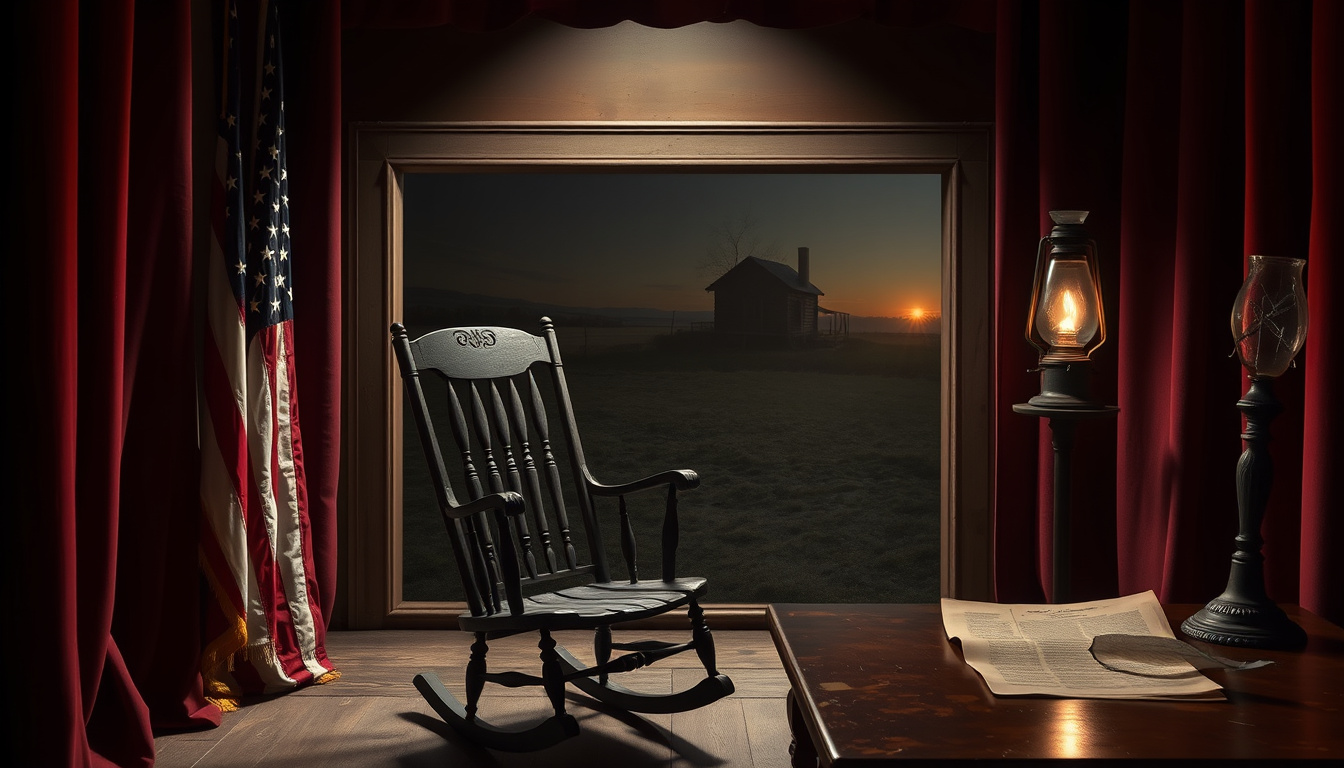
Abraham Lincoln, the 16th President of the United States, led the nation through its greatest crisis—the Civil War—and issued the Emancipation Proclamation that set the country on a path to ending slavery. Standing at 6 feet 4 inches, he remains the tallest president in American history. His life, from a log cabin in Kentucky to the White House, and his tragic assassination at Ford’s Theatre, continue to shape the nation’s understanding of leadership and democracy.
Born into poverty, Lincoln educated himself through borrowed books and became a successful lawyer before entering politics. His presidency, which began in 1861, was defined by the fight to preserve the Union and the moral struggle over human bondage. The Gettysburg Address, delivered in 1863, remains one of the most quoted speeches in the English language.
Lincoln’s legacy is anchored in his role in ending chattel slavery through the 13th Amendment, his leadership during the Civil War, and his vision of a government “of the people, by the people, for the people.” His assassination on April 15, 1865, by John Wilkes Booth cut short his plans for Reconstruction and left a lasting imprint on the nation.
When and where was Abraham Lincoln born?
Born
February 12, 1809, Kentucky
Presidency
16th President (1861–1865)
Key Act
Emancipation Proclamation (1863)
Assassinated
April 15, 1865, Washington D.C.
Abraham Lincoln was born on February 12, 1809, in a one-room log cabin near Hodgenville, Kentucky. According to Wikipedia and National Geographic Kids, his parents, Thomas and Nancy Lincoln, could neither read nor write. The family moved to Indiana when Lincoln was a child and later to Illinois, where he spent most of his adult life.
Lincoln attended school on and off for about one year in total. He was largely self-educated, reading borrowed books by firelight. Before becoming a lawyer, he worked as a flatboat navigator, storekeeper, soldier, surveyor, and postmaster—his first government job. At age 25, he was elected to local government in Springfield, Illinois, and later taught himself law, earning the nickname “Honest Abe.”
Key insights about Abraham Lincoln’s early life
- Lincoln’s self-education and rise from humble origins embody the American dream narrative.
- He lost only one election by direct vote—the 1832 Illinois House race.
- His parents could not read or write, yet he became one of the most eloquent writers in American politics.
- He was the first president not born in one of the original 13 states.
- He was the first Republican-elected president.
- He is the only president to hold a patent—for a boat-lifting device.
- His early jobs on the frontier shaped his understanding of ordinary Americans.
Snapshot facts about Abraham Lincoln
| Attribute | Detail |
|---|---|
| Birth | February 12, 1809, Hodgenville, Kentucky |
| Death | April 15, 1865, Washington D.C. (assassinated) |
| Height | 6 ft 4 in (193 cm) |
| Spouse | Mary Todd Lincoln |
| Children | Robert, Edward, Willie, Tad (only Robert survived to adulthood) |
| Political Party | Republican (National Union in 1864) |
| Presidential Term | March 4, 1861 – April 15, 1865 |
| Famous Speeches | Gettysburg Address, Second Inaugural Address |
| Assassin | John Wilkes Booth |
How tall was Abraham Lincoln and why did he wear a tall hat?
Abraham Lincoln stood 6 feet 4 inches (193 cm) tall, making him the tallest person to serve as U.S. president, according to the Abraham Lincoln Presidential Library and Museum and Britannica. His height was remarkable for the 19th century and contributed to his distinctive, commanding presence.
Why did Lincoln wear a tall stovepipe hat?
Lincoln is famously associated with the black stovepipe hat, which he used to store documents and letters. Contemporary accounts confirm he would tuck papers and letters inside the hat for safekeeping, a practical habit that became part of his iconic image. While some legends exaggerate this practice, there is no evidence he carried large objects inside.
How did Lincoln’s height influence his public image?
His stature, combined with his distinctive hat, made him instantly recognizable. Photographs and descriptions from the era emphasize his tall, lean frame. His physical presence, along with his deep voice and deliberate speech, contributed to the aura of authority he projected during the turbulent Civil War years.
The stovepipe hat is well-documented in photographs and contemporary descriptions. While some accounts suggest he stored documents inside, this habit is confirmed by multiple sources. The hat became a symbol of his identity, but the idea that he routinely carried large items in it is not supported by historical evidence.
How many children did Abraham Lincoln have?
Abraham Lincoln and his wife Mary Todd Lincoln, whom he married in 1842, had four sons: Robert, Edward (Eddie), William (Willie), and Thomas (Tad), according to the Abraham Lincoln Presidential Library and Museum (source previously cited).
Which of Lincoln’s children survived to adulthood?
Only Robert Todd Lincoln lived to adulthood. Edward died in 1850 at age 3, William (Willie) died in 1862 at age 11 while Lincoln was president, and Thomas (Tad) died in 1871 at age 18. The death of Willie in 1862 deeply affected Lincoln during his presidency.
What happened to Robert Todd Lincoln?
Robert Todd Lincoln went on to have a successful career as a lawyer, businessman, and diplomat. He served as U.S. Secretary of War under Presidents James Garfield and Chester A. Arthur, and later as U.S. Minister to the United Kingdom. He was present at two other presidential assassinations—Garfield’s in 1881 and McKinley’s in 1901.
What is Abraham Lincoln famous for?
Abraham Lincoln is best known for leading the United States through the American Civil War and preserving the Union. He issued the Emancipation Proclamation on January 1, 1863, which declared the freedom of slaves in Confederate states and allowed African American men to serve in the U.S. armed forces for the first time, according to Wikipedia (source previously cited) and the Abraham Lincoln Presidential Library and Museum (source previously cited).
He delivered the Gettysburg Address on November 19, 1863, one of the most famous speeches in American history. He also promoted the 13th Amendment, which abolished chattel slavery in 1865. Beyond the Civil War, Lincoln established the Department of Agriculture, supported the transcontinental railroad, enacted the Homestead Act, instituted the national Thanksgiving holiday, created the nation’s first income tax through the Revenue Act of 1862, and passed the Morrill Act, which founded the state university system, as noted by American Battlefield Trust.
The Emancipation Proclamation was a military strategy as much as a moral statement. It declared free only those slaves in states still in rebellion, leaving slavery untouched in border states loyal to the Union. Nevertheless, it transformed the Civil War into a fight for human freedom and paved the way for the 13th Amendment.
Delivered at the dedication of the Soldiers’ National Cemetery in Gettysburg, Pennsylvania, the speech lasted about two minutes. Lincoln redefined the nation’s purpose, urging “that this nation, under God, shall have a new birth of freedom.” Despite its brevity, it is considered one of the most powerful speeches in American history.
How did Abraham Lincoln die?
Abraham Lincoln was shot on April 14, 1865, at Ford’s Theatre in Washington, D.C., while attending a play. The assassin was John Wilkes Booth, a Confederate sympathizer, according to Biography.com and the American Battlefield Trust (source previously cited). Lincoln died the next morning on April 15, 1865, at age 56, becoming the first U.S. president to be assassinated in office.
The assassination occurred just days after the end of the Civil War, plunging the nation into mourning. Booth escaped but was tracked down and killed 12 days later. The event had profound consequences for Reconstruction, as Lincoln’s successor, Andrew Johnson, lacked Lincoln’s political skill and vision for reuniting the country.
- 1809 – Born in Kentucky.
- 1830s – Moved to Illinois; self-educated; worked as rail-splitter, shopkeeper.
- 1834 – Elected to Illinois State Legislature.
- 1846 – Elected to U.S. House of Representatives.
- 1858 – Lincoln-Douglas debates; lost Senate race but gained national attention.
- 1860 – Elected 16th President of the United States.
- 1861 – American Civil War begins; Fort Sumter.
- 1863 – Emancipation Proclamation; Gettysburg Address.
- 1864 – Re-elected; Sherman’s March to the Sea.
- April 14, 1865 – Assassinated by John Wilkes Booth at Ford’s Theatre.
- April 15, 1865 – Dies early morning; Andrew Johnson becomes president.
Is Abraham Lincoln: Vampire Hunter historically accurate?
The 2010 book and 2012 film “Abraham Lincoln: Vampire Hunter” is a work of fiction. It presents an alternate history in which Lincoln secretly hunts vampires, weaving supernatural elements into real events like the Civil War. There is no historical evidence to support any aspect of this portrayal.
| Established information | Information that remains unclear |
|---|---|
| Lincoln’s height is well-documented as 6 ft 4 in (193 cm). | Some early sources vary by an inch, but consensus is consistent. |
| He often used his tall hat to store documents and letters, confirmed by contemporary accounts. | Some legends exaggerate this habit; no evidence he carried large objects inside. |
| Four sons; only Robert lived to adulthood. Willie died in 1862. | No credible evidence of other illegitimate children; rumors are unfounded. |
| He opposed slavery and issued the Emancipation Proclamation. He supported colonization early on but later shifted. | Historians debate the speed and depth of his evolving views; some argue he prioritized Union over abolition initially. |
| “Abraham Lincoln: Vampire Hunter” is entirely fictional. | None; it is a work of fantasy with no historical basis. |
What was Abraham Lincoln’s lasting impact on the United States?
Lincoln’s presidency must be understood within the context of the Civil War and the deep sectional tensions that divided the nation. The Emancipation Proclamation was both a war measure and a moral turning point, while the Gettysburg Address redefined the nation’s founding principles. Together, they cemented Lincoln’s role as the president who preserved the Union and ended slavery.
The consequences of his assassination were profound. His absence during Reconstruction allowed the rise of the “Lost Cause” narrative and left the nation without his steady hand in healing the wounds of war. Compared to other wartime presidents, Lincoln’s leadership style—marked by patience, humility, and strategic clarity—is often cited as a model for democratic governance in times of crisis.
The Lincoln Memorial in Washington, D.C., stands as a symbol of his enduring legacy. His words continue to resonate, and his place in American memory remains central to the nation’s identity.
Where can I find Abraham Lincoln’s original speeches and writings?
Lincoln’s original papers, speeches, and letters are preserved in multiple archives. The Abraham Lincoln Papers at the Library of Congress contain the largest collection of his personal and political documents. The Abraham Lincoln Presidential Library and Museum in Springfield, Illinois, houses extensive exhibits and research materials. The National Park Service maintains the Lincoln Memorial and the site of his Second Inaugural Address.
“Four score and seven years ago our fathers brought forth on this continent, a new nation, conceived in Liberty, and dedicated to the proposition that all men are created equal.”
— Gettysburg Address, November 19, 1863 (source: Library of Congress)
“With malice toward none; with charity for all… let us strive on to finish the work we are in; to bind up the nation’s wounds…”
— Second Inaugural Address, March 4, 1865 (source: National Park Service)
“If slavery is not wrong, nothing is wrong.”
— Letter to Albert G. Hodges, April 4, 1864 (source: Library of Congress)
What is the most important thing to know about Abraham Lincoln?
Abraham Lincoln is consistently ranked among the greatest U.S. presidents for his leadership during the Civil War and his commitment to ending slavery. His legacy centers on preserving the Union, issuing the Emancipation Proclamation, and championing democratic governance. The Emancipation Proclamation and the 13th Amendment stand as his most enduring achievements, while his assassination at Ford’s Theatre marked a tragic end to a life that continues to shape the nation’s understanding of freedom and equality.
Frequently asked questions about Abraham Lincoln
When was Abraham Lincoln born and when did he die?
He was born February 12, 1809, and died April 15, 1865.
What was Abraham Lincoln’s age when he became president?
He was 52 years old when inaugurated in 1861.
Who was Abraham Lincoln’s vice president?
His first vice president was Hannibal Hamlin (1861–1865); his second term vice president was Andrew Johnson (1865).
Did Abraham Lincoln own slaves?
No, he did not. He grew up in a non-slaveholding family and became a vocal opponent of slavery.
Why is Abraham Lincoln on the penny and $5 bill?
To honor his legacy as the 16th president and his role in preserving the Union and ending slavery.
How long was Abraham Lincoln’s presidency?
He served from March 4, 1861, until his assassination on April 15, 1865 — about 4 years and 1 month.
What was Abraham Lincoln’s height in feet and inches?
He was 6 feet 4 inches (193 cm) tall, the tallest U.S. president.
How many of Lincoln’s children survived to adulthood?
Only Robert Todd Lincoln lived to adulthood. Edward, Willie, and Tad died young.
Where was Abraham Lincoln assassinated?
He was shot at Ford’s Theatre in Washington, D.C., on April 14, 1865, and died the next morning.
Is Abraham Lincoln: Vampire Hunter based on real events?
No, it is entirely fictional. It is an alternate history with supernatural elements, not based on any historical evidence.

George Bennett is Senior Reporter at NewsPrism.co.uk, covering breaking news and general UK stories.