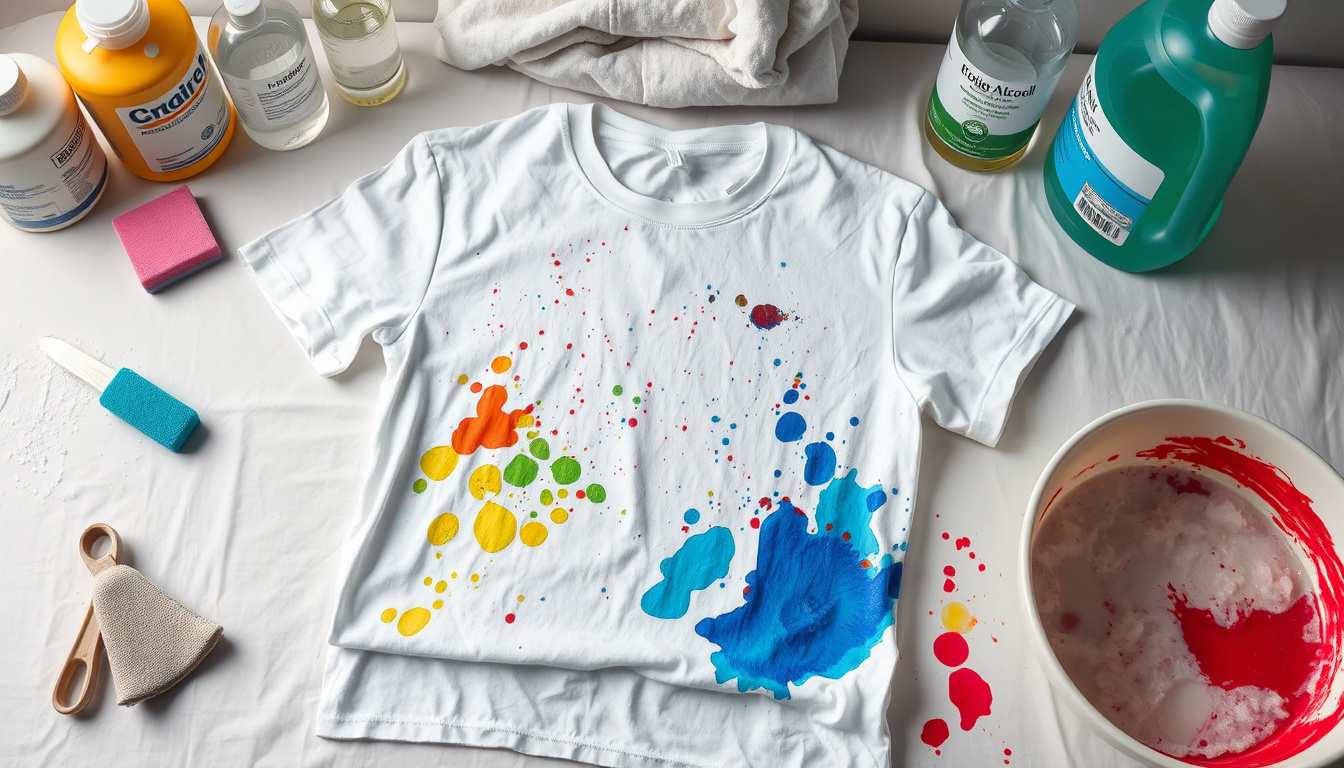

Water-based paints like latex and acrylic respond well to prompt action, while oil-based paints require solvents to break down their chemical composition. This guide covers the most effective methods for each paint type, from immediate fixes for wet stains to deep treatment approaches for dried paint that has set into the fabric.
Always check the garment’s care label before attempting any stain removal, and test any cleaning solution on an inconspicuous area first. Speed matters significantly—treating a stain within minutes yields far better results than waiting hours or days.
How to Get Wet Paint Out of Clothes
Fresh paint stains respond fastest when treated immediately. The longer paint sits on fabric, the more it bonds with fibres, making removal progressively more difficult. Acting within the first few minutes offers the best chance of complete recovery.
- Act quickly for wet paint—the first few minutes matter most
- Always spot-test any remover on an inconspicuous area first
- Use cold water initially for water-based paints
- Turn garments inside out when rinsing to push paint out rather than deeper into fibres
- Avoid paper towels when removing excess—use clean cloth instead to prevent fibre embedment
- Line dry and recheck before applying heat, as heat sets remaining stains permanently
- Repeat the treatment process if the stain persists after first washing
| Paint Type | First Step | Key Tool |
|---|---|---|
| Water-based | Rinse immediately | Soap and water |
| Dried paint | Scrape excess | Warm soak |
| Acrylic | Soak thoroughly | Alternatives to alcohol |
| Oil-based | Apply solvent | Acetone or turpentine |
Identifying Paint Types Before Treatment
The first step in effective paint removal is identifying what type of paint caused the stain. Water-based paints, including latex and acrylic varieties, are more forgiving and respond well to water and detergent. Oil-based paints require chemical solvents to break down their binding agents, according to Maytag’s laundry guidance.
Latex paint typically feels rubbery when dry and is commonly used for interior walls. Acrylic paint is craft-grade and dries to a flexible plastic-like finish. Oil-based paints, often used for woodwork and metal surfaces, have a stronger odour and take longer to dry completely.
Immediate Steps for Fresh Water-Based Stains
For fresh water-based paint, blot the stain with hot water using a clean cloth, then scrape off any excess paint gently with a dull knife or spoon. Apply liquid laundry detergent or dish soap directly to the stain, working it into the fabric with gentle circular motions. OxiClean recommends using approximately one-eighth teaspoon of detergent, lathering with water, and scrubbing with a cloth or sponge before rinsing repeatedly until the paint disappears.
The moment paint lands on fabric, blot gently without rubbing. Rubbing spreads the stain and pushes paint deeper into fibres. Work from the outside of the stain toward the centre to prevent it from expanding.
How to Remove Dried Paint from Clothes
Dried paint presents a greater challenge because the paint has bonded with fabric fibres over time. The approach requires softening the dried paint before attempting removal, and multiple treatments may be necessary for complete success.
Breaking Down Set-In Paint
Begin by scraping away as much dried paint as possible using a dull knife or spoon, working carefully to avoid damaging the fabric. Once the loose paint is removed, rinse the back of the stain with warm water to push out any paint that has penetrated the fibres.
Apply a detergent-water mixture (approximately half and half) to the stain and blot vigorously with a clean towel. According to Maytag’s stain removal guide, this process should be repeated until no paint transfers to the cloth. For stubborn cases, an overnight soak in hot soapy water with dishwasher detergent can help loosen the remaining pigment.
Using Solvents for Oil-Based Paint
Oil-based paints require solvents such as turpentine, acetone, or rubbing alcohol to break down their chemical structure. Tide’s stain removal guidance recommends applying rubbing alcohol (91-99% concentration), acetone, or non-acetone nail polish remover to the stain after scraping, then dabbing with a cloth or paper towel before thorough rinsing.
Rub laundry detergent or dish soap onto the stain, spray alcohol generously over the area, and scrub with a stiff brush such as an old toothbrush. Dab to lift the paint, adding water if the lifting process begins. This method works particularly well on sturdy fabrics like denim jeans.
Solvents may damage or fade certain fabrics. Always test acetone, alcohol, or turpentine on an inconspicuous area of the garment before applying to the stain itself. Delicate fabrics like silk or wool require particular caution.
Home Remedies to Remove Dry Paint Stains
Several household items can assist in paint removal without requiring commercial stain removers. These methods work best when combined with patience and repeated applications.
Vinegar and Baking Soda Approach
A vinegar-water soak can help draw out paint particles from fabric. Mix equal parts white vinegar and warm water, then submerge the stained area for 30 to 60 minutes before washing as normal. For more stubborn stains, a baking soda paste (mixing baking soda with small amounts of water to form a thick consistency) applied directly to the stain and left for 15-30 minutes can help lift dried paint.
While Tide notes, detergent solutions are generally more reliable than home remedies alone, these approaches can serve as pre-treatment or work well for less severe stains.
Hairspray and Denatured Alcohol
Hairspray containing alcohol can break down paint particles when applied directly to the stain and left for several minutes before blotting. Some crafters and DIY enthusiasts recommend this approach for small paint spots, particularly on sturdy fabrics.
Denatured alcohol, available from hardware stores, works similarly to isopropyl alcohol but may be more effective on certain paint formulations. Apply with a cloth, allow to sit briefly, and blot away the dissolving paint before rinsing thoroughly.
Combining liquid laundry detergent with rubbing alcohol creates a powerful stain-fighting solution. Apply detergent directly to the stain, spray generously with alcohol, then scrub stiffly before rinsing. This two-pronged approach attacks the paint chemically and mechanically simultaneously.
Using Nail Polish Remover for Paint on Clothes
Nail polish remover containing acetone serves as an effective solvent for paint stains, particularly dried paint and spray paint. However, its use requires careful consideration of fabric type and proper technique.
Application Technique
Dab nail polish remover directly onto the stain using a clean cloth or cotton ball. Blot gently—do not rub—working from the outside of the stain inward. As the paint begins to dissolve, switch to a fresh section of cloth to avoid re-depositing the paint. Rinse the area thoroughly with warm water once the majority of the stain has lifted.
According to OxiClean’s stain solutions, this method works well for dried paint and spray paint but spot-testing remains essential, as acetone may pull colour or damage certain fabric weaves.
Limitations and Alternatives
Non-acetone nail polish removers are less effective for paint removal since the acetone is the active agent that breaks down paint polymers. Acetone-based removers should never be used on acetate, triacetate, or modacrylic fabrics, as they can dissolve these materials entirely.
For delicate fabrics where acetone is unsuitable, isopropyl alcohol (rubbing alcohol) or a commercial stain remover formulated for the specific fabric type offers a safer alternative. Always rinse thoroughly after any solvent-based treatment to prevent residue from attracting dirt later.
Removing Acrylic Paint Without Rubbing Alcohol
Acrylic paint stains present unique challenges because they dry to a plastic-like finish that adheres strongly to fabric fibres. When rubbing alcohol is unavailable, other approaches can still yield good results.
Soaking Methods for Acrylic
Soaking in warm water with liquid laundry detergent remains highly effective for acrylic paint. Tide recommends soaking the stained garment in warm water with Tide Ultra Stain Release for one hour, or pretreating the stain with detergent for five minutes before washing.
For more stubborn acrylic stains, an OxiClean soak using Line 2-4 of the product per gallon of water, soaking for one to six hours depending on stain severity, followed by washing in warm water according to the care label, can produce significant improvement.
Alternative Solvents
Household ammonia can sometimes break down acrylic paint, though it should never be mixed with bleach or other cleaning products. Window cleaner containing ammonia may offer mild help for smaller stains.
The key to acrylic removal without alcohol lies in patience—repeated soaking sessions combined with gentle scrubbing gradually weaken the paint’s grip on fabric fibres. Laundry enthusiasts on YouTube demonstrate that applying dishwasher detergent, soaking in hot soapy water overnight, rinsing, and washing—then repeating if necessary—can remove even set acrylic stains.
Natural fibres like cotton and linen generally respond better to soaking methods than synthetic fabrics, where acrylic paint may bond more permanently. Always check the garment label for temperature limits before soaking in hot water.
Step-by-Step Paint Removal Process
Following a consistent process maximises the chances of successful paint removal while minimising the risk of damaging the garment. Each stage builds upon the previous one.
- Identify the paint type — Determine whether the paint is water-based (latex, acrylic) or oil-based, as this dictates the treatment approach
- Remove excess paint — Gently scrape off any wet or loose paint with a dull knife or spoon, working carefully to avoid spreading
- Turn garment inside out — Rinse from the back of the stain to flush paint out rather than deeper into fibres
- Pre-treat the stain — Apply appropriate cleaner (detergent for water-based, solvent for oil-based) directly to the affected area
- Soak if necessary — Allow the garment to soak in warm soapy water for 30 minutes to several hours depending on stain severity
- Wash the garment — Machine wash in the warmest water safe for the fabric, using appropriate laundry detergent
- Air dry and inspect — Line dry the garment and check the stain before tumble drying, as heat sets any remaining paint permanently
- Repeat if needed — For stubborn stains, repeat the process or combine methods such as solvent treatment followed by detergent washing
Never place a stained garment in a hot tumble dryer until you are certain the stain is completely removed. Heat permanently sets paint stains, making subsequent removal nearly impossible. Always air dry first and check carefully.
What Works and What Remains Uncertain
| Established Methods | Information Gaps |
|---|---|
| Detergent and soaking for water-based paint | Effectiveness varies significantly by fabric type |
| Solvents (acetone, alcohol) for oil-based paint | No guaranteed complete removal for all cases |
| Spot-testing before full application | Limited research on specific fabric-paint combinations |
| Repeat treatments for stubborn stains | Optimal soaking durations not well established |
| Immediate action improves outcomes | Regional product variations (UK vs US) minimally documented |
| Turning garments inside out when rinsing | Professional cleaning recommendations for delicate items |
Established research and manufacturer guidance confirm that water-based paints respond well to prompt water and detergent treatment, while oil-based paints require chemical solvents. The universal principle of testing any treatment on an inconspicuous area first applies across all fabric and paint types.
What remains less certain includes the precise effectiveness of various methods on different fabric compositions. Home cleaning experts acknowledge that results depend heavily on the specific combination of fabric weave, paint formulation, and how long the stain has set.
Why Paint Type and Timing Matter
Paint behaves differently depending on its base formula, which directly affects how it bonds with fabric fibres. Understanding these differences explains why treatment approaches must vary.
Water-based paints remain somewhat soluble even after drying, which is why soaking can still yield results on dried latex or acrylic stains. The water molecules can gradually penetrate and break down the dried paint film, particularly when aided by detergents that emulsify the pigment.
Oil-based paints, by contrast, cure through oxidation rather than water evaporation. Once fully cured, they create a waterproof bond that water and detergent alone cannot break. Chemical solvents are required to dissolve the oil-based binder and release the pigment from fabric fibres.
The timing element cannot be overstated. Maytag’s laundry specialists emphasise that paint removal success decreases exponentially the longer a stain sits untreated. A fresh water-based stain treated within minutes can often be removed completely, while the same stain left for hours may require multiple treatments.
Loosely woven fabrics like cotton absorb paint deeper into fibres, making removal harder. Tight weaves and synthetic fibres may allow more surface-level cleaning. Delicate fabrics may require professional treatment rather than home methods.
Expert Sources and Recommendations
“For acrylics, use isopropyl alcohol after Tide To Go pen, let sit 10-15 minutes, then wash.”
— Tide Stain Removal Guide
“Mix OxiClean Versatile Stain Remover (Line 2-4 per gallon water), soak 1-6 hours, then wash in warm water per care label.”
— OxiClean Stain Solutions
Manufacturer guidance from laundry product companies forms the most accessible body of evidence for home paint removal. Consumer product testing organisations provide additional independent verification of cleaning product effectiveness, while home appliance manufacturers offer practical laundry techniques based on testing with various fabric types.
User community feedback, particularly from DIY forums and craft communities, provides anecdotal evidence for alternative approaches. While these sources lack scientific verification, they often represent real-world experience with unusual paint types or fabric combinations not covered by mainstream guides.
Final Thoughts on Paint Stain Removal
Successfully removing paint from clothing depends primarily on three factors: identifying the paint type correctly, acting quickly when possible, and using the appropriate cleaning agent for the specific paint and fabric combination. While no method guarantees complete removal in every situation, the techniques outlined here represent the most reliable approaches supported by manufacturer guidance and practical experience.
Prevention remains the best strategy when working with paint. Wearing old clothes, using protective coverings, and keeping stain removal supplies readily available can prevent the frustration of ruined garments. For related cleaning challenges, learning How Long to Boil Chicken Breast – Exact Times and Safety Guide and other household maintenance skills helps build a comprehensive toolkit for home care.
When stains do occur, patience and persistence typically yield the best results. Most dried paint stains can be significantly improved or completely removed with repeated treatment, even if the first attempt shows only modest progress.
Frequently Asked Questions
What is the best paint remover for clothes?
For water-based paint, liquid laundry detergent combined with soaking works best. For oil-based paint, acetone, rubbing alcohol, or turpentine are effective solvents. Always spot-test first to avoid damaging the fabric.
How do I get paint out of clothes in the UK?
UK methods follow the same principles as elsewhere. Products like biological washing detergents, white vinegar, and isopropyl alcohol are widely available. Care labels on garments provide specific temperature and treatment guidance that should be followed regardless of location.
How do I remove grease stains from clothes?
Grease stain removal shares similarities with oil-based paint removal. Pretreat with dish soap or laundry detergent to break down the grease, soak in hot soapy water, then wash. Stubborn spots may benefit from rubbing alcohol or turpentine applied carefully after spot-testing.
Does hairspray remove paint from clothes?
Hairspray containing alcohol can help break down paint particles on contact. Apply generously to the stain, allow it to sit briefly, then blot with a clean cloth and rinse. Results vary depending on paint type and fabric.
Can I use white sauce for lasagne on paint-stained clothes?
White sauce is a food product designed for cooking and has no properties suitable for paint removal. For stain removal guidance, refer to cleaning-specific products and methods rather than food items. If interested in cooking, learn more about White Sauce for Lasagne – Easy Recipe and UK Tips.
How long should I soak paint-stained clothes?
For fresh water-based paint, a 30-minute soak may suffice. For dried paint, overnight soaking (6-8 hours) in hot soapy water with detergent produces better results. OxiClean soaks can range from 1-6 hours depending on stain severity.
What temperature water should I use?
Use the warmest water safe for the fabric as indicated on the care label. Generally, warm water (not hot) works well for most paint removal. Cold water is preferable as an initial rinse for fresh water-based stains before switching to warmer water for washing.

Madeleine Shaw is Politics & Public Affairs Editor at NewsPrism.co.uk, covering Parliament, government policy, elections and public spending.