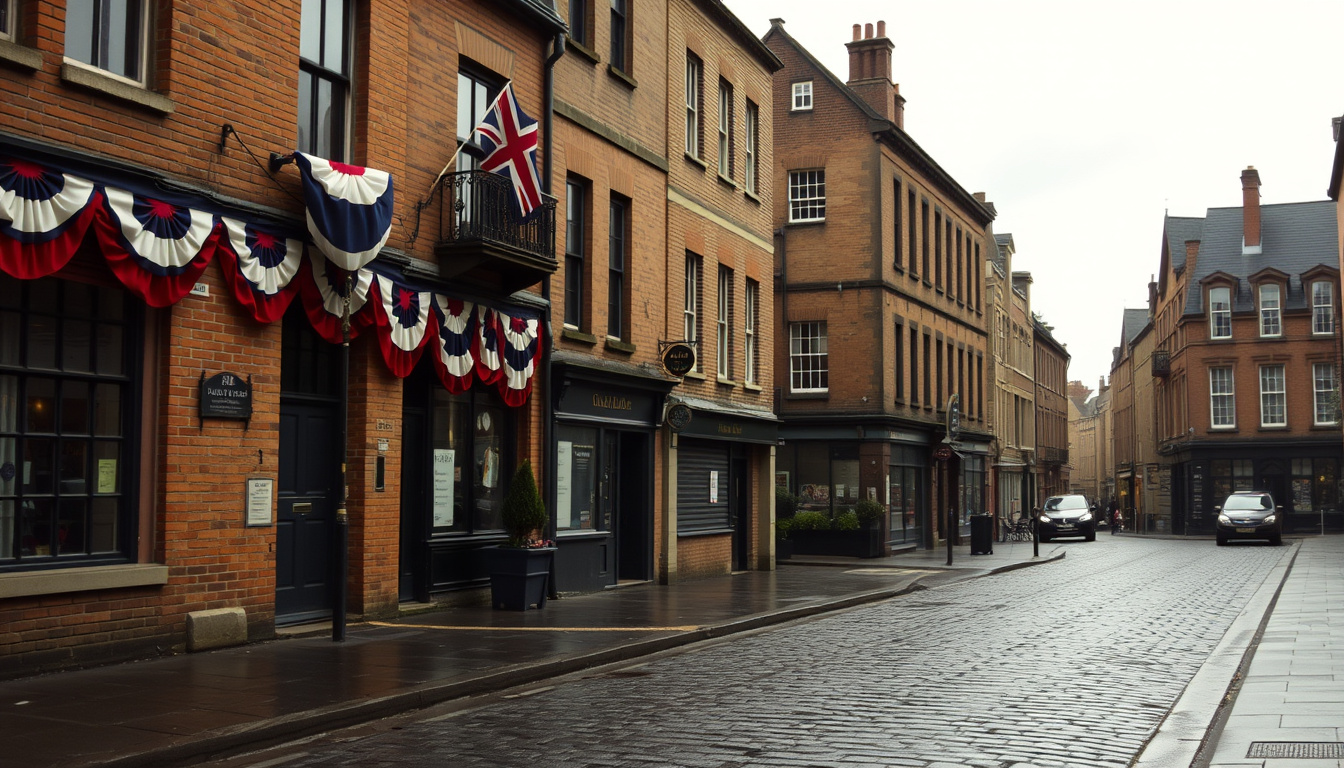
On 8 May 1945, the guns fell silent across Europe. Nazi Germany had surrendered unconditionally, bringing six years of devastating war on the continent to a close. That day is known as VE Day – Victory in Europe Day – and it remains one of the most significant dates in modern history.
VE Day marks the formal acceptance of Germany’s defeat by the Allied powers. The celebrations that erupted in Britain and across the Western world were spontaneous, emotional, and unforgettable. But the day also carried a sobering message: the war against Japan was far from over.
Understanding what VE Day means requires looking at the events leading up to it, the surrender documents signed in two different locations, and the complex emotions of a world emerging from the darkest conflict in history.
What Is VE Day?
VE Day stands for Victory in Europe Day, the day that commemorates the unconditional surrender of Nazi Germany and the end of World War II in Europe. The term is exclusively used for the Second World War; there was no VE Day for World War I.
Victory in Europe Day, May 8, 1945, marking Nazi Germany’s surrender and the end of WWII in Europe.
May 8, 1945 (formal celebration); German surrender signed May 7, 1945.
End of six years of war in Europe, street parties, Churchill’s broadcast.
Commemorated annually in UK and Europe; major anniversary events (e.g., 75th in 2020).
Key Insights About VE Day
- VE Day is often considered the symbolic end of WWII in Europe, though fighting continued in Asia until VJ Day in August 1945.
- Celebrations were euphoric but mixed with grief for the fallen and uncertainty about the future.
- The date of VE Day (May 8) differs from the actual signing of the surrender (May 7) due to timing of official announcements.
- VE Day is still commemorated in the UK, often with ceremonies, street parties, and moments of reflection.
- Churchill’s announcement at 3 p.m. on May 8 triggered mass celebrations across Britain.
Snapshot Facts About VE Day
| Fact | Detail |
|---|---|
| Full Name | Victory in Europe Day |
| Date | May 8, 1945 (UK and Western Allies; Russia celebrates May 9) |
| Event | Unconditional surrender of Nazi Germany |
| Key Figure | Prime Minister Winston Churchill |
| Duration of War in Europe | 1939–1945 (six years) |
| Public Reaction | Street parties, parades, church services |
| Surrender Signed | May 7, 1945 in Reims, France; formally ratified May 8 in Berlin |
What Happened on VE Day?
The events of 8 May 1945 unfolded in a sequence that gripped the entire nation. By the early morning, news of Germany’s surrender had already begun to circulate, but the official announcement came from Prime Minister Winston Churchill in a BBC broadcast at 3:00 p.m. BST.
Churchill’s Announcement and Public Reactions
Churchill addressed the nation from Downing Street, confirming that the ceasefire would take effect at one minute after midnight. He declared: “Hostilities will end officially at one minute after midnight tonight, but in the interests of saving lives, the ‘ceasefire’ began yesterday to be sounded all along the front…”
Within minutes, crowds streamed into central London. Trafalgar Square, Piccadilly Circus, The Mall, and Buckingham Palace were swamped with more than a million people, according to contemporary accounts. You can also explore Winston Churchill’s role in WWII.
Churchill was careful to call for only a “brief period of rejoicing” because Japan remained undefeated. The war in the Pacific continued, meaning total peace was still months away. VE Day was not the end of World War II overall.
Street Parties and Celebrations
Across Britain, people took to the streets. Impromptu street parties broke out in towns and cities. Neighbours shared food, lit bonfires, and raised Union Flags. Church bells rang, and pubs and public spaces filled as the news spread.
In the evening, King George VI and Queen Elizabeth appeared on the balcony of Buckingham Palace to greet the jubilant crowds. The celebrations continued late into the night, though many also attended solemn church services to remember the fallen.
When Was VE Day and Why Is It on May 8?
The date 8 May 1945 is used by the United Kingdom, the United States, and most Western European countries. But the surrender documents were signed a day earlier. Here is how that worked.
The German Surrender Timeline (May 7–8)
- 7 May 1945: The first surrender document was signed in Reims, France, at the Supreme Headquarters Allied Expeditionary Force (SHAEF).
- 8 May 1945: A second, more formal signing took place in Berlin, ratified by the Soviet command. The final ceasefire was set for 23:01 Central European Time on 8 May.
- Why 8 May matters: Because the surrender took effect on that day in Central European time, it became the official VE Day for Britain, the US, and most of Western Europe.
- Why some countries mark 9 May: In Moscow time, the same surrender took effect after midnight, so Russia and some former Soviet states observe 9 May as Victory Day. For more detail, read about the German surrender documents.
Is VE Day Still Celebrated Today?
VE Day is not a public holiday in the UK today, but it remains a significant day of remembrance. Annual commemorations include memorial services, military flypasts, beacon-lighting, and church services. On major anniversaries, such as the 75th in 2020, events are scaled up significantly, even amid the pandemic.
VE Day Anniversaries and National Holidays
In 1945, 8 May was declared a public holiday in the UK. Today, commemorations are organised by the Royal British Legion, the Imperial War Museum, and local councils. The day is an opportunity to honour the veterans of World War II and reflect on the cost of war.
Commemoration vs. Celebration
Modern observance of VE Day tends to be more sombre than the street parties of 1945. While anniversaries often include public festivities, the tone stresses remembrance and gratitude. Many schools and communities hold educational events to teach younger generations about the significance of the day.
VE Day (Victory in Europe) is often compared to VJ Day (Victory over Japan). VJ Day is usually dated to 15 August 1945 in the UK and 2 September 1945 for the formal signing aboard USS Missouri. VE Day ended the war in Europe; VJ Day ended World War II entirely.
How Does VE Day Differ from VJ Day?
Victory in Europe vs. Victory over Japan
VE Day commemorates the defeat of Nazi Germany and the end of the war in Europe. VJ Day marks the surrender of Japan and the end of the war in the Pacific. The two events are separated by several months: VE Day is 8 May 1945; VJ Day is 15 August 1945 (announcement in UK) or 2 September 1945 (formal signing). For a deeper look at the end of World War II, learn about VJ Day and the end of WWII in Asia.
The distinction matters because at the time of VE Day, millions of Allied servicemen and women were still fighting in the Pacific theatre. Churchill’s broadcast explicitly warned that Japan was still undefeated, tempering the celebrations with a sense of ongoing struggle.
What Are 10 Key Facts About VE Day?
- Date: 8 May 1945.
- Meaning: Victory in Europe Day.
- Event commemorated: Nazi Germany’s unconditional surrender.
- First surrender signing: Reims, France, on 7 May 1945.
- Second surrender signing: Berlin, on 8 May 1945.
- UK announcement: Churchill’s radio broadcast at 3:00 pm BST.
- London reaction: Over a million people gathered in central London.
- War not fully over: The Pacific war continued after VE Day.
- Different date in USSR/Russia: 9 May due to time-zone differences.
- Lasting legacy: VE Day remains a major annual remembrance and celebration date in Europe and the UK.
Timeline of VE Day – May 8, 1945
- Early morning (UK): News of German surrender spreads; unofficial celebrations begin.
- 3:00 p.m. (UK): Winston Churchill broadcasts the official announcement via BBC.
- 3:00 p.m. onward: Crowds gather in London’s Trafalgar Square, Whitehall, and Buckingham Palace.
- Evening: King George VI and Queen Elizabeth appear on balcony of Buckingham Palace; street parties and bonfires.
- Later (US/time zones): President Truman dedicates the victory to FDR; celebrations across the US and Allies.
What Remains Clear – and What Is Often Confused – About VE Day
| Established Information | Information That Remains Unclear |
|---|---|
| VE Day is unequivocally 8 May 1945 for the UK and most Western Allies. | Some people confuse the signing date (7 May) with the celebration date (8 May). |
| No official “VE Day” exists for World War I – the term is exclusively used for WWII. | There is occasional confusion between VE Day and VJ Day. |
| Russia observes Victory Day on 9 May due to time-zone differences. | The exact timing of ceasefire (23:01 CET) is not widely known. |
What Is the Broader Historical Context of VE Day?
VE Day represents not just a military victory but a profound social and emotional turning point. The war in Europe devastated cities, uprooted families, and reshaped geopolitics. The celebrations were a mix of relief, joy, and remembrance for the millions who died. In parallel, the war in the Pacific continued, meaning total peace was still months away.
Understanding VE Day today requires acknowledging its role in national memory, particularly in the UK, where it is a focal point for commemorating WWII veterans. It is also a reminder of the Holocaust and the liberation of concentration camps, which occurred in the weeks before VE Day.
Sources and Quotes on VE Day
“Hostilities will end officially at one minute after midnight tonight, but in the interests of saving lives, the ‘ceasefire’ began yesterday to be sounded all along the front…”
Winston Churchill, BBC broadcast, 8 May 1945
“VE Day marked the end of nearly six years of a war that had cost the lives of millions…”
Imperial War Museum
“8 May 1945 – Victory in Europe Day – is a day etched in the memory of everyone who witnessed it.”
The Royal British Legion
Summary: Why VE Day Matters
VE Day on 8 May 1945 signalled the end of the bloodiest conflict in European history. It was a day of wild celebration, quiet reflection, and unfinished business.
Frequently Asked Questions About VE Day
What is VE Day in WW1?
There is no VE Day for World War I. The term refers exclusively to Victory in Europe Day in WWII (May 8, 1945).
When is VE Day celebrated in the UK?
VE Day is commemorated annually on May 8. Major anniversaries (e.g., 75th in 2020) are marked with larger events.
How long did VE Day celebrations last?
Official celebrations spanned May 8–9, 1945, with street parties and events continuing for days in some towns.
Was VE Day a public holiday?
Yes, May 8, 1945 was declared a public holiday in the UK. It is not an official holiday today but is a day of remembrance.
Why does Russia celebrate Victory Day on May 9?
Because the German surrender was signed late on May 7 (May 8 in Moscow time), and Stalin wanted a separate ceremony on May 9.
What is the difference between VE Day and VJ Day?
VE Day marks victory in Europe over Nazi Germany (May 8, 1945). VJ Day marks victory over Japan (August 15 / September 2, 1945).
Was VE Day the end of World War II?
No. VE Day ended the war in Europe, but fighting in the Pacific continued until VJ Day later in 1945.
Are there still living veterans of VE Day?
Yes, a small number of World War II veterans who experienced VE Day are still alive, though their numbers diminish each year.

Henry Wallace is Managing Editor at NewsPrism.co.uk, running the daily news list and covering UK and world affairs.