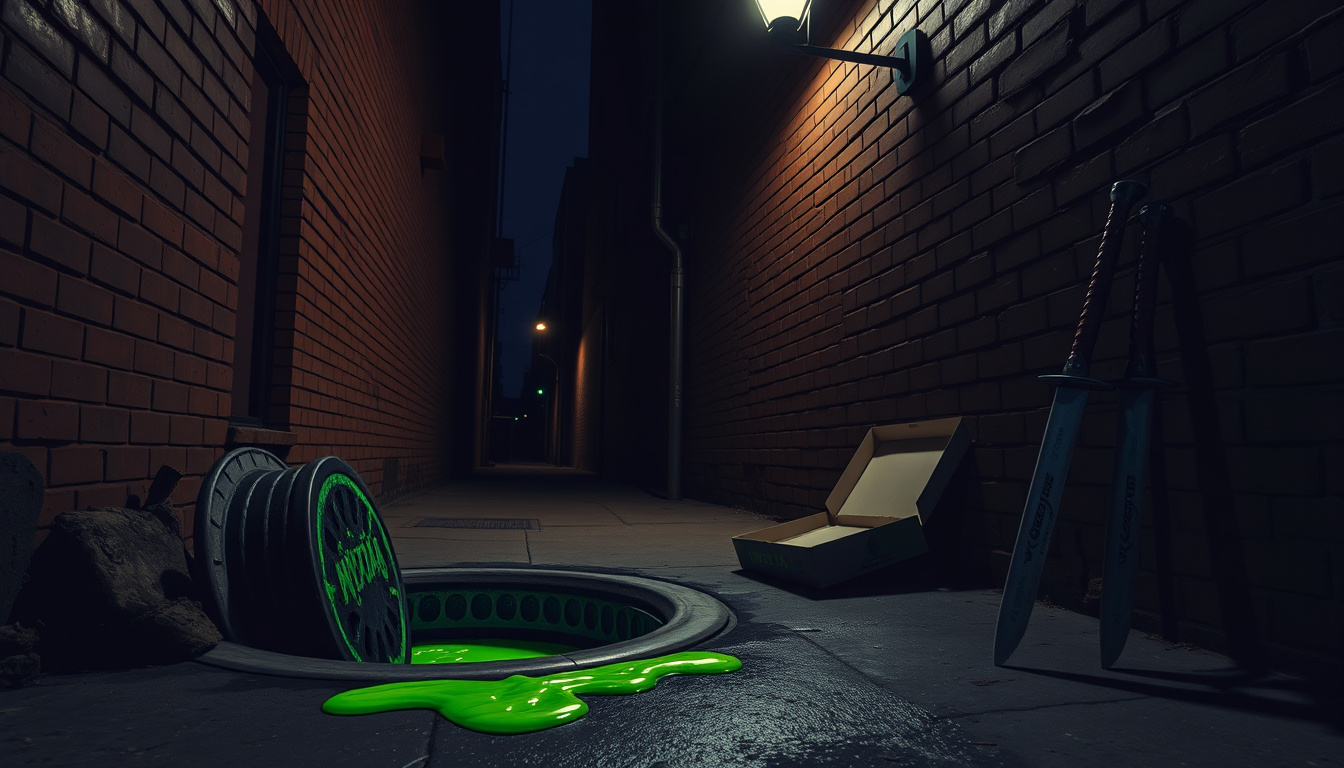

The Teenage Mutant Ninja Turtles — often shortened to TMNT — are one of the most enduring pop-culture franchises in the world. What began in 1984 as a self-published black-and-white comic book created by Kevin Eastman and Peter Laird has grown into a multi-billion-dollar empire spanning animated series, live-action films, video games, toys, and more. At its core, the story follows four anthropomorphic turtle brothers — Leonardo, Raphael, Michelangelo, and Donatello — who are trained in ninjutsu by their rat sensei, Master Splinter, and fight crime from the sewers of New York City.
The franchise has been rebooted multiple times across different decades, with each iteration introducing the characters to a new generation. Whether it is the lighthearted 1987 cartoon, the darker 1990 live-action film, or the recent 2023 animated hit Mutant Mayhem, the core appeal remains the same: four misfit brothers who rely on family, discipline, and pizza to save the day. This guide covers the characters, origin story, movies, series, and cultural impact of the TMNT franchise.
For readers interested in other comic-book icons, the Charlie Cox – Biography, Wife, Height, and Movies (2025) article offers a look at another New York-based vigilante, while David Corenswet – Biography, Age, Height and Superman Role explores the broader superhero landscape that the TMNT franchise both parodies and inhabits.
Who Are the Teenage Mutant Ninja Turtles? Names, Characters & Roles
The four turtles are named after Renaissance artists: Leonardo (da Vinci), Donatello, Raphael, and Michelangelo. Each brother has a distinct personality, signature weapon, and mask color, making them instantly recognizable. Together with their sensei Splinter and their human allies April O’Neil and Casey Jones, they form the core of the franchise.
Kevin Eastman and Peter Laird (Mirage Studios, 1984)
Leonardo (leader), Donatello (brains), Raphael (hothead), Michelangelo (party dude), Splinter (sensei), Shredder (archenemy), April O’Neil (ally)
Teenage Mutant Ninja Turtles #1 (May 1984)
7 live-action and animated films (as of 2024), plus upcoming projects
Key Insights About the Franchise
- The TMNT franchise began as a parody of popular 1980s comics like Daredevil and Ronin, but quickly became a cultural phenomenon.
- The four turtles represent distinct personality archetypes, making them relatable to a broad audience.
- The mutagen ooze — a key plot device — was originally intended as a one-time origin element but was reused in many adaptations.
- The 1987 animated series significantly softened the edgy tone of the original comics to target children, a change that defined the brand for decades.
- TMNT has been continuously rebooted in almost every decade since the 1990s, showing remarkable longevity.
Key Facts About Teenage Mutant Ninja Turtles
| Fact | Details |
|---|---|
| Namesake inspiration | The turtles are named after Renaissance artists: Leonardo (da Vinci), Donatello, Raphael, Michelangelo. |
| Splinter’s origin | Splinter was a pet rat of ninja master Hamato Yoshi before mutating into a humanoid rat. |
| Shredder’s role | The Shredder leads the Foot Clan, a ninja crime syndicate. |
| April O’Neil | April O’Neil is a human ally, originally a television reporter in most versions. |
| Franchise scope | TMNT has spawned comic books, multiple animated series, live-action films, video games, toys, and a stage show. |
| 1990 film legacy | The 1990 live-action film was a box office hit and remains a fan favorite for its practical effects and martial arts choreography. |
| Primary villain | Shredder is the primary villain across most series, leading the Foot Clan. |
| Alien antagonist | Krang is an alien antagonist from the Utrom race, introduced in the 1987 animated series. |
What Is the Origin Story of the Teenage Mutant Ninja Turtles?
Who Created the Teenage Mutant Ninja Turtles?
The franchise began in 1984 as a self-published black-and-white comic by Kevin Eastman and Peter Laird, created as a parody of dark, edgy superhero stories, according to sources including Collider and Turtlepedia. Eastman and Laird’s concept originated from a comical sketch during a casual brainstorming session, turning a joke into a 30-plus-year global franchise.
What Is the Mutagen Ooze?
In most versions of the story, the turtles begin as baby turtles — often lab animals rather than strays or pets — that are exposed to a mysterious mutagen, commonly called the “ooze.” This substance mutates them into intelligent, humanoid beings. The ooze also mutates Splinter, a pet rat, into a humanoid rat who becomes their ninja master. Different continuities offer varying explanations: some versions, such as the 2003 animated series, state that the turtles were taken by Baro Draxum to be mutated into weapons for the Yokai.
Are the Teenage Mutant Ninja Turtles Based on a Comic?
Yes, the franchise began as a comic book. The first issue, Teenage Mutant Ninja Turtles #1, was published by Mirage Studios in 1984. The comic was initially intended as a one-shot parody but quickly gained a cult following, leading to an expanded series and eventually a full media franchise. The tone of the original comics was darker and more violent than the later animated adaptations. For more on the comic-book roots of superhero storytelling, the David Corenswet – Biography, Age, Height and Superman Role article provides context on another iconic character from the genre.
Different versions of the TMNT story vary in details. For example, Splinter’s origin sometimes depicts him as Hamato Yoshi’s pet rat, while other iterations portray him as the reincarnation of Hamato Yoshi himself. The mutagen ooze is a consistent plot device across most versions, but its precise nature and origin shift between series.
What Is the Correct Order to Watch All TMNT Movies and Series?
The TMNT franchise includes multiple film trilogies, animated series, and standalone movies that exist in different continuities. There is no single “correct” order that connects all of them, but the list below organizes the major theatrical films and television series by release date.
TMNT Movies in Release Order
- Teenage Mutant Ninja Turtles (1990) — Live-action film closely following the Mirage comics.
- TMNT II: Secret of the Ooze (1991) — Live-action sequel expanding the origin story.
- TMNT III (1993) — Final live-action installment of the original trilogy.
- TMNT (2007) — First computer-animated film, bridging different continuities.
- Teenage Mutant Ninja Turtles (2014) — Michael Bay-produced live-action reboot.
- TMNT: Out of the Shadows (2016) — Second Michael Bay-produced reboot.
- Teenage Mutant Ninja Turtles: Mutant Mayhem (2023) — New animated reboot that received positive reviews.
Key Animated Series
- 1987 Animated Series (1987–1996) — The first TV show, a Saturday morning cartoon that introduced the lighter tone and the catchphrase “Cowabunga!”
- TMNT (2003) (2003–2009) — A more serialized, darker-toned CGI animated series.
- TMNT (2012) (2012–2017) — A critically acclaimed Nickelodeon-produced CGI series that introduced new characters.
- Rise of the Teenage Mutant Ninja Turtles (2018–2020) — A reimagined series with a new art style and new powers.
- The Ninja Turtles (2024) — The latest Nickelodeon animated series.
For curated viewing recommendations, Rotten Tomatoes offers aggregated critic and audience ratings for all TMNT films and series. A detailed history of the franchise is also available from IGN.
Who Are the Cast and Voice Actors Behind the Turtles?
1990 Live-Action Film Cast
The 1990 film featured actors in suits to portray the turtles, with voice work and stunt performances by multiple people. The cast included Judith Hoag as April O’Neil, Elias Koteas as Casey Jones, and James Saito as the Shredder. The film used animatronic suits created by Jim Henson’s Creature Shop, which gave the turtles a realistic, expressive appearance.
2014 Reboot and Voice Cast
The 2014 Michael Bay-produced reboot starred Megan Fox as April O’Neil, with Alan Ritchson, Noel Fisher, Jeremy Howard, and Pete Ploszek providing the motion-capture performances and voices for Raphael, Michelangelo, Donatello, and Leonardo, respectively. William Fichtner played the film’s version of the Shredder. According to MovieWeb, the cast also included Whoopi Goldberg and Will Arnett in supporting roles.
The 2012 Nickelodeon CGI series featured a dedicated voice cast: Jason Biggs (later replaced by Dominic Catrambone) voiced Leonardo, Sean Astin voiced Raphael, Rob Paulsen voiced Donatello, and Greg Cipes voiced Michelangelo. Kevin Michael Richardson voiced the Shredder, and Mae Whitman voiced April O’Neil.
There is no widely released TMNT movie from 2017. The 2016 sequel Out of the Shadows was the last live-action film before the 2023 animated reboot. Some direct-to-video or streaming films may have been released in 2017, but no major theatrical release occurred that year.
How Has the TMNT Franchise Evolved Over Time?
The following timeline highlights the key milestones in the franchise’s history, from its comic-book origins to its most recent animated film.
- 1984 — First TMNT comic published by Mirage Studios; created by Kevin Eastman and Peter Laird.
- 1987 — Premiere of the iconic animated series on CBS, introducing the catchphrase “Cowabunga!” and a lighter tone.
- 1990 — Live-action film Teenage Mutant Ninja Turtles released, directed by Steve Barron.
- 1991 — Sequel Teenage Mutant Ninja Turtles II: The Secret of the Ooze released.
- 2003 — New animated series debuts, closer in tone to the original comics; ran until 2009.
- 2007 — CGI film TMNT released, bridging different continuities.
- 2012 — CGI animated series begins on Nickelodeon; critically acclaimed, runs five seasons.
- 2014 — Michael Bay-produced live-action reboot film released, starring Megan Fox as April O’Neil.
- 2018 — Animated series Rise of the Teenage Mutant Ninja Turtles premieres with a new art style.
- 2023 — Animated film Teenage Mutant Ninja Turtles: Mutant Mayhem released, receiving positive reviews.
According to the official TMNT website, the franchise continues to expand with new merchandise, video games, and media projects.
What Do We Know for Certain About TMNT Lore?
While the core elements of the TMNT story are well-established, different adaptations have introduced variations. The table below separates what is consistently documented from what remains unclear or version-dependent.
| Established Information | Information That Remains Unclear |
|---|---|
| The core character names, creators, and original comic publication date (1984) are well-documented. | Different continuities vary in details — for example, Splinter’s origin (being Hamato Yoshi’s pet versus a reincarnation). |
| The existence of multiple film and television adaptations is fact. | The exact tone of future movies or series is subject to creative decisions. |
| Mutagen ooze as the origin catalyst is a consistent plot point across most versions. | Some fans believe the turtles were originally intended as a one-off parody; in fact, the creators quickly expanded the universe after the first issue. |
| The turtles are named after Renaissance artists. | Speculation about a potential crossover with other franchises remains unconfirmed. |
Why Has the TMNT Franchise Endured for Decades?
The TMNT franchise is a unique example of a creator-owned indie comic that exploded into a mass-market phenomenon. Its ability to reinvent itself across decades — from dark and gritty to lighthearted and comedic — demonstrates strong brand adaptability. The core appeal lies in the relatable brotherly dynamics and the underdog story of four outcasts training to protect their city.
The franchise’s ownership by Paramount and Nickelodeon ensures continued investment. Recent hits like Mutant Mayhem (2023) show that the brand is still evolving for new audiences while paying homage to longtime fans. Merchandise, video games, and a new ongoing comic series from IDW Publishing continue to keep the turtles in the public eye.
As noted by Nickelodeon’s official TMNT portal, the franchise has sold over 1.3 billion dollars in retail sales worldwide according to licensing industry reports from 2021.
What Do the Creators Say About TMNT?
Kevin Eastman and Peter Laird, the co-creators of the Teenage Mutant Ninja Turtles, have spoken about the origins and philosophy of the franchise in various interviews over the years.
“Teenage Mutant Ninja Turtles was our attempt to do a funny, satirical comic that combined our love of martial arts movies, superheroes, and indie comics.”
— Kevin Eastman (co-creator), various interviews
“We wanted to create something that felt like a superhero team but with a twist — they’re turtles, and they’re teenagers.”
— Peter Laird (co-creator), Mirage Studios retrospective
“The TMNT franchise has sold over 1.3 billion dollars in retail sales worldwide.”
— Licensing industry reports, Nickelodeon (2021)
For a comprehensive encyclopedia entry with verified historical and factual data, Wikipedia’s TMNT article is a reliable starting point.
What Makes the Teenage Mutant Ninja Turtles a Lasting Phenomenon?
The Teenage Mutant Ninja Turtles have remained relevant for more than four decades because of their strong character identities, their ability to adapt to changing times, and the universal appeal of a family of misfits who fight for justice. From the original black-and-white comics of 1984 to the celebrated Mutant Mayhem in 2023, the franchise continues to find new audiences while honoring its roots. Fans looking for more on comic-book-inspired characters can explore the Charlie Cox – Biography, Wife, Height, and Movies (2025) article, which covers another New York-based vigilante with deep comic-book origins.
Frequently Asked Questions About Teenage Mutant Ninja Turtles
What does TMNT stand for?
TMNT stands for Teenage Mutant Ninja Turtles.
Are the Teenage Mutant Ninja Turtles based on a comic?
Yes, the franchise began as a black-and-white comic book created by Kevin Eastman and Peter Laird in 1984, published by Mirage Studios.
Why are the turtles mutants?
In the original story, the turtles are exposed to a mysterious mutagen (often called “ooze”) that transforms them into intelligent, humanoid beings.
Who is the most popular turtle?
Popularity varies, but Michelangelo is often the most recognizable due to his carefree attitude and frequent use of the catchphrase “Cowabunga!”
How many TMNT movies are there?
As of 2025, there are 7 theatrical films: three from the 1990s (1990, 1991, 1993), one CGI film (2007), two Michael Bay-produced reboots (2014, 2016), and Mutant Mayhem (2023). Additional direct-to-video films also exist.
Is there a TMNT 2017 movie?
There is no widely released TMNT movie from 2017. The 2016 sequel Out of the Shadows was the last live-action film before the 2023 animated reboot.
Who created the Teenage Mutant Ninja Turtles?
The turtles were created by Kevin Eastman and Peter Laird in 1984 as a parody of dark superhero comics.
What is the mutagen ooze in TMNT?
The mutagen ooze is a mysterious substance that mutates living creatures into intelligent, humanoid forms. It is the origin catalyst for the turtles and Splinter in most versions.

Amelia Grant is Technology & Media Editor at NewsPrism.co.uk, covering AI, platforms, cybersecurity, consumer tech and the media landscape.