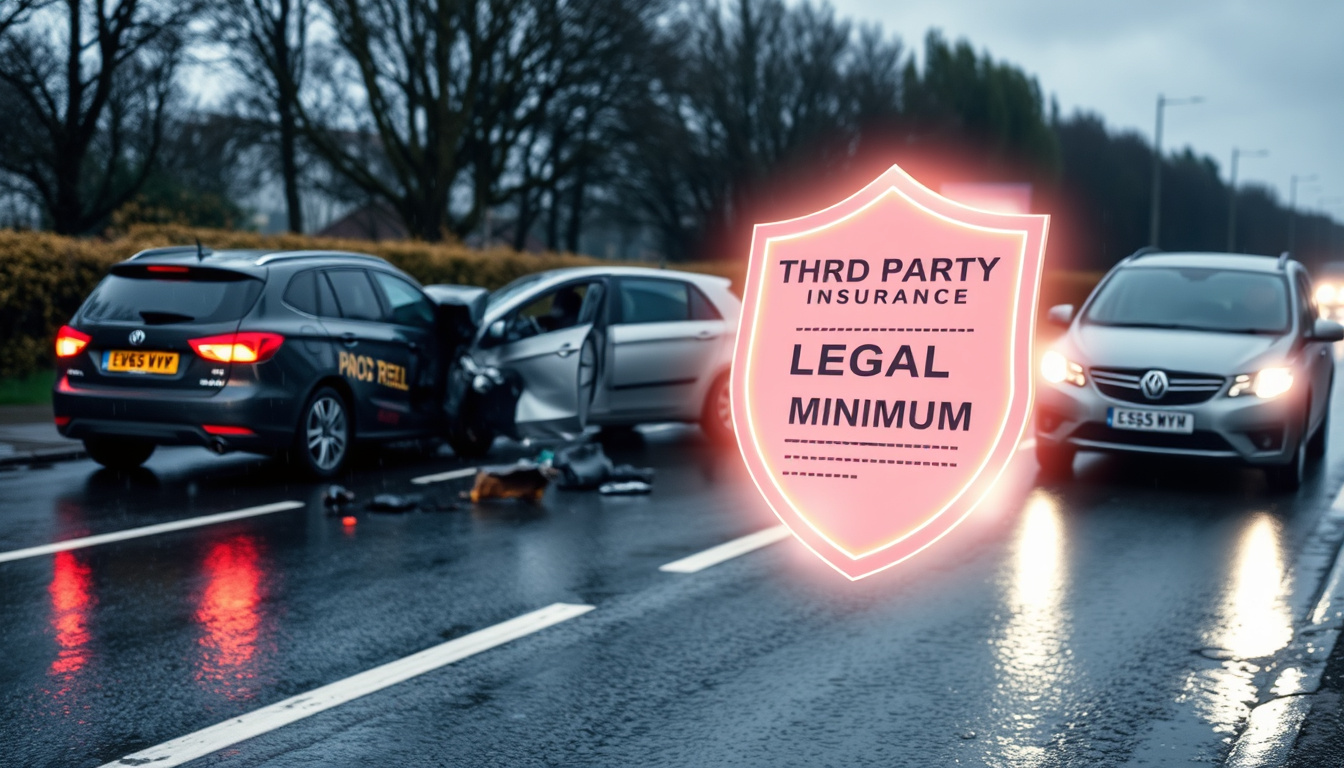
Third-party car insurance represents the baseline level of cover required by law for anyone driving on UK roads. It protects you against claims from other people involved in an accident—but leaves your own vehicle and personal injuries unprotected. Understanding exactly what this policy type covers and excludes is essential before purchasing.
For drivers seeking to minimise upfront costs, third-party insurance may seem attractive. However, the savings can be misleading. Recent market analysis reveals that this coverage option often costs more than comprehensive alternatives, despite offering significantly less protection. The gap between expectation and reality catches many drivers unprepared.
What does third party insurance cover?
Third-party insurance provides liability protection only. When you cause an accident, this policy handles the financial consequences for the other party involved. The cover extends to damage you inflict on another person’s vehicle, harm to their property, and any medical expenses or compensation claims they pursue against you.
Third-party liability only
Damage or injury to others
Your vehicle, theft, fire
Mandatory on UK roads
Key points to understand
- Damage to another person’s vehicle during a road accident falls under third-party cover
- Property damage extending beyond vehicles—including fences, buildings, or street furniture—is included
- Injuries sustained by third parties and associated medical costs are covered
- Compensation claims from the other party are handled up to policy limits
- Your own vehicle repairs remain entirely your responsibility
- Medical costs for you or your passengers are not covered—even when the accident is someone else’s fault
- The policy covers damage or injury you cause to others, not harm suffered by you
Third-party insurance never pays for damage to your own vehicle, regardless of circumstances. If your car is stolen, vandalised, damaged by fire, or involved in an accident where another driver is at fault, you bear the full cost of repairs or replacement yourself.
| Aspect | Third Party | Comprehensive |
|---|---|---|
| Coverage for others | Yes | Yes |
| Own vehicle damage | No | Yes |
| Fire and theft protection | No | Yes |
| Cost relative | Higher average | Lower average |
| Your medical costs | No | Often included |
| At-fault accident cover | Others only | All parties |
What does third party insurance mean?
The term “third party” refers to any person or entity involved in an insurance claim who is not you (the policyholder) or your insurer. When you purchase this type of policy, you are essentially buying protection against liability for harm you cause to other road users, pedestrians, or property owners.
According to the UK Government, third-party cover represents the absolute minimum level of motor insurance legally permitted. Driving without this cover carries immediate and serious consequences, including fines, penalty points, potential vehicle seizure, and possible court action leading to a driving ban.
This insurance type does not establish a direct relationship between you and your insurer regarding your own vehicle. Instead, it creates a contractual obligation for your insurer to defend and compensate third parties when you are found responsible for an incident. The protection operates solely on your behalf when dealing with other people’s claims.
Driving without at least third-party insurance in the UK is illegal. Penalties include a £300 fine, six penalty points on your licence, potential vehicle seizure, and possible court proceedings that could result in a driving ban.
What is third party insurance vs comprehensive?
The distinction between these two policy types hinges on the scope of protection. Third-party insurance addresses liability exclusively—covering damage and injury you cause to others. Comprehensive policies expand this baseline to include protection for your own vehicle under a much broader range of circumstances.
Coverage scope differences
Comprehensive insurance encompasses all third-party liabilities while adding coverage for damage to your own vehicle. This includes accidents where you are entirely at fault, single-vehicle incidents such as hitting a tree or barrier, and damage caused by weather events, falling objects, or vandalism.
Third-party policies offer no protection when your car is damaged, whether the incident involves another driver, fire, theft, or natural events. You bear all repair costs yourself, which can quickly exceed any initial savings on premiums if an accident occurs.
Cost paradox
Counter-intuitively, third-party only policies tend to cost more than comprehensive alternatives. Average market data shows third-party only averaging £789.35, compared to £487.75 for fully comprehensive policies. This pricing reflects reduced competition among insurers offering basic third-party policies and higher claim frequency among policyholders who select minimal coverage.
Young drivers face particularly stark differences. Analysis of specific quotes found that an 18-year-old driver was quoted £1,524 more per year for third-party only cover compared to comprehensive protection—a premium that makes the basic policy the more expensive option overall.
Before assuming third-party only offers better value, compare total annual costs including potential repair bills. For most drivers, comprehensive cover provides better financial protection at a lower premium.
Does third-party insurance mean you can drive any car?
This represents one of the most common misconceptions about third-party insurance. The policy covers you specifically to drive your own insured vehicle—it does not grant blanket permission to operate any car you encounter.
If you need to drive someone else’s vehicle, you must be added to their insurance policy as a named driver. Operating another person’s car without proper authorisation voids your coverage and may constitute a criminal offence under continuous insurance requirements.
Some insurers offer extensions that permit driving other vehicles, but these typically require explicit agreement and additional premium payment. Always verify your coverage status before driving a car not listed on your policy. Breaking this rule can result in claim denial, policy cancellation, and potential legal proceedings.
What does third party, fire and theft insurance cover?
Third-party, fire and theft represents an intermediate coverage tier sitting between basic third-party only and fully comprehensive policies. It retains all third-party liability protection while adding specific protections for your own vehicle against fire damage and theft-related losses.
Fire coverage
The fire element covers damage caused by accidental fire, arson, or any fire-related incident. Whether your vehicle catches fire due to a mechanical fault, electrical problem, or external fire source, this protection covers repair or replacement costs up to your policy value.
Theft coverage
If your vehicle is stolen or broken into, third-party fire and theft coverage responds to the loss. This includes scenarios where your car is stolen entirely, items are stolen from your vehicle, or damage occurs during a break-in attempt.
What remains excluded
Despite the extended protection, third-party fire and theft does not cover accidental damage to your vehicle. Collisions, scrapes, flooding damage, and similar incidents where no fire or theft is involved fall outside the policy scope. For protection against these common risks, upgrading to comprehensive cover becomes necessary.
Average pricing for third-party fire and theft policies stands at approximately £594.47, placing it between basic third-party (£789.35) and comprehensive (£487.75) options. This positioning makes it a consideration for drivers seeking additional protection without paying full comprehensive premiums, though comprehensive often proves more cost-effective overall.
Summary
Third-party car insurance satisfies the legal minimum requirement for UK road use, covering liability for damage and injury you cause to others. However, it provides no protection for your own vehicle, personal injuries, or theft and fire damage. The common assumption that this represents the cheapest option is often incorrect—comprehensive policies frequently cost less while delivering substantially broader coverage. Drivers should carefully assess their individual circumstances, potential repair costs, and risk tolerance before selecting coverage. For vehicles with significant value or drivers seeking genuine financial protection, comprehensive insurance offers considerably better value despite its lower premium. Understanding these distinctions prevents costly surprises when accidents occur.
Frequently Asked Questions
Is third party insurance cheaper than comprehensive?
No. Market data shows third-party only policies averaging £789.35 compared to £487.75 for comprehensive cover. Young drivers may face even larger differences, with some quotes showing £1,524 higher annual costs for basic third-party protection.
Can I drive any car with third party insurance?
No. Third-party insurance only covers you to drive your own listed vehicle. To drive another car, you must be added to that vehicle’s policy as a named driver.
What happens if I drive without insurance?
Penalties include a £300 fine, six penalty points, potential vehicle seizure, and possible court action resulting in a driving ban.
Does third party insurance cover fire damage?
No. Basic third-party only covers liability to others. Fire damage to your own vehicle requires a third-party fire and theft or comprehensive policy.
What does third party fire and theft cover?
This policy extends basic third-party coverage to include damage from fire (accidental or arson) and theft-related losses for your own vehicle, while retaining third-party liability protection.
Does third party insurance cover me if someone else crashes into my car?
No. Third-party insurance does not cover damage to your own vehicle regardless of fault. You would need to claim against the at-fault driver’s third-party insurance or pay for repairs yourself.
Can I add extra cover to a third party policy?
Yes. Insurers often offer add-ons including breakdown cover, personal accident cover, motor legal protection, and no-claims discounts to enhance basic third-party coverage.
Is third party insurance valid in Europe?
Yes. Third-party insurance provides the minimum cover required for driving in most European countries, though additional cross-border coverage may be advisable for longer trips.

Amelia Grant is Technology & Media Editor at NewsPrism.co.uk, covering AI, platforms, cybersecurity, consumer tech and the media landscape.