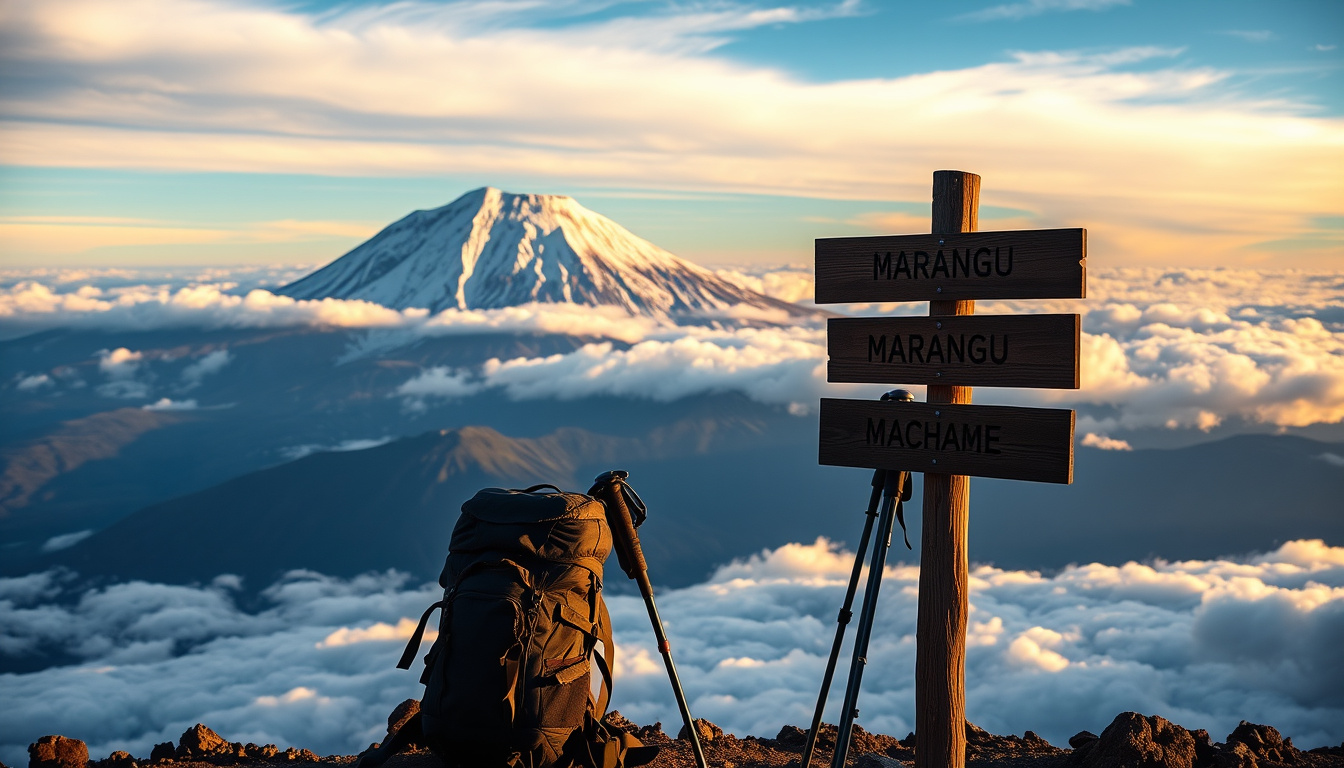
Mount Kilimanjaro rises to 5,895 meters (19,341 feet) above sea level, making it the highest mountain in Africa and the tallest free-standing mountain on Earth. This dormant stratovolcano sits in northeastern Tanzania, near the border with Kenya, drawing thousands of climbers each year who attempt to reach its summit, Uhuru Peak.
The mountain is not a single peak but a volcanic massif composed of three distinct cones: Kibo, Mawenzi, and Shira. Kibo, the tallest of the three, is dormant and could erupt again, while Mawenzi and Shira are extinct. Steam and sulfur emissions from Kibo’s fumaroles serve as reminders of its volcanic nature.
For those planning a climb, understanding the route options, costs, and success rates is essential. The mountain is accessible to beginners with good fitness, though altitude sickness remains the primary challenge. The information that follows draws on authoritative sources to clarify the geography, logistics, and common misconceptions surrounding Kilimanjaro.
What Is the Height and Location of Mount Kilimanjaro?
Height & Rank
19,341 ft (5,895 m) – tallest in Africa; tallest free-standing mountain on Earth.
Location
Northeastern Tanzania, near the Kenyan border; part of Kilimanjaro National Park (UNESCO).
Volcano Status
Stratovolcano (dormant); last major eruption estimated 150,000–200,000 years ago; fumarolic activity continues.
Climbing Duration
5–9 days depending on route; Marangu (5 days) easiest; Machame (6–7 days) most popular.
Key Insights
- Mount Kilimanjaro is not an active volcano; its last major eruption predates human history.
- Despite being close to the equator, Kilimanjaro has permanent glaciers that are rapidly retreating due to climate change.
- The success rate for summiting varies by route; longer treks (Lemosho, Northern Circuit) have higher success (85–90%) than shorter (Marangu ~50%).
- Altitude sickness is the primary barrier, not physical fitness; proper acclimatization is the key success factor.
- Costs vary widely; park fees alone are ~$800, while full guided tours range from budget ($2,000) to luxury (>$6,000).
Snapshot Facts
| Fact | Detail |
|---|---|
| First ascent | 1889 by Hans Meyer and Ludwig Purtscheller |
| Volcanic cones | Kibo (dormant), Mawenzi (extinct), Shira (extinct) |
| Highest point | Uhuru Peak on Kibo |
| UNESCO designation | World Heritage Site since 1987 |
| Annual climbers | Over 35,000 people attempt the climb each year |
| Success rate range | 50% to 90% by route |
| Elevation | 5,895 m (19,341 ft) |
| Coordinates | 03°04′33″S, 37°21′12″E |
| Last major eruption | ~360,000 years ago (some sources estimate 150,000–200,000 years) |
| Total hiking distance | 60–70 km (37–43 miles) to summit |
| Best time to climb | June–September and December–February |
| Cost range | $2,000–$6,000+ per person |
How Much Does It Cost to Climb Mount Kilimanjaro?
The total cost of a Kilimanjaro climb typically ranges from $2,000 to $6,000 or more per person, depending on the route, duration, and level of service. National park fees alone account for approximately $700 of that amount. Budget operators offer basic packages at the lower end, while luxury outfitters include premium equipment, meals, and porter services.
What Factors Influence the Price?
Package type is the largest variable. Budget trips include group transport, basic camping gear, and standard meals. Luxury packages often add private transfers, high-quality tents, gourmet food, and more porter support. Duration also matters: longer routes require more park fees and staff wages. Some operators include flights, gear rental, and pre-trip training in their pricing.
How Long Does a Climb Take?
Most climbers spend 6 to 9 days on the mountain. The Marangu route can be completed in 5 to 6 days, while the Northern Circuit takes 8 to 9 days. Longer itineraries provide better acclimatization and significantly improve summit success rates.
What Is the Hike Distance to the Summit?
Total hiking distance varies by route but generally falls between 60 and 70 kilometers (37 to 43 miles) from the trailhead to Uhuru Peak. Daily distances range from 5 to 12 kilometers depending on the itinerary and elevation gain.
Choosing a longer route with gradual elevation gain, such as Lemosho or the Northern Circuit, can improve your summit odds to 85–90%, potentially saving you the cost of a second attempt. Budget for at least $200–$400 per day on the mountain.
Which Route Should You Take to the Summit?
Seven official routes lead to the summit of Kilimanjaro, each with distinct characteristics in terms of scenery, difficulty, and acclimatization potential. The choice of route directly affects both the experience and the likelihood of reaching Uhuru Peak.
Main Climbing Routes Overview
- Marangu (5–6 days): Often considered the easiest; passes through forest and features waterfalls.
- Machame (6–7 days): The most popular route; scenic and provides good acclimatization.
- Lemosho (7–8 days): Stunning views, less crowded, and high success rate.
- Rongai (6–7 days): The longest trek in terms of distance; excellent for acclimatization.
- Shira (6–8 days): Starts at high altitude, less crowded than Machame.
- Umbwe (6–7 days): Short, steep, and direct; considered the most challenging.
- Northern Circuit (8–9 days): The longest route with the best success rate due to gradual acclimatization.
What Is the Easiest Route for Beginners?
The Marangu route is often described as the easiest because it is the only route with hut accommodation and has a gentler overall gradient. However, its shorter duration (5–6 days) means less time to acclimatize, which can reduce summit success to around 50%. For beginners who can spare extra days, Lemosho or the Northern Circuit offer a safer balance of difficulty and success rate.
Where Can I Find a Detailed Kilimanjaro Map?
Detailed route maps are available through the Tanzania National Parks Authority and commercial tour operators. The park boundary begins at the 2,700-meter contour line. Nearby towns Moshi and Arusha serve as starting points, with Kilimanjaro International Airport (JRO) providing the main air access.
Longer routes consistently yield higher summit success rates. The Northern Circuit (8–9 days) and Lemosho (7–8 days) both achieve success rates of 85–90%, compared to approximately 50% for the shorter Marangu route. Altitude acclimatization is the determining factor.
Common Questions About Kilimanjaro’s Volcanic Past
Is Mount Kilimanjaro an Active Volcano?
Kilimanjaro is a dormant stratovolcano, not an active one. Its highest cone, Kibo, is capable of erupting again, but the last major eruption occurred roughly 360,000 years ago, according to some sources, while others place it between 150,000 and 200,000 years ago. Fumaroles on Kibo continue to emit steam and sulfur.
When Did Kilimanjaro Last Erupt?
The exact date of the last eruption remains debated. The most recent major volcanic activity is estimated at approximately 150,000 to 200,000 years ago. Some evidence suggests minor fumarolic activity as recently as 10,000 years ago, but this is not considered a full eruption.
Is K2 Connected to Kilimanjaro?
K2 and Kilimanjaro are entirely separate mountains. K2 is the second-highest peak in the world, located in the Karakoram range on the border of Pakistan and China. The two share no geological or geographic connection. Confusion arises only from the similar numerical naming convention.
Mount Kilimanjaro is often mistaken for an active volcano or confused with K2. In reality, Kibo is dormant with no historical eruptions, and K2 is a separate mountain in a different continent and mountain range. Neither assumption is correct.
How Did Kilimanjaro Form and What Is Its Climbing History?
- ~1 million years ago: Volcanic activity begins forming the Shira cone.
- ~500,000 years ago: The Mawenzi cone forms through subsequent eruptions.
- ~200,000 years ago: The Kibo cone forms; major eruptions occur.
- ~150,000 years ago: The last major volcanic eruption takes place.
- 1889: First recorded ascent by Hans Meyer and Ludwig Purtscheller.
- 1920s: Regular climbing route development begins.
- 1987: UNESCO designates Kilimanjaro National Park as a World Heritage Site.
- 2010s: Accelerated glacial retreat is documented through scientific studies.
- 2024: Ongoing climber access and conservation issues remain under review.
What Do We Know for Certain About Kilimanjaro and What Remains Unclear?
| Established Information | Information That Remains Unclear |
|---|---|
| Mount Kilimanjaro is located in Tanzania, East Africa. | The exact date of the last eruption remains debated (some fumarolic activity ~10,000 years ago). |
| It is the highest mountain in Africa (5,895 m / 19,341 ft). | The exact glacier disappearance timeline is a subject of ongoing climate modeling. |
| It is a dormant stratovolcano; last major eruption ~150,000–200,000 years ago. | Cost ranges vary widely by operator, season, and inclusions; no single definitive ‘average cost’ exists. |
| There are 7 official climbing routes. | |
| Climbs require 5–9 days. |
Why Is Mount Kilimanjaro Significant Beyond Its Elevation?
Kilimanjaro holds cultural, ecological, and scientific importance that extends far beyond its status as Africa’s highest peak. Its glaciers, though rapidly receding, serve as a key indicator of climate change in equatorial regions. The mountain’s five distinct ecological zones, from cultivated farmland to arctic summit conditions, support a wide range of biodiversity within Kilimanjaro National Park.
The mountain is also a major economic driver for Tanzania, attracting more than 35,000 climbers annually. The trekking industry supports thousands of local guides, porters, and hospitality workers in Moshi and Arusha. For many visitors, climbing Kilimanjaro represents a challenge that requires no technical mountaineering skills but demands physical fitness, mental resilience, and careful planning around altitude.
Misunderstandings about its volcanic activity and confusion with other peaks like K2 are common. Setting the record straight helps climbers appreciate what the mountain truly is: a dormant stratovolcano with a long geological history and a well-established trekking infrastructure.
What Do Authoritative Sources Say About Mount Kilimanjaro?
“Kilimanjaro is a dormant stratovolcano with three volcanic cones: Kibo, Mawenzi, and Shira.”
— Wikipedia (en.wikipedia.org)
“The highest mountain in Africa, towering at 5,895 m (19,341 ft) above sea level.”
— Britannica (britannica.com)
“Take as many days as you can afford on a route with a high success rate.”
— Climb Mount Kilimanjaro (climbmountkilimanjaro.com)
“Our beginner’s guide covers how to get there, when to go, how to do it, what to pack, and costs.”
— Much Better Adventures (muchbetteradventures.com)
Key Takeaways at a Glance
Mount Kilimanjaro is Africa’s highest peak, a dormant stratovolcano located in Tanzania. Climbing it requires 5 to 9 days, costs between $2,000 and $6,000, and has an overall summit success rate of approximately 66%. Longer routes offer better acclimatization and higher success rates. The mountain is beginner-friendly with proper preparation, and it is not connected to K2. For a deeper dive into another iconic peak, see Mount Everest Peak – Official Height, Location and First Ascent Facts.
Frequently Asked Questions
How many days does it take to climb Mount Kilimanjaro?
Most routes require 5–9 days. The longer the itinerary, the higher the summit success rate.
Is Mount Kilimanjaro safe for beginners?
Yes, with proper guiding and preparation. Altitude sickness is the main risk, not the terrain.
Can you see Kilimanjaro from Nairobi?
On a clear day, Kilimanjaro is visible from the Amboseli area in Kenya, but not typically from Nairobi.
Do you need climbing experience for Kilimanjaro?
No technical climbing is required; it is a high-altitude hike, not a climb.
What is the best month to climb Kilimanjaro?
The dry seasons from June to September and late December to February offer the most reliable weather.
How much does a Kilimanjaro climbing permit cost?
National park fees total approximately $700 per person, included in most tour packages.
Is Kilimanjaro harder than Everest Base Camp?
Kilimanjaro is generally considered more physically demanding due to the shorter ascent time and higher altitude gain per day.
What is the success rate for climbing Kilimanjaro?
Approximately 66% of climbers reach Uhuru Peak. Success rates vary by route from 50% to 90%.
Can Kilimanjaro erupt again?
Kibo is dormant, not extinct, and could erupt in the future, though no eruption has occurred in recorded history.
What gear do I need to climb Kilimanjaro?
Warm clothing, hiking boots, rain gear, and a sleeping bag rated for -10°C to -20°C are essential.

Thomas Ellery is Business & Economy Correspondent at NewsPrism.co.uk, reporting on UK companies, markets, employment and household finances.